

 Facebook
 X
X
 Pinterest
 Copy Link
The Ultimate Guide to Fishing Douglas Lake in East Tennessee
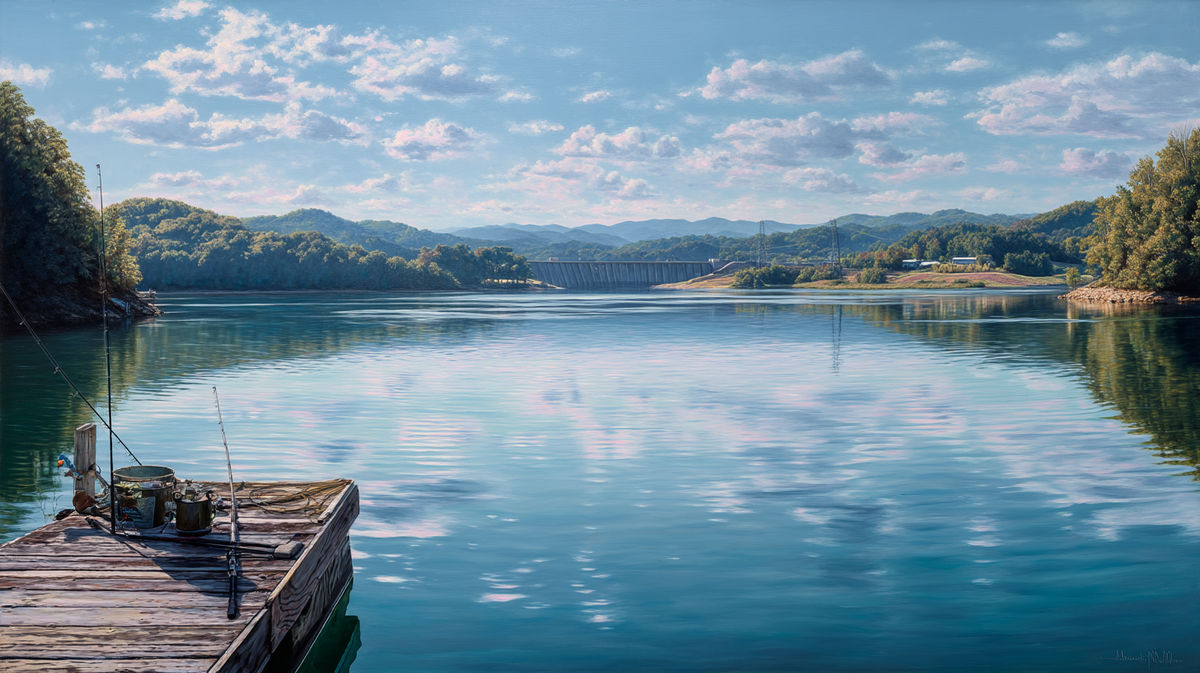
Why Douglas Lake Belongs on Every Angler’s Bucket List
Douglas Lake in Dandridge sits in the heart of East Tennessee, framed by the rolling foothills of the Great Smoky Mountains National Park.
The Tennessee Valley Authority (TVA) reservoir stretches roughly 30,600 acres, boasts 555 miles of shoreline, and routinely ranks among Bassmaster Magazine’s Top-10 bass fisheries nationwide while also landing in the Top-5 for crappie-bragging rights few waters can match.
Beyond the trophies, the setting is pure Smoky Mountain magic: look up from the bow of your boat and you’ll see hazy ridges stacked against the horizon, with Douglas Dam just minutes from Pigeon Forge and Gatlinburg.
Toss in year-round tournaments, abundant public boat launches, and dozens of creek arms begging to be explored, and it’s easy to see why anglers from across the Tennessee River Valley pencil Douglas Lake fishing trips onto their calendar every season.
At-a-Glance Lake Stats & Fast Facts
Lake Size, Depth Range, and Water Clarity
The reservoir averages 60 miles long, 30,600 acres in summer pool, and plunges to nearly 140 feet near the dam. Clarity runs gin-clear on the lower end but turns a “Smoky” tea-stain upriver after heavy rain-a perfect mix for bass fishing junkies chasing a reaction bite.
How the TVA Water Level Drawdown Schedule Affects Fishing
Because Douglas Lake is a flood-control workhorse, TVA lowers the lake as much as 60 feet by late winter, then refills it each spring. That drawdown groups bait along rocky ledges and cavities, making late-winter vertical jigging for smallmouth bass and sauger downright electric.
Target Species & Seasonal Patterns
Largemouth & Smallmouth Bass
Largemouth bass and their bronze cousins fuel Douglas Reservoir’s national reputation.
A five-fish limit applies year-round; between June 1 and Sept 30 only one fish 16 inches or longer may be harvested-details every angler should memorize before day fishing.
Spring prespawn cranks and jerkbaits shine on secondary points; summer finds the best fishing on deep channel swings where schooling fish wolf down shad; fall brings classic topwater mayhem; winter rewards slow-rolled swimbaits.
Smallmouth bass fishing peaks during February through early May spring spawning run to the headwaters of the reservoir.
Crappie
Crappie fishing here is legendary.
White crappie dominate, with a 15-fish daily creel and a 10-inch minimum length limit. Brush-pile jigging and dock shooting rule in spring and fall; once surface temperatures spike, slide to deeper treetops off the main river ledge.
Catfish & Panfish
Channel, blue, and flathead catfish feed along ledges at night, especially where decaying animal matter washes out of coves.
Only one catfish 34 inches or longer may be harvested per day; the rest of your whiskered haul comes from fish under that mark.
Bluegill, a short-lived species here, attack electric red worms under floating docks all summer long.
Walleye & Sauger
Sauger and walleye stack on the French Broad River channel seams below Douglas Dam in late winter.
Troll crankbaits in 18-25 feet during the post-spawn night bite; then vertical-jig spoons once fish move upstream toward the Leadvale area.
Best Times of the Year to Fish Douglas Lake
Spring (March – May)
Spawn is on: largemouth bass and crappie slide into shallow coves, rocky ledges, and cavities where spawning takes place. White and Carolina-rigged lizards score, and white bass make surprise blitzes along pea-gravel flats.
Expect great fishing for anglers willing to chase fish that move upstream with warming water.
Summer (June – August)
Deep offshore ledges are the best places to find the best fishing once the sun climbs.
Night jug-fishing for catfish and sauger keeps you cool; remember, state fishing regulations close jug-lines for flathead catfish during parts of July.
Fall (September – November)
As shad pour into creeks, schooling fish bust the surface in explosive flurries. Tie on a walking bait, keep a Bass Pro plopper handy, and hunt coves near the headwater where shad funnel.
Winter (December – February)
Late winter sees fish glued to steep bluffs.
Find channel bends, drag a ¾-oz football jig, and you’ll discover why Douglas Lake is one southern spot in the Smoky Mountains that still coughs up six-pounders in cold water.
Top Tactics, Rigs & Recommended Gear
Shallow-Water Power Fishing
In March through June, cover water with squarebills and spinnerbaits around willow grass. Large red or orange flies pitched on a 6-weight can even fool cruising smallmouth.
Offshore Electronics & Ledge Fishing
When summer months arrive, graph humps at 20-32 feet, then milk-run with a 5-inch spoon or a Carolina-rigged mag fluke.
Bank-Fishing Tips for Non-Boaters
Public boat launch parking lots double as shoreline hotspots; cast parallel to rip-rap for bluegill and white bass, or fish from point to point with a finesse worm when surface temps climb past 80°F.
Where to Launch or Fish from Shore
Dandridge Boat Ramp (Tournament Site)
Host ramp for the 2024 Bassmaster College Series and multiple Phoenix BFL events-expect ample parking, courtesy dock, and quick access to the main French Broad River channel.
TVA Campgrounds & Day-Use Areas
Douglas Dam Headwater and Tailwater Campgrounds each feature ramps, showers, and fuel docks-ideal if you need a place to stay on multi-day trips.
Bank-Friendly Spots & Accessible Piers
TVA day-use areas at Douglas Dam offer piers designed for anglers with mobility challenges; elsewhere, 16 boat ramps circle the lake, so you’re never far from a quick cast.
Current Regulations & Fishing License Info
Creel & Size Limits by Species
Largemouth bass: five per day, only one ≥ 16 inches June-Sept; crappie: 15 per day, 10-inch minimum length limit; catfish: one over 34 inches or longer harvested per day.
Special Gear Restrictions
Jug-fishing is prohibited from April 15-May 31 to protect spawning runs; check TWRA fishing information for exact dates.
Where to Buy Your Tennessee License Online
Grab your state fishing license through TWRA’s online portal before your next day on the water.
Local Guides, Bait Shops & 2025 Tournament Calendar
Fishing Events and Tournaments
Douglas is already penciled in on every serious angler’s 2025 calendar. Kick things off at the Big Bass Tour Spring Douglas Lake showdown, March 7-9-hourly weigh-ins, $150 K on the line, and plenty of schooling fish busting shad at the mouths of creeks.
Come May 22-24, the pros of the National Professional Fishing League – Stop #3 roll into Dandridge Boat Ramp, turning the headwaters of the reservoir into a live-stream spectacle.
Finally, grassroots heroes wrap up the season October 10-11 at the MLF Phoenix Bass Fishing League Regional, where someone’s towing home a brand-new Phoenix bass boat.
Local Fishing Guides
If you want a dialed-in day on the water, book a trip with Smokies Angling Adventures-Captain Mike’s crew chases everything from smallmouth bass to slab crappie year-round.
Another solid choice is East Tennessee Guide Service; Joel and Larry know every rocky ledge and cove where largemouth stage during the spring spawning run.
Fly-rod fanatics can call Nathan Mountain Outdoors for light-tackle trips that bounce between Douglas and the French Broad River.
Local Bait and Tackle Shops
Need minnows, crankbaits, or a last-minute state fishing license? Swing by the floating ship’s store at Swann’s Marina-they’ve got live bait, ethanol-free gas, and a biscuit window that opens before sun-up.
Five minutes up Hwy 25, Lakeway Bait & Tackle Shop keeps nightcrawlers cold and the local fishing reports even fresher.
For extra hooks and a friendly rec on where to find channel cats after dark, drop into Bucks N Bass on East Meeting Street in Dandridge.
No boat? No problem-the Mobile Bait Store rolls up to public boat launches most weekends with ice, tackle, and fresh skipjack.
Trip-Planning Essentials for Fishing at Douglas Lake, TN
Lodging & Campgrounds Near the Lake
If you want to wake up with Douglas Lake in full panoramic glory, you can’t beat snagging a waterfront RV pad at Anchor Down RV Resort. Its infinity-edge pool and quick-launch beach sit directly across from the snow-dusted ridges of the Great Smoky Mountains National Park.
Just up the road, Fanchers Campground & Lakeside Rentals rents rustic cabins and park-model cottages-each one an easy stroll from its private boat ramp, so you can slide the rig in at dawn and still be back for breakfast.
TVA’s budget-friendly Douglas Dam Headwater and Tailwater Campgrounds stay open March through November; both spots give you shaded pads, hot showers, and ringside seats to the evening walleye bite below the dam.
Prefer a pillow-top mattress? Grab a lake-view suite at Mountain Harbor Inn-the porch swings overlook the marina, and breakfast is waiting when you idle back in.
Maybe even check out some homes for sale on Douglas Lake while you are in town and make it official!
Boat Rentals, Kayak Rentals & Fuel Docks
Leave the trailer at home and scoop a 22-foot Crest pontoon or a jet ski from Mountain Cove Marina-they’ll even toss in free ice cream with every rental, which hits the spot once summer humidity cranks up.
Swann’s Marina keeps a floating ship’s store stocked with minnows, snacks, and-most important-ethanol-free gas so your outboard doesn’t sputter halfway to Dandridge Bridge.
If you launch out of the Leadvale arm, swing into the full-service dock at Indian Creek Dock; the crew pumps the gas for you, and their convenience store carries everything from sunscreen to last-minute crankbaits.
Paddlers can rent kayaks and SUPs at Douglas Lake Marina, right beside Mountain Harbor Inn, then hug the shoreline coves where bluegill beds bloom in late spring.
Weather & Safety Checklist
Before you even hitch up, fire up TVA’s free Lake Info App for the latest reservoir level, turbine release schedule, and surface-temperature readout-handy intel when a sudden summer drawdown pushes bait off your favorite ledge.
Day of, pull the National Weather Service forecast for Dandridge so you’re not caught miles from the ramp when an afternoon pop-up thunderstorm barrels over the ridge (93° and calm? Great. 40 mph gusts? Maybe hit the marina café instead).
Life jackets are Tennessee law for kids under 12 and plain common sense for everyone else; stash a throwable cushion on deck, keep a working horn or whistle within reach, and remember Douglas Lake’s rocky ledges sit just beneath the surface once TVA starts the late-summer drawdown.
A quick radio check on Channel 16 before you idle out could save you a pricey prop-or worse-in the fog that settles on the headwaters at dawn.
Conservation & Lake Etiquette
Clean, Drain, Dry to Prevent Invasives
Zebra mussels lurk in neighboring waters-be the angler who keeps them out.
Catch-and-Release Best Practices
Handle smallmouth with wet hands, mind those cavities are the preferred spawning habitat, and keep fish submerged until photos snap.
Final Thoughts on The Best Fishing Near the Smoky Mountains
Douglas Lake is one of the few reservoirs where largemouth bass and crappie share equal headline status, where a cove tucked beneath a Smoky Mountain skyline can provide excellent fishing opportunities year-round, and where 16 public ramps mean you’re never far from your next adventure.
Grab your state fishing license, book a local fishing guide, check live water levels, and find the best fishing this side of the Great Smoky Mountains National Park.
FAQ’s About Fishing in Douglas Lake
Do I need a special permit to night-fish with jugs?
Yes-TWRA issues seasonal permits; jug-lines are closed during parts of summer to protect spawning catfish.
What’s the minimum length limit for crappie?
Ten inches, with a 15-fish daily creel.
When does the spring spawning run peak?
Typically late March through early May when fish push into creek headwaters.
Where can I find daily fishing reports?
Check TWRA’s weekly updates and local marinas like Swann’s for on-the-water intel.
Are there places to bank-fish near a public boat launch?
Absolutely-Dandridge Boat Ramp, TVA day-use piers, and the Leadvale area all offer shoreline access without a boat.
How to Make Your Douglas Lake, TN Cabin an Unforgettable Vacation Rental
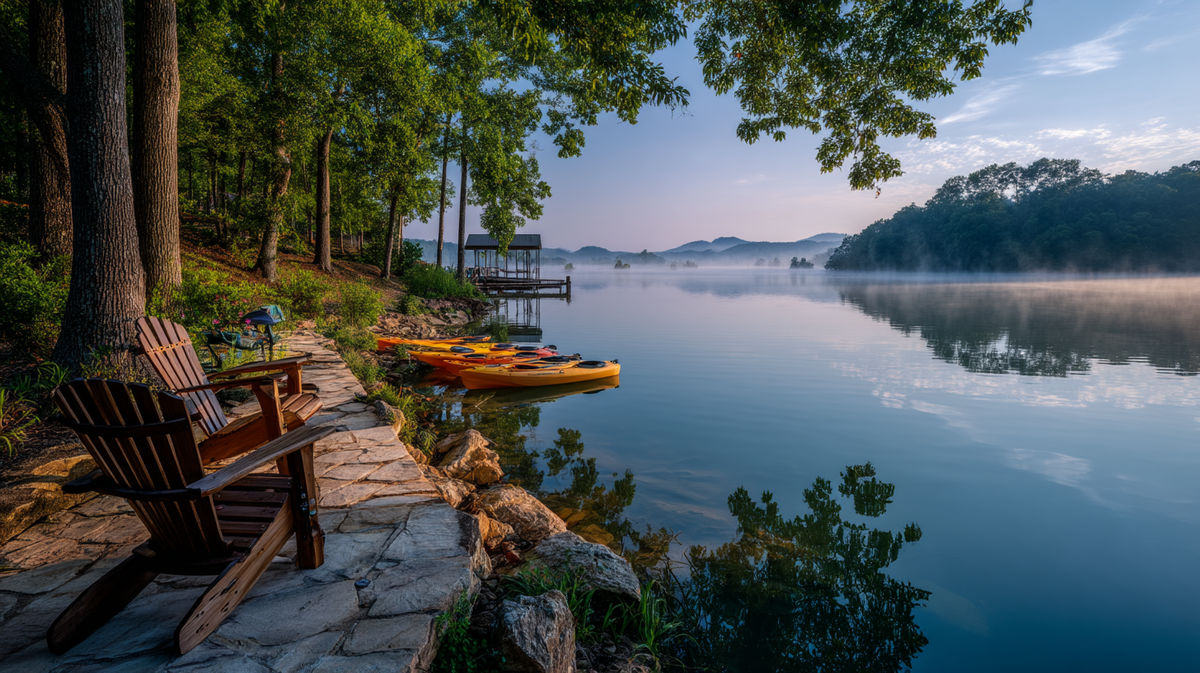
Every summer, when the sun breaks over the Smokies and filters through Douglas Dam, thousands of vacationers cruise I-40 looking for a place to stay that doesn’t feel like another cookie-cutter hotel in Gatlinburg or a cramped condo in Pigeon Forge.
They want a lake cabin with a dock big enough for two jet skis, a fire pit for late-night s’mores, and maybe a hot tub facing a mountain view that glows orange at sunset.
If you already own a home on Douglas Lake-or you’re browsing homes for sale on Douglas Lake, TN-you’re sitting on a rental goldmine.
The goal of this guide is to walk you through everything from understanding Tennessee’s newest short-term-rental rules to stocking the kitchen with shrimp-boil pots, so your place becomes a top-rated, family-friendly getaway that books out every weekend from Memorial Day to Labor Day.
What Makes Douglas Lake a Top-Rated Lake Vacation for Tourists
Natural Beauty and Scenery near the Smokies
Picture glass-calm coves reflecting purple Smoky Mountain ridges at dawn; then imagine walking twenty steps from the master bedroom to a private dock where a kayak waits. The shoreline around Lake Douglas is laced with hardwoods and hidden inlets, so even peak-season mornings feel serene.
Renters love that they can launch a paddleboard before breakfast, photograph osprey circling overhead, and still be back on the deck by 9 a.m. for coffee. For vacationers used to Gatlinburg traffic, that kind of stillness is half the draw.
Activities and Recreation
Douglas Lake covers roughly 30,400 acres, which translates into full-throttle fun for outdoor enthusiasts.
Jet-ski jousts in McGuire Creek, pontoon picnics near the French Broad River inflow, sunset fishing holes bursting with largemouth bass-the water is the main stage.
On land, eight public boat ramps, the scenic Cherokee Dam trail, and a handful of horseback-riding outfits add variety.
That recreation buffet means repeat bookings: families may start with a three-night stay, fall in love with the lake access, and re-book next summer for a full week.
Proximity to Other Popular Destinations
A half-hour drive drops renters into Dollywood’s roller-coaster queues or the eclectic eateries of Pigeon Forge; add ten more minutes and they’re sipping moonshine on Gatlinburg’s strip.
Knoxville’s downtown craft-beer scene is an hour west, while Forbidden Caverns hides fifteen miles east under English Mountain.
Guests can bounce from the calm of a Douglas Lake cabin rental to big-ticket attractions without burning a whole tank of gas.
Easy Access
I-40 and Highway 66 funnel vacationers directly to Sevierville, so visitors from Nashville, Atlanta, or Charlotte can make a Friday-night check-in before dark. For fly-ins, McGhee Tyson Airport (TYS) sits roughly sixty minutes away.
That accessibility keeps the booking window tight-people decide on a Thursday that they need a weekend getaway and can click “reserve” on your lakefront vacation rental by Friday lunch.
Why Your Douglas Lake Vacation Home Could Be a Great Rental Investment
Huge Visitor Pipeline Year-Round
Great Smoky Mountains National Park hit 12.2 million recreation visits in 2024-up 20 percent over the last decade-and those guests spent an estimated $2.2 billion in the gateway counties that ring Douglas Lake.
What matters for hosts is that those visitor waves no longer crest only in July. NPS data show that 55 percent of parks, including the Smokies, logged “above-average” traffic in February-June and again in October-December as travelers chased synchronous-firefly season, fall foliage, and Dollywood’s Christmas lights.
In other words, the “slow season” is shrinking: anglers arrive for March bass tournaments, spring-break families fill April, leaf-peepers spike October ADRs, and holiday festivals keep calendars flashing “Booked” through New Year’s.
For a Douglas Lake cabin, that means reliable demand almost every month, not just the classic Memorial-Day-to-Labor-Day crunch.
Strong Vacation Rental Economics
Data that backs up that demand.
AirDNA pegs Sevierville-area short-term rentals at roughly a 58 percent occupancy rate, a stout $381 average daily rate (ADR), and about $54,500 in annual gross revenue per listing. Just down the road, Pigeon Forge properties still clear $336 ADR with 53 percent occupancy and about $43,000 a year in revenue-even after a full decade of inventory growth.
Translate that to Douglas Lake: a lakefront three-bedroom that books 240 nights at $400 ADR would gross $96,000-roughly triple what a long-term lease at $2,000 a month would yield.
Factor in the tax advantages of depreciation plus the flexibility to block personal-use weekends, and the cap-rate math starts looking more like a downtown Knoxville multifamily than a single-family lake house.
Bottom line: inventory is limited, nightly pricing power is high, and real cash-on-cash returns remain some of the strongest in the Southeast’s vacation-rental corridor.
Plenty of Demand, Limited Competition
Sevier County counts roughly 4,600 active short-term rentals, but only a fraction sit directly on water.
A true Douglas Lake cabin with a private dock, hot tub, and game room instantly jumps into a scarce tier, letting you command premium pricing, especially on holiday weekends.
Recreation Magnet that Drives Repeat Bookings
Because renters can kayak, fish, and grill on the deck without leaving the property, the lake becomes their personal resort. Families return every year, chasing the same lake view and asking if the pool table is still in the loft.
Seasonality Works in Your Favor
Peak demand runs from the first warm week of May to the last splash on Labor Day, but angling tournaments in early spring, leaf-chasers in October, and Dollywood’s Smoky Mountain Christmas events extend the money-making months.
Owners often block January for personal use to avoid winter dock maintenance, then flip the calendar back to revenue mode by Valentine’s Day.
Understanding Local Airbnb/Rental Regulations in Tennessee
Douglas Lake straddles Jefferson and Sevier counties.
If your driveway falls on the Sevier side, you must apply for a Short-Term Rental Unit (STRU) permit, schedule an inspection, and renew each year; the county set a June 30, 2024 deadline for existing hosts. Jefferson County, by contrast, only requires a business license and remittance of lodging taxes.
No matter the county, Tennessee’s Short-Term Rental Unit Act says you can’t dodge city or HOA restrictions, so always read neighborhood covenants before taking your first booking.
Tax rules just tightened: effective July 1, 2025, the first thirty days of any stay are subject to local occupancy tax even if a guest books for two months. Airbnb will collect state sales tax and most local occupancy taxes automatically, but you must post your STRU permit number on every listing.
Last, Sevier County Fire Department now checks for posted evacuation diagrams, interconnected smoke alarms, and life-jacket counts during permit inspections-skip those, and your listing disappears until you pass a re-inspection.
Prepare Your Douglas Lake Cabin for Guests
Think of getting your place guest-ready like tuning up a boat engine before a long day on the water-you want everything humming so visitors can slip straight into lake-vacation mode.
Walk through the cabin as if you’ve just driven in from Knoxville at midnight: the porch lights should pop on, directions to the Wi-Fi jump out at you, and the sheets feel hotel-fresh.
Nail the little things now, and your Douglas Lake cabin will market itself after the very first checkout.
Non-Negotiable Safety Gear
Install linked smoke and carbon-monoxide alarms on every floor, place fire extinguishers in the kitchen and near grills, and hang a laminated lake-safety sign listing no-wake zones.
The county inspector will count USCG-approved life jackets on your dock; keep extras in child and adult sizes to avoid fines and bad reviews.
Core Comfort Basics Every Guest Expects
High-thread-count sheets, firm but cozy pillows, and blackout curtains in the master bedroom mean renters wake refreshed and ready for a day on the water.
Pair that with fast Wi-Fi and a 55-inch smart TV stocked with log-ins; lakes might be about unplugging, but rainy-day movie marathons sell five-star ratings.
Fully Equipped Kitchen
Vacationers want to shove eight filet mignons into a cast-iron skillet or boil five pounds of shrimp. Provide oversized pots, sharp chef knives, a spice starter kit, and enough wine glasses for a girls’ weekend. Label drawers-renters lose spatulas faster than fish jump.
Entertainment and Rainy-Day Backups
A pool table in the loft, a retro Pac-Man cabinet in the corner, and a shelf stacked with board games keep families happy when the Smokies toss an afternoon thunderstorm.
If you install arcade machines, tape a quick-reset cheat sheet to the back door so guests don’t call you at 11 p.m.
Douglas Lake Rental Amenities Must-Haves
Kayaks, paddleboards, and a floating mat scream “lake vacation.” Add a fish-cleaning table with running water and a chest freezer for fillets.
Print a two-page boating guide marking the marina for fuel, shallow-water hazards, and the cove locals love for sunset swims.
Outdoor Comfort
Rocking chairs on a wrap-around deck, a hot tub under Edison bulbs, and a fire pit with lakefront seating create that perfect vacation rental vibe. Spruce up landscaping with pet-friendly turf zones and keep a hose handy for muddy paws.
How to List Your Douglas Lake Home on Airbnb
Create an Airbnb Host Profile
Upload a smiling headshot-guests book humans, not corporations. In your bio, tell the story of the first time you watched a Douglas Lake sunrise or hooked a monster smallmouth. Authenticity builds trust and sets you apart from faceless property-management companies.
Create a Stand-Out Airbnb Listing
Use a professional photographer who shoots golden-hour exteriors and twilight dock shots.
Lead with a headline such as “Lakefront cabin with private dock, hot tub, and Smoky Mountain view-close to Pigeon Forge.” In the description, weave in SEO magnets like lakefront vacation rentals, Smoky Mountain getaway, and pet-friendly lake house without sounding robotic.
Tick every amenity box that applies-guests often filter for hot tub, game room, or pet-friendly.
Publish Your Listing
Sync calendars with Vrbo or Booking.com to prevent double bookings.
Turn on Smart Pricing for weekdays but manually raise rates during fishing tournaments, Dollywood’s Smoky Mountain Christmas, and fall-color peak.
Require a three-night minimum in summer to maximize revenue and reduce churn on cleaning crews.
Other Things to Know About Renting Your Smoky Mountain Rental
Cleaning, Maintenance & Turnover
Hire a local team that specializes in lakefront homes-they’ll know how to sweep spiderwebs off the dock lights and refill propane in the grill. Schedule HVAC and hot-tub service twice a year.
Stock two full sets of linens per bed and double on bath towels so turnovers run smoothly, even when laundry backs up.
Insurance & Liability
Ask your agent for a short-term-rental rider plus a $1 million umbrella policy. Mount grab rails on dock stairs, post “No Diving” signs, and include a waiver in the digital house manual. Photograph the property before every check-in for damage-claim protection.
Pricing Your Douglas Lake Cabin Rental
Use the local data as your launch pad, then let amenities and timing fine-tune the price. Sevierville-area cabins averaged about $380 a night and 58 % occupancy last year, while lakefront listings with a dock, hot tub, and game room routinely clear $600-plus ADR. Start near those benchmarks: add $40-$75 per night for “lakefront” and “private dock,” bump another $25 for a pool table or arcade, and shave 10 % if you’re off-water.
Set a three-night minimum from Memorial Day to Labor Day to reduce turnovers, then drop to two nights in the shoulder seasons to snag spontaneous getaways. Dynamic-pricing tools can auto-surge rates for bass tournaments, July 4th, fall foliage, and Dollywood’s holiday rush, while mid-week discounts in April and early November fill gaps.
Keep cleaning fees in line with the county average (≈$175 for a 3-bed) and fold dock upkeep into the nightly rate so guests see transparent pricing.
Review your calendar weekly: raise rates when the next 60 days are over 70 % full; trim them inside a two-week window to catch last-minute bookers.
Dialed-in like this, a three-bed lakefront cabin can gross well over $50-$60k a year-multiple times a long-term lease-while still leaving weekends for your own lake days.
Ask ChatGPT
Beyond Airbnb-Marketing & Repeat Stays
Create an Instagram reel showing sunrise paddleboard runs and tag #DouglasLakeVacationRentals.
Offer previous guests a ten-percent loyalty code or a free guided tour on a pontoon next visit. Partnerships with local kayak-rental companies or petting-zoo operators can add packages that justify premium pricing.
Secret Tips from Airbnb Hosts
Keep two paddleboards instead of one-couples love matching adventures. Leave labeled life jackets in every size from toddler to XXL.
If no one is checking in the same day, message departing guests at 8 a.m., offering a late checkout for a small fee. You’ll bank goodwill and sometimes an extra hundred dollars.
The Bottom Line
A Douglas Lake house blends Smoky Mountain scenery with lake-life perks, drawing vacationers who crave both serenity and easy access to Dollywood thrills.
Secure the proper STRU permit, post evacuation plans, stock the kitchen and dock with thoughtful amenities, price dynamically around peak weekends, and market beyond Airbnb.
Do that and your cabin on the lake can pay its own mortgage, fund dock repairs, and still leave a few serene weekends each year for your family.
FAQs About Putting Up Your Douglas Lake Home on Airbnb
Do I need a permit to rent my Douglas Lake house?
Yes. Homes in Sevier County must hold a Short-Term Rental Unit permit and pass an annual inspection; Jefferson County currently requires only a business license, but both counties enforce occupancy tax collection.
What taxes does Airbnb collect for me?
Airbnb remits Tennessee state sales tax and most county hotel-motel taxes automatically. Starting July 1, 2025, the platform will also collect local occupancy tax on the first thirty days of every stay, regardless of length.
How much can I charge per night in peak season?
Lakefront homes with a dock, hot tub, and game room typically command $350-$450 a night, in line with AirDNA’s average daily rate near $336 for similar properties in Pigeon Forge.
Is Douglas Lake pet-friendly?
Many Douglas Lake cabin rentals welcome dogs, and parts of the Great Smoky Mountains National Park allow leashed pets on specific trails. Listing “pet-friendly” often boosts shoulder-season occupancy.
How does my home’s value affect rental ROI?
In May 2025, the median listing price in Dandridge’s 37725 ZIP code hovered around $599,900.
Securing $40-$50k in annual gross rents delivers a competitive cap rate compared with long-term tenants, especially when you factor in owner-use flexibility.
Everything to Know About Douglas Lake, TN Water Levels
Douglas Lake Overview
Where is Douglas Lake located?
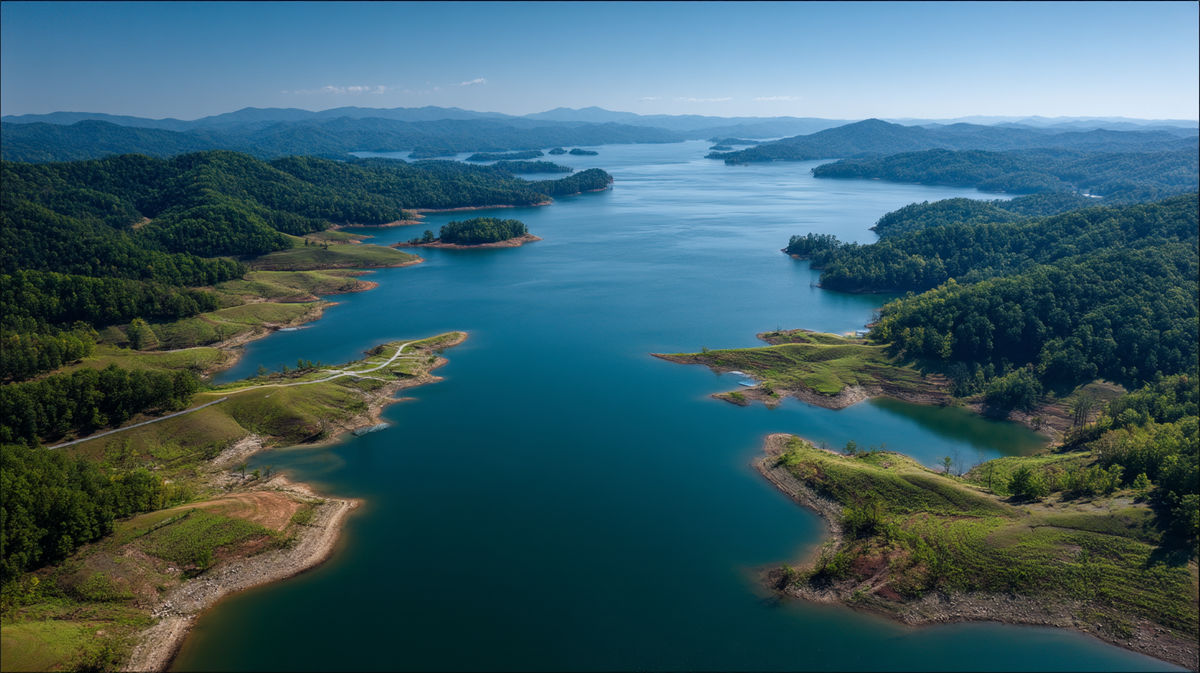
Douglas Lake in Tennessee sits in East Tennessee’s rolling foothills just west of the Great Smoky Mountains, stretching 60 miles along the French Broad River before that river joins the Holston to form the Tennessee River.
The 30,400-acre Douglas Reservoir’s serpentine shoreline winds past camp sites, picnic spots, and small towns that market themselves as a laid-back destination for visitors chasing sunrise views over blue water and green ridges.
Why was Douglas Lake created?
The Tennessee Valley Authority built Douglas Dam in 1942, at World War II speed, to produce hydropower, curb downstream flooding, and keep an eight-foot navigation channel open for barge traffic on the Tennessee River.
Four generating units inside the hydroelectric facility still turn runoff into electricity every day, proving that the control system first envisioned for flood storage and overall water control still pulls its weight in the current day.
Douglas Lake Recreational Activities
Because the lake level rises high enough each spring to flood coves and backwater sloughs, anglers rave about striped bass and crappie fishing.
Summer brings a flotilla of boats-everything from kayaks to wake-surf rigs-plus shoreline Recreation staples like camp grills, beach chairs, and quick picnic breaks between swims.
It’s no surprise that two million visitor days are recorded here annually, with Douglas Lake water level forecasts guiding every boat launch.
Why Do Douglas Lake Water Levels Fluctuate?
Seasonal Patterns Explained (Spring vs. Summer vs. Winter)
Tennessee Valley Authority (TVA) targets a summer pool of roughly 990 feet above sea level, then lets the water rise a few extra feet in late spring when precipitation and snowmelt out of the Smoky Mountains pour in.
To make room for winter storms, the agency slowly lowers the elevation-often 25 feet from summer to winter-starting in early October.
That seasonal drawdown exposes red-clay flats, reduces evaporation rates in cold weather, and resets the shoreline for next year’s rise.
Tennessee Valley Authority (TVA) Management and Flood Control
Douglas Dam’s release schedule is the linchpin of flood control for the broader Tennessee Valley.
Water stored behind the dam through the foothills can be dumped in controlled bursts to protect downstream towns, support navigation, and feed hydropower generation when the grid needs a jolt.
Storied records show that keeping several hundred thousand acre-feet in reserve for flood storage has prevented numerous high-water emergencies.
Impact of Weather: Rainfall and Drought
Daily lake level swings can spike after heavy rainfall or tumble lower in drought, but the long-term historical chart shows a remarkably consistent pattern thanks to the TVA’s data-driven management.
If East Tennessee suffers a dry spring, managers may throttle generation and hold extra storage; if runoff is excessive, they’ll bump release volumes to maintain safety.
How Water Levels Affect Recreation and Property
Boating and Dock Access
Launch ramps and private docks are built with seasonal fluctuation in mind, yet lower winter water means some boaters may have to push off from deeper ramps or wait until spring.
Always watch your prop near shallow points, and remember that safety buoys shift as the lake level changes.
Fishing and Wildlife Habitats
Drawdown uncovers mud flats that bake in the sun, creating fertile feeding grounds when the lake refills. That cycle sustains robust fisheries even during winter, though anglers may need longer runs to reach productive coves once levels drop. Downstream releases also influence river fishing opportunities below the dam.
Lakefront Homes and Property Values
Pull up any MLS feed for homes for sale on Douglas Lake and you’ll spot roughly 160 waterfront listings around Dandridge alone, with a median ask near $600,000 and typical homes changing hands in just 57 days.
That premium hinges on dock rights: a floating slip that stays usable even when the lake level drops keeps a price sky-high, while a fixed pier stranded by October’s drawdown drags it down fast.
Strong short-term-rental demand and steady in-migration keep values climbing, so smart buyers always check TVA shoreline permits and projected water curves before they write an offer.
When Are Water Levels Highest and Lowest?
Typical Timeline of Annual Drawdown
Peak elevation usually arrives in late June; then a gradual release begins in August, accelerating by October as managers make room for winter rains.
The lake hits its lowest mark-often 960-965 feet-by mid-January before it starts to climb again.
Peak Season for Water Activities
Mid-May through Labor Day brings the deepest water, warmest surface temps, and best conditions for tubing, jet-skis, and sunrise paddleboard sessions.
That’s the time when the reservoir feels less like a flood-control asset and more like a pure recreational playground.
How to Check Current Douglas Lake Water Levels
TVA Lake Level Monitoring Tools
The TVA lake-info portal posts observed elevation, predicted data, and generation releases, updated periodically throughout the day, giving real-time feet-above-sea-level readings you can trust on the drive to the ramp.
Best Mobile Apps and Websites
Grab TVA’s Lake Info app for official elevation and release times straight from the source.
Third-party choices like RiverApp, Rivercast, and LakeMonster tap USGS gauges and send push alerts when levels jump-handy for last-minute ramp checks.
Need a quick web glance? DouglasLake.info refreshes its chart several times a day, the USGS National Water Dashboard maps every gauge in real time, and TWRA’s Generation Schedules page lists planned dam releases so you’re never surprised by a surge.
Tips for Visitors and Homeowners
Boating Safety During Low Levels
When Douglas Lake drops to its winter pool, reefs, old fence rows, and even forgotten bridge pilings lurk just inches beneath the surface. Keep your trim high, throttle back near points and island tips, and use the river-channel markers-red triangles on the left heading upstream, green squares on the right-to stay in deep water.
TVA can crank up generation in minutes, so monitor the Lake Info app while you’re on the water; a sudden release can raise currents at the Douglas Dam tailrace and tug floating debris loose.
Finally, treat early-spring and late-fall outings like cold-water sessions: wear a life jacket the whole run, stash a dry change of clothes in a waterproof box, and file a float plan with someone on shore. A little prep makes winter drawdown just as fun-and much safer-as peak-summer cruising.
Planning Around Seasonal Fluctuations
Schedule dock maintenance for winter drawdown, book campsites early for spring rise weekends, and keep an eye on rainfall totals-big storms can bump elevation within hours.
Final Thoughts
Understanding Douglas Lake water level behavior turns casual trips into well-planned adventures and protects lakefront investments.
Check the data often, respect TVA release alerts, and you’ll enjoy everything this East Tennessee reservoir offers-rainfall or drought, winter drawdown or summer peak.
FAQ’s About Douglas Lake, TN Water Levels
How far can the lake drop between seasons?
Levels typically swing about 25 feet from summer to winter, a change that protects downstream flood control while balancing hydropower generation.
Does Douglas Dam generate electricity every day?
Yes-four generating units spin whenever demand and water supply line up, turning stored water into reliable electricity for the Tennessee Valley.
Is boating safe during winter drawdown?
It is, but shallow coves become mud flats; stick to the main river channel and observe navigation markers for safety.
Where can I view a historical chart of lake levels?
TVA’s Lake Info site archives daily elevations so you can study long-term historical patterns before planning construction or shoreline improvements.
What month offers the best fishing conditions?
Many locals swear by spring, when rising water floods new cover and sparks a feeding frenzy, though summer night fishing around lighted docks can be just as productive.
Cherokee Reservoir, TN Water Levels: What You Need to Know
Cherokee Lake Overview
Where is Cherokee Lake located?
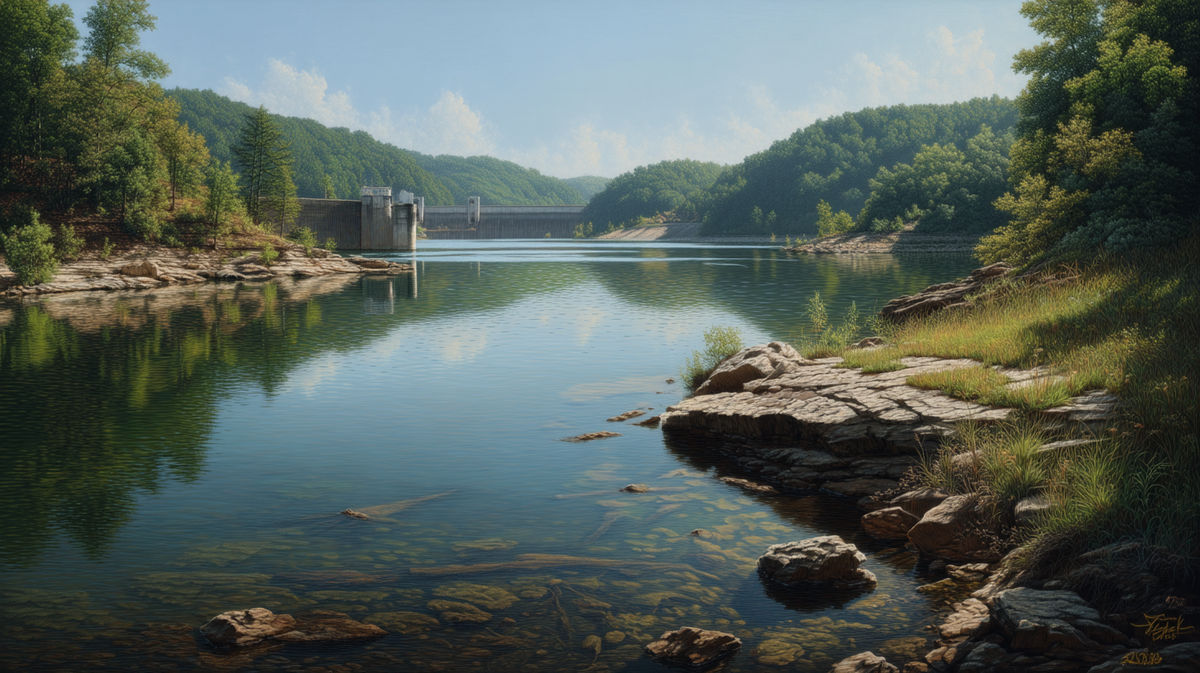
Lake Cherokee-the locals’ shorthand-winds 59 miles along the Holston River in East Tennessee, skirting Jefferson, Grainger, and Hamblen counties. Its coves sit just forty-odd minutes from Knoxville, so the growing population in the city treats the lake as an easy playground any day of the week.
Why was Cherokee Lake created?
The Tennessee Valley Authority finished the Cherokee Dam in 1941 to make hydro power, tame floods, and store water. Those three goals still drive every water-level change you’ll see on the official table or map.
Things to Do on Cherokee Lake
Sun-soaked Saturdays usually start at one of the marinas-Black Oak or German Creek-where you can gas up, snag a breakfast burrito, and slide into 463 miles of shoreline.
When the pool’s near full, you’ll see pontoons towing kids on giant inflatables, wake-surfers carving flat water behind a new-school surf boat, and even a couple of small-sail regattas catching the afternoon breeze. Stick around after dark: many docks light up with live music and a rolling “dock-and-dine” vibe that feels more Caribbean than East Tennessee.
Anglers rave about the lake’s healthy bass and striper population, especially during steady generation releases out of the dam. Spring floods push baitfish into coves; by midsummer the fish follow shad schools out over deeper humps, and your sonar lights up like a Christmas tree.
Cooler weather? Locals switch to night crappie rigs or chase catfish below the spillway-there’s always a bite somewhere if you match your plan to the current elevation and weather pattern.
Not everything happens on the water. Hike the Overlook Trail at Panther Creek State Park for a drone-worthy view of Lake Cherokee, spread a picnic blanket near the dam where TVA posts a giant elevation gauge, or wander newly exposed sandbars during winter drawdown for arrowheads and old bottle finds.
Grab the free TVA recreation map, watch that daily level table, and you’ll discover a new adventure every time the lake changes by even an inch.
Understanding Water Level Changes
How the Tennessee Valley Authority (TVA) Manages Levels
Think of Cherokee as a seasonal storage battery. TVA fills it toward full pool in spring, then draws it down in autumn for flood pool space while spinning power through the turbines.
Seasonal Patterns: Summer vs. Winter Levels
Full pool sits at 1,073 feet above sea level; winter target drops to about 1,030, so the lake swings roughly 40 feet each year, sometimes an extra inch or two depending on weather.
Factors Affecting Fluctuations (Rainfall, Drought, Energy Needs)
Heavy rain, drought, or a big power schedule can change the current elevation quickly. TVA leans on decades of data and strict regulation guides to predict the schedule.
When Are Water Levels Highest and Lowest?
Typical Timeline of Annual Drawdown
Levels peak around late May and start a slow drop by mid-August, hitting winter pool near New Year’s Day unless unusual weather forces a faster change.
Peak Season for Water Activities
Memorial Day through Labor Day offers the safest boating window: deep ramps, long days, and predictable generation releases that keep the river tail cool.
How to Check Current Cherokee Lake Water Levels
TVA Lake Level Monitoring Tools
The TVA Lake Levels site and Lake Info app show real-time data, a two-day forecast, and a historical chart for quick comparison.
Best Mobile Apps and Websites
Skip the guesswork and check the TVA Lake Info app-it shows the current elevation, hourly generation releases, and a handy historical chart.
For bigger screens, CherokeeLake.info layers those numbers on an interactive map and emails you when water drops or rises more than an inch.
Anglers swear by the Navionics Boating app: overlay contour maps, then time your spots against TVA’s release schedule even if cell service fades. And keep the classic browser bookmark-TVA’s Lake Levels page-for daily storage notes and flood-control warnings.
How Water Levels Impact Recreation
Boating and Marina Access
When Cherokee Lake’s pool hovers near full, even deep-draft cruisers glide off the most remote ramps; drop the elevation below about 1,055 feet, and you’ll notice a few skinny launches at German Creek or Black Oak flashing temporary “low water” signs.
Marinas extend their floating walkways, but private docks can go dry fast, so keep an eye on the TVA update before you hitch the trailer. Mid-drawdown exposes stump fields that weren’t there last week-hug the marked channel and throttle back around points you don’t know by heart.
Fishing Conditions
A rising lake scatters baitfish into flooded brush, so spring bass pound spinnerbaits in water barely deep enough to wet your ankles. Once TVA starts daily generation releases, forage funnels toward river ledges, and stripers blitz the boils below the dam-prime time for live bait at dawn.
By winter’s lowest pool, crappie stack tight to standing timber and submerged roadbeds, while catfish patrol the deep holes at a predictable depth you can practically set a clock (or sonar) to.
Swimming and Shoreline Use
High water means sandy pockets disappear under a glassy surface that warms into the 80s by mid-July-perfect for a lazy float or a cannonball off a rental pontoon.
As the lake draws down, those same beaches grow by the foot, revealing red-clay flats that get slick after rain; pack water shoes if you’re visiting after Labor Day.
Remember: TVA can open turbines without warning, so stay clear of the dam and watch for sudden current changes signaled by horns.
Seasonal Tips for Lake Visitors
June through early August gives you the longest daylight, stable elevation, and the least debris-ideal for big-water sports and sunset cruises.
In shoulder seasons, plan your day around TVA’s generation schedule: paddleboards at daylight before the release, then chase the rolling boil for striper after lunch. Cold-weather explorers should dress for wind that whistles across half-empty coves, and always check the forecast-one heavy rain can bump the water level several inches overnight.
Impacts on Local Communities & Real Estate
Waterfront Property Considerations
Before you fall for those sunset views and vacation rental income, remember Cherokee Lake swings nearly 40 feet between full pool and winter drawdown. Walk any lot at the lowest winter elevation to be sure a future dock (and prop) will still have at least three feet of water. TVA must sign off on every pier, lift, and shoreline wall through its Section 26a permit process, so have the paperwork started early-buyers of homes for sale on Cherokee Reservoir expect it.
Prices shift by county: Jefferson City’s south-shore market shows a $599,900 median and roughly $247 per square foot with homes selling in around 39 days. Up in Grainger County, listings cool to a $435,000 median price and stay on the market closer to 80 days.
Check FEMA’s flood-risk map, too; houses sitting below the dam’s official flood-pool line may need extra insurance. Finally, double-check well depth and septic placement, because a sudden storage release can nudge groundwater levels overnight.
Do that homework and you’ll enjoy lakefront living year-round, not just when the pool is high.
Flooding Concerns and Drought Risks
Fall drawdown frees up enough storage to blunt a major flood, but severe drought can keep the lake fifteen feet low, stretching marina gangways and testing private wells.
How Locals Prepare for Water Level Changes
Marinas post daily readings, fishermen retune electronics to the new elevation, and shoreline owners slide lifts as the inch-by-inch change marches on.
Final Thoughts
Cherokee Lake water level knowledge keeps your boat floating, your fish biting, and your real-estate plans realistic. Grab reliable information, watch the weather, and you’ll enjoy the lake in any condition.
FAQ’s About Cherokee Lake, TN Water Levels
How much does the lake drop in winter?
Usually 30-40 feet between full pool and winter pool, depending on rainfall and power demand.
Where can I see the current elevation?
The TVA Lake Levels page and CherokeeLake.info give a real-time update and the exact foot-and-inch reading.
Can TVA predict when the lake hits full pool?
Yes, operating guides forecast the date, but extreme weather can change the schedule without warning.
Is it safe to boat near the dam during generation releases?
It’s legal but strong currents demand caution-follow TVA safety signage and wear a life jacket every time.
Does lower water hurt fish?
TVA maintains minimum flow to protect fish populations, and many anglers like the predictable winter pattern.
The Ultimate Guide to Cherokee Lake, TN: Everything You Need to Know
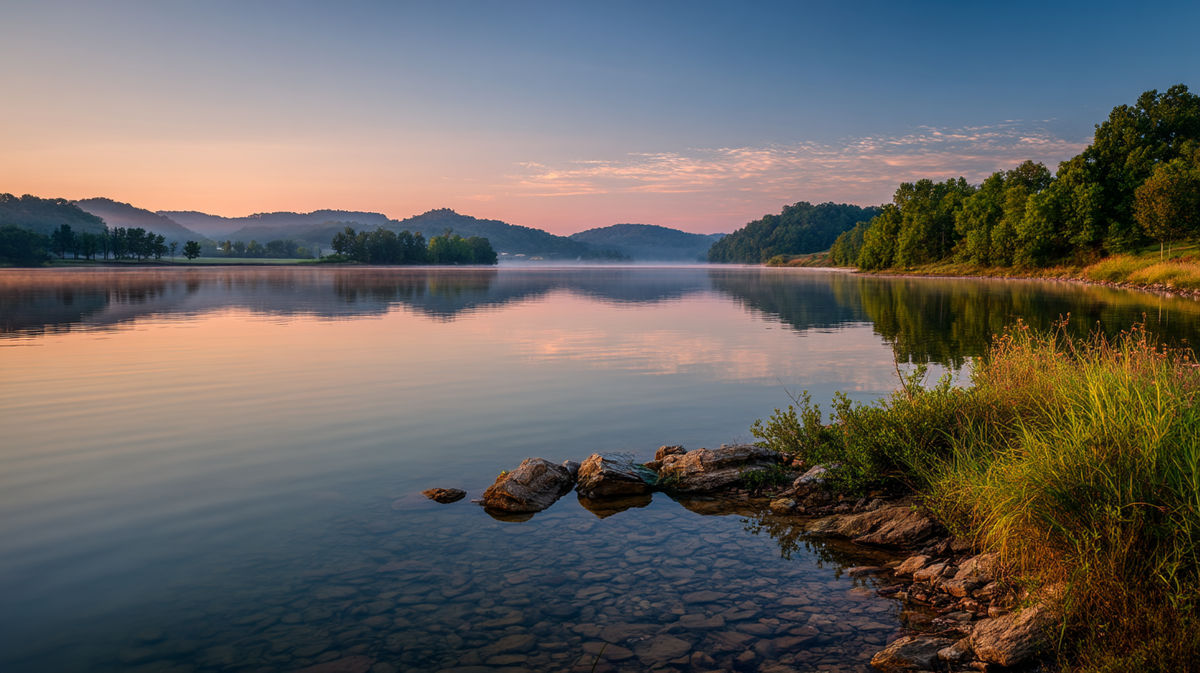
Introduction to Cherokee Lake
Why Visit Cherokee Lake?
Cherokee Lake is a majestic lake, a beautiful lake known for its clear blue water, laid-back vibe, and easy drives from Knoxville or Jefferson City.
This majestic lake, located near the city of Jefferson City, feels worlds away once you’re skimming past coves in a boat, yet you’re still close enough to grab tacos in town.
Whether you’re chasing stripers at dawn, scouting homes for sale on Cherokee Lake, or just hunting the perfect lakeside retreat, the blend of scenery, history, and friendly East TN hospitality keeps folks coming back.
History & Formation of the Lake
The construction of Cherokee Dam-one of the big wartime builds for the Tennessee Valley Authority (TVA)-wrapped up in 1942, backing up the Holston River to create what locals still call Cherokee Reservoir. The new hydroelectric plant did double duty: churning out power for WWII aluminum plants and taming spring floods.
Today the lake sprawls across roughly 30,300 surface acres with about 393 miles of shoreline – plenty of space for houseboats and herons alike.
Things to Do at Cherokee Lake
Fishing
Local anglers rave about the bass fishing-largemouth, smallmouth, and hybrid black bass-but the fish population doesn’t stop there. Expect crappie, walleye, sauger, saugeye, and the usual rough-fish species too.
Spring and fall see the hottest action, yet winter jigging under the dock lights can be sneaky-good thanks to the lake’s year-round water.
Remember to check TWRA regs and size limits before you cast.
Boating and Water Sports
With multiple public access areas, deep lake basin stretches, and plenty of commercial boat docks, Cherokee is a playground for pontoons, wake boats, and kayaks.
TVA manages the water level so you’ll typically have enough draft from March through October, and even winter pool leaves room for exploring long creek arms. Feel free to tube, ski, or try the latest foil board-just keep an eye on the TVA release schedule for sudden drops.
Swimming and Beaches
You won’t find miles of manicured sand, but that clear blue water invites quick dips at day-use spots like the TVA public access areas near Bean Station or the pocket beach inside Panther Creek State Park.
Shallow coves warm fast in summer, perfect for toddlers splashing off the shoreline of Cherokee Lake while you keep a cooler in the shade.
Hiking and Nature Trails
Panther Creek State Park alone dishes up 17 signed trails-more than 30 miles that snake from cedar glades to ridge crests overlooking the shoreline of Cherokee Lake. Loops like Old Farm (easy) and Hunt Knob (moderate) let you cobble together anything from a 20-minute leg-stretcher to an all-day ramble.
If you only lace up for one trek, make it Point Lookout Trail. The 1.9-mile out-and-back climbs to 1,460 feet, serving up a hawk’s-eye sweep of the lake basin and clear blue water dotted with tiny islands-a serious wow for minimal calf burn.
Families pushing strollers or bikes gravitate to the Cherokee Dam Loop Trail, a paved, two-mile greenway that circles picnic lawns and skirts the mile-long dam face-perfect for sunset laps when the TVA turbines quiet down.
History buffs shoulder packs for Warpath Ridge, tracing a fragment of the old Great Indian Warpath once trodden by Daniel Boone. Interpretive signs pepper the route, and spring wildflower carpets plus bald-eagle flyovers turn every switchback into a photo op.
Wildlife Watching and Photography
The lake’s mix of shallow coves, forested ridges, and open reservoir water draws a variety of waterfowl and neo-tropical songbirds. Early mornings are prime for lensing herons stalking the shallows, while twilight reveals foxes and raccoons that have long inhabited the area. Bring a long lens and patience-nature here still feels wild.
Best Places to Stay Near Cherokee Lake
Lakefront Cabins & Vacation Rentals
Private lakefront homes and rustic chalets dot the coves-many listed on Airbnb or the local vacation rental sites. Expect boat-house slips, sweeping decks, and sunset firepits.
Campgrounds & RV Parks
For hassle-free hookups and lakeside sunrises, head to the Cherokee Dam Campground just outside Jefferson City-it’s TVA-run, so you’re steps from the boat ramp and a tiny swim beach.
Hikers gravitate to Panther Creek State Park’s campground, where wooded pads back right up to 30-plus miles of trails.
Want a private-marina vibe? Greenlee Campground & RV in Bean Station links coves, cabin rentals, and covered slips, while German Creek Resort & Marina pairs RV pads with pontoon rentals and a dockside café.
Budget travelers can sprawl under the oaks at family-run Cherokee Lake Campground near Mooresburg, where weekend ice-cream socials match the laid-back East TN pace. Reserve early-holiday spots on this majestic lake disappear fast.
Hotels & Resorts in the Area
If you need chain comforts, Morristown (15 minutes south) offers familiar brands off US-25E, while boutique inns in Jefferson City and Bean Station provide cozy porches overlooking the water.
Tips for Visiting Cherokee Lake
Local Dining & Shopping
Start the day with a pour-over at Mossy Creek Roasting Company in Jefferson City-the roasters crank out fresh beans every morning, and the adjacent café plates up cinnamon-roll French toast on weekends. If you’re rolling in from the Knoxville side, swing through the drive-thru at Dutch Bros Coffee for a Rebel energy drink before you hit the lake.
Lunch usually means water views: grab fish-and-chips or shrimp tacos at Off The Hook Lakeside Bar & Grille at Black Oak Marina, where live music drifts across the slips all summer long.
Prefer something wood-fired? Patriot Wood Fired Pizza in Rutledge turns out blistered Neapolitan pies that taste like a vacation in each slice.
In Morristown, locals swear by Redbud Deli for scratch-made paninis and by the 70-year-old icon Little Dutch Restaurant for meat-and-three comfort plates. Craving down-home? Slide into a booth at Lisa’s Country Kitchen and order the catfish special.
When it’s time to shop, Morristown’s College Square Mall packs 50-plus national stores for rainy-day browsing, while the historic Skymart district downtown-an elevated, second-story sidewalk lined with boutiques, breweries, and antique shops-offers a one-of-a-kind stroll you won’t find anywhere else in East TN.
Safety and Local Rules
TVA posts daily generation schedules and water level forecasts-check before anchoring overnight or parking on gravel bars. Life jackets are required for kids under thirteen, and boat docks must stay within TVA setback limits.
Events & Festivals Around Cherokee Lake
Annual and Seasonal Events
Spring kicks off with the sweet scent of berries at the WCRK Strawberry Festival in Morristown each mid-May-live bluegrass, arts tents, and enough shortcake to fuel an afternoon paddle.
Summer belongs to fireworks and floats. On July 3, boats raft up near Cherokee Dam for Morristown’s lake-side Freedom Fest, capped by a dusk fireworks finale that booms across the water.
Two weeks later, tens of thousands descend on Rutledge for the Grainger County Tomato Festival-think heirloom tastings, “Tomato Wars” sling-shots, and free concerts that spill past sunset. For pure lake flair, the “Fur-Eedom Floats” boat parade launches from Cherokee Lake Retreat every first Saturday in July, awarding the most over-the-top deck decor while funding local pet rescues.
Fall swaps bikinis for hoodies as hot-air balloons drift over the coves during the Lakeside of the Smokies Balloon Fest, the last weekend of October. Evening “balloon glows” light up the shoreline like giant jack-o-lanterns, and a Nine Lakes wine garden keeps adults toasty.
Winter may drop the TVA pool, but holiday spirit rises: marinas string thousands of LEDs for floating light shows, downtown Morristown rolls out carriage rides, and local churches host lakeside nativity hayrides-proof that Cherokee’s calendar never really hibernates.
Fishing Tournaments
Weekend bass circuits and charity crappie events launch from public access areas like German Creek Marina, boosting local tourism and conservation coffers.
Living Near Cherokee Lake
Cost of Living
Along with Tennessee’s zero state income tax, both lake counties keep property levies modest-Jefferson County’s newly set rate sits at $1.43 per $100 of assessed value while Grainger County’s effective take hovers near 0.59 percent of market value, noticeably under the national norm.
Groceries and utilities trend roughly 8-10 percent below the U.S. average, so a move to this lakeside retreat usually means more boat-gas money than bill shock.
Crime Rate and Safety
Violent-crime tallies linger in the single digits-about 4 incidents per 1,000 residents in Jefferson County-while property crime averages 13 per 1,000, with most petty thefts clustered around highway corridors rather than quiet coves.
TVA patrols main-channel marinas on summer weekends, and county deputies run extra lake-access sweeps during peak season, keeping night anglers and dock lights feeling secure.
Cherokee Lake Real Estate Overview
Inventory pivots with the seasons, yet Zillow still shows 1,200-plus Cherokee Lake-tagged listings statewide, and county median sale prices range from $409,000 in Grainger to $499,000 in Jefferson.
Expect a mix of 1970s A-frame cabins, new-build Craftsman cottages, and the occasional modern farmhouse tucked behind wrought-iron gates.
Buying a Home or Cabin on the Lake
Lakefront lots require TVA sign-off for new boat docks, so budget a 45- to 60-day permit window and be ready to show septic plans if you’re outside municipal sewer.
Deep-water shoreline brings premium pricing and year-round water under the dock; second-tier “lake-access” homes save six figures yet still grant use of neighborhood slips.
Short-term rental rules are friendly-summer Airbnb cabins with private ramps routinely gross over $40,000 per season.
Current Real Estate Trends & Pricing
Through spring 2025, Grainger County homes go under contract in about 51 days, while Jefferson’s hotter market pushes many waterfront cottages to pending within a month.
Price-per-square-foot averages hover around $230 for updated lakefront, and vacant interior lots under an acre still pop up for under $50,000, though those bargains rarely last a week.
Other Things to Know About Living on Cherokee Lake
Blazing-fast fiber covers 98 percent of Jefferson City, and satellite fills the remaining hollows, so remote workers stream meetings just fine.
Regional healthcare is anchored by Morristown-Hamblen Healthcare System’s six specialty centers 20 minutes south of the dam.
Kids feed into Jefferson or Grainger County public schools, and Knoxville’s big-box shopping and McGhee-Tyson flights sit roughly 45 minutes down I-40-close enough for a city fix, far enough that night skies still sparkle over the clear blue water.
When to Visit Cherokee Lake
Seasonal Guide
Spring means dogwoods blooming and schooling black bass; summer is all about tubing and nightly dock lights; fall paints Clinch Mountain in reds while crappie pile onto brushpiles; winter? Quiet coves are perfect for eagle watching and campfire s’mores.
Weather and Lake Levels
Expect humid highs around 88°F in July and crisp 45°F afternoons in January. TVA’s daily updates show how generation at the dam affects depth; plan ramp choices accordingly.
Final Thoughts: Why Cherokee Lake is a Hidden Gem in Tennessee
From its WWII-era construction of Cherokee Dam to today’s sunrise paddles, this slice of East Tennessee blends history, recreation, and community. Whether you’re chasing trophy stripers, scouting a campground, or touring homes for sale, you’ll find the slower pace contagious.
Give Cherokee a weekend-or a lifetime-and see why locals whisper it’s still the most underrated reservoir in the Volunteer State.
FAQ’s About Cherokee Lake, TN
Is Cherokee Lake part of the Tennessee River system?
Yes. The Holston River feeds the lake; just downstream, it meets the French Broad, and the two rivers converge north of Knoxville to form the Tennessee River.
Can I build a private dock?
Possibly. TVA issues permits for new boat docks based on shoreline classification, water depth, and neighbor spacing. Always verify before you buy land.
How deep is the lake?
Depths average about 30 feet, with the old river basin plunging past 150 feet near the dam.
Are there good spots for walleye and sauger?
Absolutely-late-winter jigging near the upper lake basin and river channels produces quality walleye and sauger on overcast days.
What’s the story behind the name “Warpath”?
Local lore ties the moniker to Daniel Boone’s travels along the Great Indian Warpath, portions of which skirt today’s TVA Warpath Recreation Area on the north shoreline.
Fun Things to Do Near Douglas Lake, TN
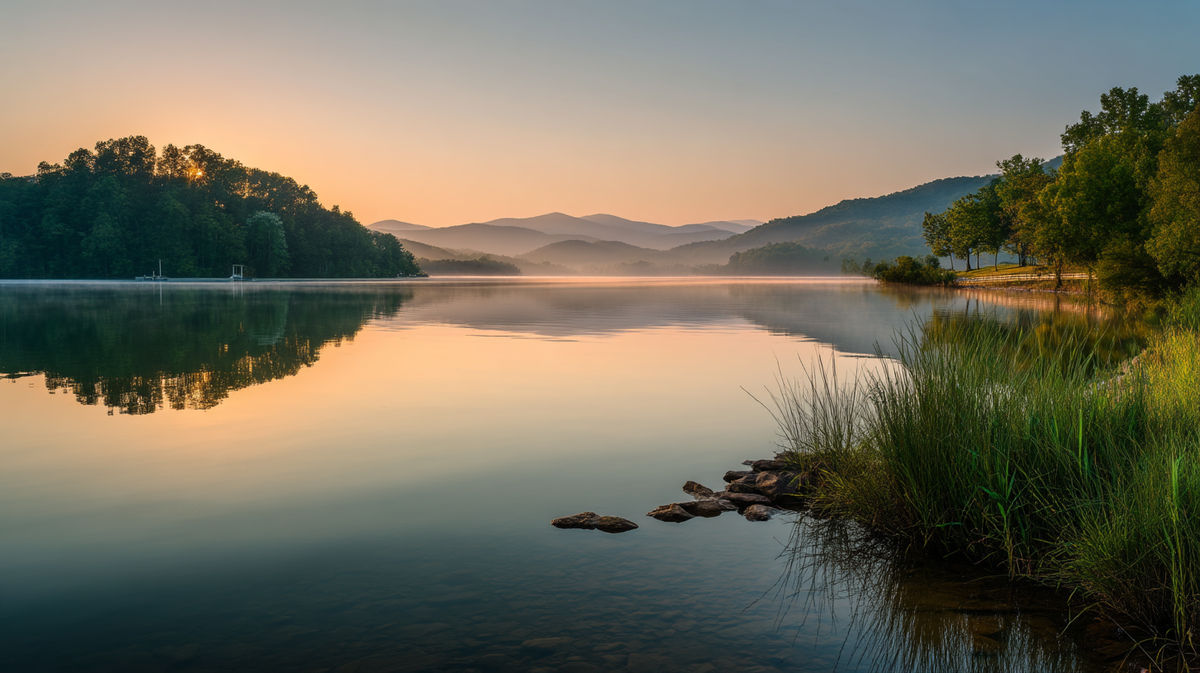
Discovering Douglas Lake
Overview of Douglas Lake
Douglas Reservoir-locals just call it Douglas Lake-sprawls across 28,420 acres with about 513 miles of shoreline in the foothills of the Great Smoky, just 32 miles upriver from Douglas Dam on the French Broad.
Built by the Tennessee Valley Authority (TVA) in 1943 for hydro power and flood control of the Tennessee River, the dam rises 201 feet and still cranks out renewable energy today.
Getting Around Douglas Lake
It’s easy to find a day at Douglas Lake because good roads tie the Town of Dandridge to Pigeon Forge and Gatlinburg in under 30 minutes.
A string of public launch ramps, TVA day-use areas, and full-service spots like Mountain Cove Marina circle the lake, so whether you tow your own boat, snag a pontoon boat for a quick rental, or just paddle a kayak, you’re never more than a few minutes from the water.
Water Activities
Boating, Paddleboarding & Kayaking
Douglas Lake offers every flavor of boat rental imaginable.
Outfitters such as Smoky Mountain H2O Sports line up pontoons, jet skis, and stand-up paddleboards, while Smoky SUP will literally drop a board at the cove of your choice so you can explore the lake at sunrise before the crowds show.
A slow cruise reveals breathtaking Smoky Mountain views, hidden coves perfect for a swim, and lakeside cabins that make you wish you owned a lake house of your own.
Fishing
Ask any angler and they’ll tell you Douglas Lake is a top spot for fishing; the Tennessee Wildlife Resources Agency lists it among the state’s best for crappie and largemouth bass thanks to rich baitfish in the tributaries of the Pigeon and French Broad.
Daily creel limits (15 crappie, five bass) keep the resource healthy, and spring draws pros chasing big tournament bags
Early mornings often see boats idling through fog while Douglas Lake fishing fans whisper about where the largemouth are staging.
Swimming
On a hot Smoky Mountain vacation day, nothing beats a splash in the clear waters of Douglas Lake.
Popular swim beaches sit near Douglas Headwater Campground and Mountain Cove Marina, and many private rentals on Douglas Lake include their own docks for an easy day on the water.
With TVA keeping summer lake levels up, you’ll have room to float, paddle, or just hang a hammock at the water’s edge.
Watersports
Crave speed? Grab a jet ski or waverunner from Vet Adventures and carve big figure-eights while soaking up Smoky Mountain views. Beginners stick closer to shore, but seasoned riders blast across the entire lake-just watch for wake zones near Douglas Dam and the marinas.
Land Activities
Birdwatching
The floodplain coves near Douglas Dam host migrating waterfowl all winter, while summer brings ospreys and the occasional bald eagle. Early mornings reward patient spotters with songs echoing over this beautiful lake in East TN.
Picnic Areas and Scenic Views
Jefferson County nicknames the region “Lakeside of the Smokies” for good reason.
Pull off Highway 139 at sunset for sweeping views of Douglas Lake and the distant Great Smoky Mountains National Park, or snag a picnic table at TVA’s Douglas Dam Overlook for classic Smoky Mountain views without the park traffic.
Hiking and Biking
Trade the boat wake for trail dust without straying far from the water.
The Dandridge Partnership Trail (1-mile loop, gravel) starts a block from Downtown Dandridge and skirts the shoreline for quick Smoky Mountain views-perfect for strollers or a post-lunch leg-stretch. A five-minute drive puts you at Trotter Bluff Loop near Douglas Dam, a shady 1.2-mile ridge walk where bald eagles often ride the thermals above miles of shoreline.
Need more mileage? Head 25 minutes west to Seven Islands State Birding Park, where eight-plus miles of riverside greenway welcome bikes and casual hikers alike. Serious single-track junkies can torch quads at Panther Creek State Park, 30-plus miles of loops that roll from fern-lined hollows to Cherokee Lake overlooks.
Whichever path you pick, cap the trek with a lakeside swim or hammock break-because nothing beats dipping trail-tired legs into the cool, clear water of beautiful Douglas Lake.
Camping Near Douglas Lake
Want the lake right outside your tent flap? Mountain Cove Marina & RV Resort keeps 70-plus full-hookup sites within a long cast of the slips, plus a swim beach and grill-perfect if you like rolling straight from camp chair to pontoon deck.
If resort-style perks are more your speed, Anchor Down RV Resort in Dandridge hands you a pool with a waterslide, pickleball courts, and front-row Smoky Mountain views from nearly every pad.
For a quieter, woodsy vibe, snag a waterfront spot at TVA’s Douglas Dam Headwater Campground, where 60 sites (most with water and electric) sit beside a sandy swim beach and the Trotter Bluff nature trail.
Wherever you unroll the sleeping bag, nights crackle with frogs, mornings start with fog skimming the coves, and the promise of another day on the water is only a zipper pull away.
Visiting Douglas Dam
History buffs shouldn’t skip Douglas Dam. Interpretive signs explain how wartime crews built it in a record 12 months, and you can stroll the powerhouse deck to feel the rumble that still helps control the Tennessee River today.
Nearby Attractions
Bush’s Visitor Center
Fifteen minutes south in Chestnut Hill, Bush’s Visitor Center pairs a quirky bean museum with a café serving giant pinto-pie slices-perfect fuel after a day on the water. Open Monday-Saturday, it’s a laid-back slice of Tennessee River Valley history.
Great Smoky Mountains National Park
A straight shot down U.S. 441 drops you into America’s most-visited national park in about 45 minutes, so you can greet the sunrise over Douglas Lake and still snag a trailhead parking spot. Knock out the 4.6-mile round-trip Alum Cave Trail for arch-rock tunnels and sweeping overlooks of the foothills of the Great Smoky.
Prefer waterfalls? The 2.6-mile out-and-back to Laurel Falls dishes up an 80-foot cascade that photographs best before noon.
Scenic-drive types cruise over Newfound Gap to Clingmans Dome, while wildlife lovers loop Cades Cove for black-bear sightings before hustling back for sunset views of Douglas Reservoir-proof you can pack both mountains and lake into one day.
Pigeon Forge, Gatlinburg, and Sevierville
If roller coasters and neon call your name, Pigeon Forge’s Dollywood theme park mixes high-speed rides with Smoky-flavored shows and Southern eats dollywood.com.
Just down the Parkway, The Island in Pigeon Forge keeps the fun rolling with a 200-foot observation wheel, live music, and moonshine tastings until midnight.
Gatlinburg ups the adrenaline with SkyLift Park’s glass-bottom SkyBridge spanning a mountain gorge, while Sevierville cools things off with old-town boutiques, the Dolly Parton statue, and laid-back BBQ joints.
Best part? Each town sits 25-35 minutes from the lakeside coves near Douglas Dam, so it’s easy to chase bright lights by day and enjoy the lake’s hush after dark.
Local Food and Dining
Top Restaurants Around Douglas Lake
Nothing caps a day on the water like pulling the boat up to a dockside table-or rolling into Dandridge’s old-brick storefronts-and the local dining scene offers plenty of flavor.
Start at Angelo’s at the Point, where hand-cut rib-eye, wood-fired pizzas, and tiki-bar cocktails arrive on a sprawling patio that practically sits in the main channel; time it for sunset and live music frames postcard-worthy views of beautiful Douglas Lake.
Over at Smoky Mountain Lakeside Resort, Cowboy’s Bar & Grill piles brisket sandwiches as big as the Smoky Mountain views, then turns into a line-dancing hangout after dark-perfect if you want to dock your pontoon and two-step the night away.
Ten minutes inland, Taste of Dandridge rolls steady smoke for ribs and Friday-night rib-eye specials that pack in the locals. If you’re sightseeing at Bush’s Visitor Center, swing by the Bush’s Family Café and sample the famous pinto-bean pie-quirky, sure, but surprisingly satisfying.
Finally, craft-beer fans can stroll Historic Downtown to Dandridge Brewing Company for locally brewed lagers and deli-style sandwiches on a patio that lets you toast the day’s catch just steps from the courthouse square.
Exploring Local Farmers’ Markets
Every Saturday from April to October, the Dandridge Farmers Market pops up behind the county courthouse.
Pies, honey, and fresh produce travel no farther than Jefferson County backroads before hitting your basket-ideal for stocking a lake house rental or a picnic near Douglas Dam.
Events and Festivals in Douglas Lake
Annual Events & Seasonal Festivals to Attend
October’s Lakeside of the Smokies BalloonFest lifts technicolor hot-air beasts above the waters of Douglas Lake, turning sunrise into a photographer’s dream.
Late September follows with the Scots-Irish Festival in Downtown Dandridge, a free street party of bagpipes, Celtic fare, and highland dancers that fills America’s second-oldest town with heritage pride.
Planning Your Trip to Douglas Lake
Where to Stay: Hotels and Lodging Options
Options range from rustic TVA campgrounds to boutique lakeside cabins and full-service resorts in Pigeon Forge and Gatlinburg. Many waterfront rentals on Douglas Lake include private docks, making it simple to launch a kayak at dawn, grill lunch, then hop a pontoon for sunset.
Best Times to Visit Douglas Lake, TN
TVA drops lake levels about 40 feet each winter to make room for spring rains, so boaters favor May through early September when the waters of Douglas Lake sit high enough for the entire lake to be navigable.
Spring wildflowers and fall color add their own sparkle, but don’t underestimate chilly winter mornings when you’ll share coves only with diving loons.
Final Thoughts on Visiting Douglas Lake
Between miles of shoreline, Smoky Mountain views, and the down-home hospitality of Lakeside of the Smokies, it’s tough to imagine a more perfect place for a day on the water-or a lifetime.
Whether you’re scouting homes for sale on Douglas Lake, or just planning to enjoy the lake for a weekend, you’ll find that around the lake, every cove promises new memories.
FAQ’s on Things to Do on Douglas Lake
How far is Douglas Lake from Pigeon Forge and Gatlinburg?
Douglas Lake sits about 30 minutes northeast of Pigeon Forge and Gatlinburg, so you can split time between roller-coaster thrills and a relaxing day on the water without logging highway hours.
Can I rent a pontoon or jet ski on short notice?
Yes-marinas such as Douglas Lake Marina and Smoky Mountain H2O Sports keep fleets of pontoon boats, jet skis, and kayaks ready for same-day reservations in peak season.
What fish are biting right now?
According to recent TWRA reports, crappie school over flooded timber in spring, while summertime brings largemouth bass to shallow grass just before dawn.
Are there hiking trails near the lake?
Plenty. TVA maintains shoreline nature trails, and Great Smoky Mountains National Park-less than an hour away-serves up everything from family-friendly riverside strolls to full-day summit pushes.
Is Douglas Lake good for swimming?
Absolutely. With numerous coves, clean waters, and designated swim areas near TVA recreation sites, Douglas Lake is one of the best spots in East Tennessee to cool off on a humid summer afternoon.
7 Picks for the Best Areas to Live in Tennessee (2025 Edition)
7 Picks for the Best Areas to Live in Tennessee (2025 Edition)
There’s more to Tennessee than country music and Smoky Mountain postcards. From mid-sized cities with an economic spark to small mountain towns that defy tourist stereotypes, this state has layers. If you’re searching for a home base with a strong job market, family-friendly atmosphere, and a cost of living that won’t break the bank—plus real estate moves worth paying attention to—keep reading. Below, we spotlight seven of the best areas to live in Tennessee that stand out in 2025. You’ll see classic big names and a few surprises, with details on why each place could be the right fit (or not). Consider this a no-frills look at what actually matters: housing prices, the local vibe, and whether or not you’ll still love living there five years down the line.
1. Knoxville: An Underdog on the Rise
Overview
Knoxville sits in East Tennessee, roughly an hour away from Great Smoky Mountains National Park. It’s home to the University of Tennessee’s flagship campus, a downtown area that’s seen fresh growth, and neighborhoods that run the gamut from historic to suburban sprawl. With a population nudging past 190,000 in city limits (and a much larger metro), Knoxville exudes a unique energy—casual, university-driven, and steadily evolving.
Cost of Living & Real Estate (2025 Snapshot)
Over the past couple of years, Knoxville’s housing market bumped up around four to six percent annually. As of 2025, you might snag a three-bedroom home in a walkable neighborhood for about $300,000–$350,000. Prices push higher in west side suburbs like Farragut or Hardin Valley, where new construction can cross the $400,000 mark without blinking. Despite these increases, compared to national hotspots, it’s still more approachable—especially for first-time buyers or relocating families.
Job Market
Knoxville’s economy thrives on a blend of higher education (UT), healthcare, and a growing tech and engineering sector (thanks to proximity to Oak Ridge National Laboratory). Several large manufacturers and distributors also operate in the region. This isn’t Silicon Valley, but steady expansions mean new job listings keep popping up, offering an alternative to the skyrocketing living costs in bigger metros.
Why Knoxville Makes the List
- Outdoor Access: With the Smoky Mountains so close, hiking and outdoor recreation become part of day-to-day life. You can be on a scenic trail in under an hour.
- Cultural Mix: The mix of college town influences and old-school Southern traditions creates an interesting backdrop. You’ll find brewpubs, art festivals, and sports mania—especially on UT game days.
- Manageable Traffic: Yes, rush hour can choke I-40, but it’s nowhere near the chaos of larger cities.
If you want a mid-sized city that isn’t at peak saturation, Knoxville’s on point. The real estate market’s still competitive, but not at panic-inducing levels, and neighborhoods continue upgrading infrastructure. Downsides? Some find the downtown scene small compared to bigger cities, and certain pockets in North or East Knoxville still grapple with blight. But the upsides remain strong, and you can’t overlook the closeness to mountains, lakes, and trails galore.
2. Nashville: The Headliner That Won’t Quit
Overview
Nashville gets the national spotlight—a music capital, a magnet for corporate relocations, and a population that soared past 700,000 in the city proper. By 2025, the city’s metamorphosis continues. Skyscrapers climb, new restaurants appear monthly, and traffic can test your patience. If you crave a fast-paced environment with big-city glitz, you’ll find it here. Just brace yourself for soaring real estate and an ever-changing skyline.
Cost of Living & Real Estate (2025 Snapshot)
Real estate in Nashville hasn’t cooled off much. In 2024, there was a momentary lull, but by 2025, values rebounded in core neighborhoods like The Gulch, East Nashville, and 12South. The median home price in or near downtown hovers around $450,000–$500,000. Suburbs like Hendersonville, Mt. Juliet, or Spring Hill offer slightly more attainable ranges ($350,000–$400,000 for a family home), but competition remains stiff. Rental rates also trend high, driven by a wave of newcomers and a robust short-term rental scene.
Job Market
Music might be the headline, but healthcare, finance, and tech feed Nashville’s continued growth. Corporate giants, healthcare systems (like HCA), and numerous start-ups set up shop in office towers across the city. While wages have risen, home prices often climb faster, forcing many middle-income earners to look outside city limits.
Why Nashville Makes the List
- Urban Pulse: A nightlife scene anchored by Broadway’s neon glow and a dining culture that shifts from hot chicken to artisanal sushi.
- Career Prospects: A stronger-than-average job market for skilled workers, entrepreneurs, and creative types.
- Music & Arts: Whether you love country or any other genre, the city’s music pipeline fosters endless live shows and festivals.
Still, Nashville can be polarizing. You pay a premium for a slice of city-center living, and the traffic on I-24 or I-65 can morph into an ordeal. But if you crave a major metro with job options and cultural events out the wazoo, it’s a prime contender.
3. Chattanooga: Bridging the Gap Between Urban and Outdoors
Overview
Chattanooga sits by the Tennessee River in the southeastern corner of the state. Nicknamed the “Scenic City,” it balances a compact downtown, a forward-thinking tech sector, and proximity to mountains, rivers, and rock-climbing hotspots. The population within city limits nears 190,000, but the metro extends well beyond that.
Cost of Living & Real Estate (2025 Snapshot)
Over the past two or three years, Chattanooga’s real estate prices rose by a modest yet consistent rate (roughly four percent yearly). Downtown condos can be found for $300,000–$400,000, while single-family homes in established neighborhoods like North Shore might push higher. Suburbs such as East Brainerd or Ooltewah provide more space at slightly lower prices, typically $275,000–$350,000 for a three-bedroom. While not dirt cheap, it’s generally more attainable than Nashville.
Job Market
This city has made waves with its “Gig City” branding, courtesy of ultra-fast internet offered by the local power company. That’s attracted tech start-ups and remote workers. The city also has strong manufacturing ties (Volkswagen has a plant here), along with a health and insurance presence. The variety of employers helps keep the economy balanced.
Why Chattanooga Makes the List
- Outdoor Haven: From mountain biking on Raccoon Mountain to rock climbing at Sunset Rock, you’ll find endless weekend adventures. There’s a reason travelers flock here for adrenaline.
- Downtown Revival: A once sleepy center transformed with cool coffee shops, breweries, and a modern waterfront.
- Pace of Life: Faster than a small town, more chill than a huge city.
The city’s biggest drawback is sprawl; traffic on certain corridors can jam up quickly. And while some parts of Chattanooga have upgraded quickly, older neighborhoods still wrestle with underfunded infrastructure. Even so, the blend of job opportunities, scenic wonders, and a rising cultural scene keeps it among Tennessee’s top picks.
4. Gatlinburg: A Mountain Gateway with Surprising Depth
Overview
Best known as a tourist magnet near the Great Smoky Mountains National Park, Gatlinburg’s year-round population hovers around 4,200, but millions of visitors pass through annually. Streets can be jam-packed in peak seasons with folks seeking funnel cakes and black-bear souvenirs. Yet behind the flashy storefronts, you’ll find neighborhoods tucked into the hillsides, where cabin-style homes overlook panoramic mountain vistas.
Cost of Living & Real Estate (2025 Snapshot)
The real estate market here is somewhat unique: short-term rentals drive demand. A modest cabin with rental income potential can fetch $350,000–$500,000, depending on the view and proximity to downtown. If you’re looking to live here full-time and want a “normal” neighborhood, you’ll pay less if you’re willing to be a bit outside the main strip (in developments like Chalet Village or along Highway 321). Prices rose about four percent from 2023 to 2025, so it’s still a rising market but not outlandish.
Job Market
Tourism is king, employing workers in hospitality, food services, and attractions. Many residents commute to Sevierville or even Knoxville for broader job options. Remote workers can find pockets of decent broadband, especially in areas with fiber or cable expansions. Don’t expect a large corporate presence; tourism and small businesses dominate.
Why Gatlinburg Makes the List
- Natural Splendor: The Smokies at your doorstep, with hiking trails, waterfalls, and wildlife galore. You can step outside to a daily dose of scenic therapy.
- Community Ties: Locals pride themselves on a tight-knit vibe, forged by weathering seasonal tourist swings and past events like the 2016 wildfires.
- Rental Potential: If you plan to buy a cabin and offset costs through short-term rentals, that’s a viable strategy here.
The main negative is the crush of seasonal crowds—traffic on the Parkway can be brutal, and groceries cost more than in major cities. If you can handle the constant tourism swirl and love mountain living, Gatlinburg remains a unique spot to settle.
5. Franklin: Historic Charm Meets Suburban Upscale
Overview
Located just south of Nashville in Williamson County, Franklin is known for its quaint downtown full of historical architecture, plus upscale suburban developments. With a population over 80,000 and counting, it’s grown into a hub for corporate offices, particularly in healthcare and finance. The meticulously preserved Main Street often appears on “best small towns” lists for its sense of history blended with modern conveniences.
Cost of Living & Real Estate (2025 Snapshot)
High demand has pushed home prices in Franklin well above state averages. A typical family home might hover around $550,000–$650,000, with some luxury developments scaling into seven figures. Even older ranch-style houses on the outskirts can hit $400,000–$450,000. While it may pinch your budget, the area’s school districts rank among the best in Tennessee, often cited as a driving force behind the real estate surge.
Job Market
Williamson County boasts corporate expansions and a steady pipeline of professional-level opportunities. Healthcare, finance, and tech subdivisions feed an affluent population. Residents can also commute to downtown Nashville in around 30 minutes to an hour, traffic dependent.
Why Franklin Makes the List
- Historic Appeal: The downtown area’s Civil War sites and heritage buildings create an atmosphere that’s both charming and distinctly local.
- A+ Schools: Many families move here to tap into top-ranked public education.
- Suburban Amenities: Upscale shopping centers, dining, and entertainment keep daily life convenient.
Of course, the cost of living can shock newcomers from cheaper areas. Traffic on I-65 at rush hour is no joke, and the city’s popularity continues pushing development outward. If you’ve got the budget and want a polished environment with a strong sense of local identity, Franklin delivers.
6. Johnson City: A Hidden Gem in the Appalachian Highlands
Overview
Tucked in northeast Tennessee, Johnson City is part of the “Tri-Cities” region (with Kingsport and Bristol). It’s often overshadowed by Knoxville or Asheville (just across the North Carolina border), but it’s been steadily growing. The population in city limits is around 70,000, but the broader metro region adds more. Mild summers, cooler mountain breezes, and a lower cost of living shape its appeal.
Cost of Living & Real Estate (2025 Snapshot)
Compared to the big Tennessee metros, Johnson City offers more bang for your buck. You might find a three-bedroom home in a decent neighborhood for $200,000–$280,000. The city’s expansions, particularly around the Boones Creek area, have introduced modern subdivisions in the $300,000–$350,000 range. From 2023 to 2025, real estate appreciation ran at about three percent annually—steady but not explosive.
Job Market
Home to East Tennessee State University, Johnson City has a robust educational and healthcare sector (the hospital system is one of the biggest local employers). There’s also a manufacturing presence in the region. It’s not a hub of giant corporate headquarters, but you’ll find moderate opportunities, especially in healthcare, education, and small business.
Why Johnson City Makes the List
- Outdoor Recreation: Nearby Buffalo Mountain Park, Watauga Lake, and Roan Mountain give hikers, boaters, and trail runners plenty to explore.
- College Town Ambiance: ETSU injects youth and cultural events, plus a decent music and arts scene.
- Affordable Housing: Great for first-time buyers or retirees who want scenic surroundings without high prices.
Some folks bemoan the lack of a big-city buzz or fewer job openings at certain income levels. Still, if you prefer a balanced pace with mountain vistas in every direction, Johnson City is one to check out.
7. Clarksville: Military Roots and Rapid Growth
Overview
Located about 50 miles northwest of Nashville, Clarksville is Tennessee’s fifth-largest city and neighbors Fort Campbell (though that installation is partly in Kentucky). It’s seen a surge in population, now hovering around 170,000 within city limits. This city often flies under the radar, but expansions in industry, retail, and housing have steadily placed it on the map.
Cost of Living & Real Estate (2025 Snapshot)
Fort Campbell exerts a big influence on housing demand. Many military families rent or buy in the area, so the market remains quite active. A typical single-family home might be $250,000–$300,000, with new builds popping up in subdivisions around Sango or Tiny Town Road. From 2023 to 2025, prices rose at around five percent annually, partly spurred by the influx of military personnel and folks seeking a cheaper alternative to Nashville.
Job Market
Aside from the military presence, Clarksville hosts manufacturing and distribution centers, plus an emerging retail scene. Some residents make the commute to Nashville, though that can push an hour or more in peak traffic. The city’s public sector jobs, healthcare, and local businesses round out the job landscape.
Why Clarksville Makes the List
- Affordable Options: Cheaper than Nashville or Franklin, with a variety of new subdivisions.
- Military-Friendly: Businesses and schools cater to service members, veterans, and their families.
- Steady Growth: Ongoing economic development means rising property values and new amenities.
Critics point out that Clarksville’s suburban sprawl can feel haphazard. And while it’s easy to reach the bigger city if you can tolerate the commute, some prefer living closer to metropolitan action. Still, for those wanting a middle-ground with stable house prices and a supportive network for military families, Clarksville stands out.
Choosing Your Tennessee Base
Tennessee’s diversity is striking. Each region offers its own blend of scenery, economic tempo, and real estate quirks. Whether you gravitate to Knoxville’s blossoming city center near the Smokies, Nashville’s high-octane job scene, or smaller spots like Johnson City with calmer living, it’s all about alignment with your priorities. Some prefer a fast-lane environment with glossy skyscrapers and global cuisine. Others want that fresh-air mountain vibe where the local diner staff greets you by name. There’s no universal best—just the place that fits you.
Remember to do your homework on local taxes, check how commuting might affect your daily life, and budget for properties that might not stay on the market long in hot ZIP codes. If possible, visit in person—drive around neighborhoods, talk to residents, see how the place feels at different times of the day. Tennessee’s real estate market in 2025 remains competitive in popular hubs, but prices remain more approachable than in many coastal metros. So if you’re itching for new scenery, weigh the trade-offs of each region. You might just find a spot where rolling hills, job prospects, and a decent cost of living intersect in a way that suits you—and you’ll be calling yourself a Tennessean in no time.
The Ultimate Guide for First-Time Home Buyers in Tennessee

Buying your first home in Tennessee can be a roller coaster. You’ve got skyrocketing demand in cities like Nashville and Knoxville, smaller towns like Cleveland or Cookeville suddenly attracting out-of-staters, and rumors of “easy” state programs that’ll hand you down-payment assistance on a silver platter. But we’re going to keep it real in this article. No cliché bullet points like “Save for a down payment!” or “Get pre-approved!”—you’ve seen that stuff everywhere. This is the deeper dive into what first-timers need to know about the Volunteer State’s 2025 real estate market, the key programs that can help, and the pitfalls that can blindside you.
The State of the Tennessee Real Estate Market in 2025
Surge of Inbound Movers and Shifting Demographics
Tennessee is no longer a well-kept secret. According to the U.S. Census Bureau, over 200,000 people moved into the state between 2020 and 2025—many from states with higher taxes or cost of living. A chunk of them are also remote workers lured by scenic backdrops and zero state income tax. That influx spiked home demand and kept prices in a steady upward climb, even as some national markets cooled.
Knoxville has seen around a 4-5% year-over-year rise in home values. Nashville remains a hotbed for corporate expansions (hello, Oracle and Amazon), so starter homes there can flirt with $400,000 or more—painful if you’re fresh out of college with a modest salary. Even smaller cities like Murfreesboro, Clarksville, and Johnson City are attracting new residents looking for more space and lower prices. So, if you think you’ll waltz into a deal, get ready for competition from both locals and out-of-staters.
The Supply & Demand Crunch
Inventory in Tennessee remains tight. New construction tries to keep pace, but building costs and labor shortages still hamper how many homes can pop up each year. Some developers pivot to multi-family or “luxury” builds because that’s where the bigger profit margins are. Bad news for first-time buyers craving a simple ranch home under $300,000.
Pro Tip
Don’t get discouraged if you lose a few bidding wars or see “Price Reduced” on a property only to find out it’s still above your budget. That’s just the 2025 hustle. The more you understand local markets (even down to the specific neighborhood), the better off you’ll be.
Interest Rates & Economic Jitters
After the wild swings of the early 2020s, interest rates in 2025 settled into a range that’s a bit higher than pre-pandemic lows, but not the sky-high double digits your parents lament about from the ’80s. Still, a 1% increase in interest rates could cost you tens of thousands over a 30-year loan. Buyers in more competitive Tennessee markets often use “rate buydowns” or get creative with mortgage lenders to keep monthly payments manageable.
Eye-Opening Stats about First-Time Home Buyers in 2025
Let’s throw some data into the mix (based on national and localized studies):
- Average Age is 33: First-time buyers are older than in decades past, partly because wages lag behind housing prices, forcing folks to delay ownership.
- Down Payment Averages 6% for first-timers, according to the National Association of Realtors—meaning if you’re eyeing a $300,000 home, that’s $18,000.
- 34% of All Home Sales are to first-time buyers, but in high-demand Tennessee markets, new construction sometimes targets repeat or move-up buyers with bigger budgets.
- Student Loan Debt: About 40% of first-time buyers wrestle with college debt—if that’s you, it’ll impact your debt-to-income ratio when you apply for a mortgage.
- Rural Housing Surge: Data from the USDA shows a spike in interest for rural property loans in areas like East Tennessee, as folks want space for remote work or mini-homesteads.
Use these numbers as a touchstone. You’re definitely not alone if you’re feeling the pinch. But remember, stats aren’t destiny; some TN programs or local quirks can still tip the scales in your favor.
Tennessee First-Time Home Buyer Programs Worth Knowing
Enough with the generalities—what about actual resources? Many states wave around “down-payment assistance” as a carrot, but you need to read the fine print. Here are the big Tennessee players:
THDA (Tennessee Housing Development Agency) “Great Choice” Program
THDA’s flagship offering, Great Choice, can provide 30-year fixed-rate mortgages with relatively competitive interest rates. They also have “Great Choice Plus,” which layers on down payment assistance. Typically, you can get up to 5% of the purchase price for DPA, repayable at low or zero interest (exact terms vary year to year).
Caveats
- There’s often an income cap based on household size and region.
- You have to complete a THDA-approved homebuyer education course—don’t skip it, or you’ll lose eligibility.
- The property must be your primary residence; no short-term rental empire building here.
USDA Rural Development Loans
Yes, USDA (U.S. Department of Agriculture) offers zero-down mortgages if you buy in eligible “rural” areas—though “rural” can include surprising spots near city outskirts. East Tennessee especially has pockets that qualify. The main perk: no down payment required, but you’ll pay a guarantee fee (kind of like PMI).
Caveats
- Strict income limits and location requirements.
- Property condition guidelines can be more stringent than a conventional loan.
- The mortgage insurance factor might make monthly payments higher than you’d expect.
VA Loans (For Military)
If you’re a veteran or active-duty service member, VA loans can be gold: zero down payment, no private mortgage insurance, and fairly lenient credit requirements. Tennessee’s large military/veteran community (particularly near Fort Campbell, even though that’s partly in Kentucky) uses VA loans extensively.
Caveats
- You must meet service eligibility criteria.
- Some sellers (sadly) shy away from VA loans because they fear stricter inspections or delayed closings—though this stigma is lessening as more sellers get educated.
Local and City-Level Grants
Cities like Chattanooga, Knoxville, or Memphis sometimes roll out grants or forgivable loans for first-time buyers purchasing in specific neighborhoods they want to revitalize. The terms can vary drastically—some might require you to stay in the home 5-10 years or else repay part of the funds. Keep tabs on local government websites or talk to local nonprofits/housing counselors.
Raw Tips & Insights You Won’t Find in Basic Brochures
Here’s where we ditch the sugary disclaimers and get real about navigating the Tennessee market:
Don’t Rely Solely on Zillow or Realtor.com
Online listings can be outdated or incomplete. Some smaller Tennessee towns still have old-school real estate agents who don’t post every gem on major portals. Find a local agent who knows the backroads, off-market deals, or hush-hush listings—especially in rural areas where grandma’s farm might be sold by word of mouth before ever hitting the MLS.
Home Condition: Radon, Termites, and Flood Zones
Tennessee’s geology includes pockets with high radon levels—particularly in East Tennessee. Radon test kits cost under $20; skip it at your peril. Termites thrive in our humid climate, so a termite inspection is basically mandatory. Also, watch out for flood zones near the Tennessee River and its tributaries; flood insurance can add hundreds to your monthly costs.
The Fierce Short-Term Rental Market & Its Ripple Effects
Cities like Gatlinburg and Nashville have massive short-term rental scenes. Investors snatch up cabins or houses, driving up prices. Even if you’re not buying a “tourist property,” this competition filters into adjacent areas. In Nashville, neighborhoods once overshadowed by downtown are hot because investors are forced to look elsewhere. That can price out first-time buyers or push them to the outer suburbs.
That Pesky “No Income Tax” Myth
Yes, Tennessee doesn’t tax wages. But be warned: sales tax can reach 9.75% (one of the highest in the nation). And while property taxes are lower than in some places (like New Jersey), they’re not trivial in booming counties. Factor these costs into your monthly budget because it’ll impact what you can truly afford.
The Art of the Local Lender
Working with a big, national mortgage lender might seem convenient, but local Tennessee lenders often know about state-specific quirks. They might have in-house THDA specialists or be more flexible with credit guidelines for first-timers. Plus, real estate agents prefer lenders who can close deals on time without corporate red tape. Building that local rapport can mean the difference between winning a bidding war or losing out.
“Multiple Offers” Reality
Competitive neighborhoods see multiple offers within days of a home hitting the market. If you’re serious, be prepared to move quickly. Have your pre-approval letter ready, and consider using an escalation clause (it automatically bumps your offer if someone outbids you up to a set limit). Just be aware of your maximum comfort level to avoid an overblown final price.
The Inspection Gap
In hyper-competitive areas, you might feel pressured to waive the inspection or limit it to a pass/fail. That’s risky, especially with older Southern homes that might hide foundation issues, outdated wiring, or that dreaded black mold in the crawlspace. If you’re set on waiving the full inspection, at least pay for a short “walk-and-talk” inspection—something to minimize huge surprises.
Negotiate Repairs—But Don’t Be Greedy
Sellers in hot markets might shrug at your request for minor repairs and pick another buyer. So if the HVAC is near death or the roof is leaking, definitely raise concerns. But if you nitpick a $150 leaky faucet, you may sabotage the deal. Focus on big-ticket items—structural or safety hazards—and weigh the pros and cons before you start demanding freebies.
Market Predictions for 2025 (and Beyond)
No crystal ball is perfect, but local economists and real estate pros see these trends on the horizon:
- Continued Demand: Tennessee’s popularity likely won’t collapse. Even if the broader U.S. market cools, the state’s combination of job growth, scenic living, and tax perks keeps demand stable.
- Possible Slowdown in Price Growth: After several years of rapid price jumps, some speculate that price hikes might slow to a more modest 2-3% annually, especially if interest rates remain moderate.
- Urban vs. Suburban vs. Rural: Cities like Nashville will remain pricey. Mid-sized cities (Knoxville, Chattanooga) are the next best bets, while smaller towns might be your real bargain—if you’re okay with fewer amenities and a longer commute.
- Infrastructure Strain: As more people flood in, roads, schools, and utilities might struggle to keep up in certain counties. Keep an eye on local government proposals for expansions or new property tax levies to fund them.
Navigating the Tennessee Culture Clash
When you talk about “Tennessee,” keep in mind the strong regional identities:
- West Tennessee: Primarily flat farmland, Memphis culture, and a heavier blues and barbecue influence.
- Middle Tennessee: Nashville’s unstoppable sprawl, corporate expansions, and a music scene that’s not just country anymore.
- East Tennessee: Smoky Mountain tourism, Appalachian heritage, and the ongoing love affair with UT Volunteers football.
Buying a house in Memphis is radically different from buying in Pigeon Forge—same state, completely different vibe. Understand local lifestyles, job markets, and property quirks. Don’t assume you can take your experience in suburban Nashville and apply it directly to Johnson City without skipping a beat.
Key Reminders for the Tennessee Closing Process
Expect “Property Condition Disclosure”
Sellers must provide a disclosure form listing known defects, from structural issues to pests. But some sellers claim “no knowledge” to dodge blame or sell “as is.” Never skip your own inspection.
Title & Attorney
Tennessee doesn’t require an attorney for closings in every instance, but many buyers do use real estate attorneys for peace of mind, especially if there’s anything unusual about the property (easements, boundary line disputes, etc.). Title companies handle most closings, ensuring no hidden liens pop up to haunt you.
Earnest Money Matters
Don’t confuse earnest money with your down payment. It’s a deposit you make after a seller accepts your offer—usually 1-2% of the home’s price. If the deal falls through for reasons not covered by contingencies, you risk losing this chunk of change. So, read your contract conditions carefully.
The Real Cost of Homeownership in Tennessee
Monthly Budget Surprises
- HOA Fees: Some suburban developments tack on monthly or annual dues for landscaping, pools, or shared amenities.
- Utilities: Summer AC bills can sting in humid Tennessee, and if you’re in rural areas, you may have well water or septic to maintain.
- Home Insurance: Tornadoes, occasional flooding, plus potential for hail or storm damage, means you can’t neglect comprehensive coverage.
- Property Taxes: Varied by county—Cheatham vs. Williamson vs. Knox can have drastically different rates.
Renovations & Repairs
Don’t blow your entire bank account on a down payment. Some older Tennessee homes have aluminum wiring, single-pane windows, or 15-year-old AC units on their last legs. Stash at least a few thousand bucks for immediate repairs after move-in.
Final Words: Embrace the Hunt, But Stay Grounded
Yes, buying your first home in Tennessee is an emotional journey—especially with all the hype about low cost of living, no state income tax, and scenic vistas. But let’s keep it raw: the best property is the one you can truly afford without living on ramen for the next decade. All the homebuyer programs in the world won’t help if you’re house-poor and can’t handle unexpected upkeep.
Parting Advice
- Lean Into Education: THDA’s homebuyer education isn’t just a bureaucratic hoop. You might actually learn how mortgages work, how to handle home maintenance, or how to keep your credit in shape—less sexy than dreaming about farmhouse sinks, but crucial.
- Look Beyond Trendy Spots: Sure, East Nashville or West Knoxville might have your heart. But if your budget is $100,000 short, check the suburbs or smaller towns. Commutes can be longer, but sometimes it’s worth it for a stable mortgage payment.
- Local Agents with True Grit: Avoid the cousin who just got licensed last week (unless you really trust them). You want someone who’s done deals in your target area for years, who knows the gossip on new subdivisions, and who can keep you from overpaying in a bidding war.
- Patience + Persistence: You’ll likely face rejection if you’re in a hot market. Keep your head up, keep adjusting your game plan, and remember: the right home eventually surfaces if you stay sharp.
At the end of the day, becoming a homeowner in Tennessee in 2025 isn’t a cakewalk—but it’s not an impossible dream either. Armed with the right knowledge of state programs, a strong sense of local market realities, and a willingness to adapt, you can find your piece of the Volunteer State to call home. And if you do it right, your biggest worry will be how to celebrate with a proper housewarming barbecue—Tennessee style.
Knoxville vs. Nashville in 2025: Which City Fits You Best?

Knoxville and Nashville may share the same state flag, but they’re worlds apart in lifestyle, culture, and pace. Knoxville, set in East Tennessee’s rolling hills, has a population around 190,000 and sees moderate but steady real estate growth—home prices are up roughly 4% since 2023. In contrast, Nashville rockets forward with over 700,000 residents, fueled by corporate expansions and a dramatic skyline that keeps reaching higher. People still pour into both cities, though Nashville’s surge has outpaced Knoxville’s by a wide margin. Yet Knoxville claims an undeniable draw with its proximity to the Great Smoky Mountains and a cost of living that remains within reach for many first-time buyers. Whether you’re craving a city pulsing with music or one that’s anchored by college pride and outdoor adventure, choosing between these two hinges on priorities like budget, career, and personal vibe.
Cost of Living
When it comes to expenses, Knoxville generally wins on affordability. From median home prices to grocery bills, living in Knoxville will stretch your dollar further. In 2025, a typical three-bedroom house near downtown Knoxville might list in the mid-$300,000s, while a similarly sized property in one of Nashville’s trending neighborhoods can climb north of $400,000 or even $450,000. Property taxes in both cities are moderate by national standards, but you’ll notice a higher sticker shock in Nashville’s priciest ZIP codes like 12South or Germantown.
Renters also see a gap. Knoxville averages around $1,100-$1,300 a month for a one-bedroom near campus or in neighborhoods like North Knoxville. Nashville easily hits $1,600-$2,000 for an equivalent space, especially in hip locales like East Nashville. Add in the rising cost of downtown parking or daily commuting, and Nashville can tighten your budget unless you snag a top-tier salary.
Daily expenditures, like food and utilities, remain fairly close in both cities, though Knoxville’s smaller footprint often means cheaper utility bills (especially in older housing). While wages can be higher in Nashville, that extra income might not fully offset the bigger dent in your monthly budget. If keeping costs low ranks high on your list, Knoxville steps in as the practical choice.
Job Market
Nashville currently carries more star power in the job market. Beyond the obvious music industry, healthcare giants (like HCA) and corporate headquarters (Amazon, Oracle) have anchored themselves in Music City, fueling a robust pipeline for white-collar roles. Even the tech sector is growing, with start-ups staking out office space in The Gulch or WeHo (Wedgewood-Houston). If you’re chasing a high-octane corporate career, Nashville has an edge.
Knoxville, on the other hand, leans more toward higher education (University of Tennessee), government research (Oak Ridge National Laboratory nearby), and a mix of smaller-scale manufacturing and distribution. It’s not a magnet for Fortune 500 expansions, but it maintains a steadiness. Entrepreneurial folks find opportunities in tourism (given the gateway to the Smokies) and the thriving local arts scene. Pay might lag behind Nashville, but living costs also run lower, so the gap in take-home quality of life can be narrower than it seems.
In short, if you’re seeking the chase of high-level corporate or tech opportunities, Nashville has more volume and diversity. If your aim is decent pay without the fierce scramble, or a research-centric or academic environment, Knoxville can fulfill those ambitions nicely, all while keeping the cost of living manageable.
Entertainment
Music & Nightlife
Nashville’s nightlife is practically legendary—Broadway’s neon signs, honky-tonk bars, and live music pouring out of every door. If you’re craving late-night sets with aspiring singer-songwriters, you’ll find it any day of the week in spots like The Stage or Tootsie’s Orchid Lounge. Beyond country, a surprising array of EDM, rock, and indie scenes have sprouted, particularly in East Nashville or Marathon Village. High-end lounges mingle with grungy clubs, so you can shape your evening to taste.
Knoxville’s after-dark scene is smaller but not dull. Old City is the prime zone for bars and live music, anchored by a scattering of breweries and clubs hosting local bands. The vibe is more laid-back, often revolving around UT sporting events or casual pub-hopping. You won’t see the all-night mania of Lower Broadway, but you will find a handful of reliable music venues, plus a strong craft beer culture.
Outdoor Adventures
Knoxville lures nature lovers with the Smoky Mountains roughly 45 minutes away, plus easy access to rivers and lakes. It’s common to kayak the Tennessee River by day and catch a local band at night. Urban wilderness areas, like Ijams Nature Center, offer trails, climbing spots, and wildlife habitats, all within the city limits. For an impromptu weekend hike, the options are nearly endless, from a quick jaunt around House Mountain to more challenging Smoky Mountain trails like Chimney Tops or Alum Cave.
Nashville’s outdoor scene often gets overshadowed by its music image. Still, Radnor Lake State Park delivers peaceful trails just outside the city, and Percy Priest Lake draws boaters and anglers. With a bit of a drive, you can explore quieter parks like Montgomery Bell or Cedars of Lebanon. Yet, for truly epic mountain vistas, you’d better budget a road trip—Nashville’s rolling hills can’t compete with the Smokies’ grandeur.
Food & Dining
Nashville’s food landscape is exploding. Hot chicken reigns supreme, but the city also boasts chef-driven eateries and global cuisines that reflect its growing, diverse population. Neighborhoods like Germantown, 12South, and East Nashville brim with experimental bistros, brunch spots, and craft cocktail bars. If you’re a foodie chasing the newest fusion concept, you’ll fit right in.
Knoxville has smaller pockets of culinary innovation, often overshadowed by chain restaurants near campus or Turkey Creek. Still, local gems do exist—particularly downtown and in the Old City. Farm-to-table dining is on the rise, with seasonal menus celebrating East Tennessee produce. Breweries are equally on the upswing; you can find taprooms serving creative IPAs and stouts in revitalized warehouse spaces. The overall dining scene isn’t as large as Nashville’s, but it feels more approachable, with shorter lines and often cheaper tabs.
Festivals & Events
Nashville’s calendar is stacked year-round, from CMA Fest shutting down downtown to smaller gatherings like the Tomato Art Fest in East Nashville. The synergy between the music industry and local businesses produces a constant array of pop-up events, record launches, and late-night afterparties.
Knoxville counters with cultural celebrations like the Dogwood Arts Festival and the Big Ears Festival, which draws avant-garde musicians from around the world. While these might not grab national headlines as often, they resonate with a passionate local crowd. UT sports events also double as city-wide parties—if you’ve never tailgated by boat for a Vols game (the famed “Vol Navy”), you’re in for a unique spectacle.
Conclusion on Entertainment
In short, if you crave around-the-clock nightlife with cutting-edge concerts and a never-ending stream of new restaurants, Nashville is the heavyweight champion. Meanwhile, Knoxville’s smaller scale doesn’t lack variety; it simply keeps things more intimate. Outdoor enthusiasts might lean Knoxville, with the Smokies just a quick dash away, while those who live and breathe music or cutting-edge dining can thrive in Nashville’s bigger playground.
Education
Public Schools
Nashville’s public school system (Metropolitan Nashville Public Schools) spans a large, varied district. Some neighborhoods boast well-regarded schools, but others face underfunding or overcrowding. Davidson County also has an increasing roster of charter schools, offering specialized tracks, but competition for slots can be fierce.
Knox County Schools operate in a more unified environment, with some top-performing schools in West Knoxville suburbs like Farragut, Hardin Valley, or Bearden. That said, certain inner-city schools grapple with resource constraints, so families do their homework to find the right zone.
Higher Education
Nashville stands out with an impressive range of colleges, including Vanderbilt University (a national top-15 private institution), Belmont University (renowned for music business programs), and Tennessee State University (a key HBCU). These institutions generate robust research, cultural events, and a steady influx of students fueling the rental market.
Knoxville is anchored by the University of Tennessee’s main campus, known for its engineering and business programs (and, of course, the Volunteers sports scene). You’ll also find Pellissippi State and a handful of private colleges in the region. While not as wide-ranging as Nashville’s collegiate spread, UT has a major influence on Knoxville’s economy and character.
Takeaway for Parents & Students
Families prioritizing top-tier private schools or a wide spectrum of college choices often lean Nashville, given its roster of prestigious institutions and specialized programs. Knoxville might offer a calmer route, with fewer traffic headaches during campus visits, plus an academic environment heavily tied to UT’s flagship. Both cities feature pockets of excellence at the K-12 level, but the distribution of “good schools” can be patchy, so local research is crucial. If you want big-name universities and potential scholarship draws, Nashville’s diversity might appeal more. For those who favor a single, large public university town vibe, Knoxville is simpler and still academically solid.
The Vibes
If you’re chasing a city bursting at the seams with fresh transplants, skyscraper projects, and a music-driven identity, Nashville feels unstoppable. The energy can be electrifying but also draining if you yearn for less hustle. Nashville is full of creative entrepreneurs who like the idea of forging big dreams in a place that’s become far more than country tunes.
Knoxville, by contrast, functions on a slightly slower wavelength. It’s a city shaped by UT pride, easy access to mountain adventures, and a modest but dedicated local arts scene. Newcomers can integrate swiftly—there’s a sense of closeness, particularly if you network through the university or local gatherings. Traffic rarely hits meltdown levels, and you’ll never be too far from a hike or a calm lake.
In short, if you feed off big-city momentum, brand-new condo towers, and a swirl of career possibilities, Nashville’s heady swirl beckons. If you’re itching for a balanced mix of urban perks and near-immediate countryside escapes, Knoxville’s inviting backdrop might make more sense. Both cities have their star qualities, but their personalities diverge enough that a day-trip visit to each can immediately sway your choice.
Wrapping Up
Knoxville and Nashville each hold a distinct draw. Nashville shines as the larger stage with ambitious job prospects and vibrant nightlife—perfect for those craving an electric scene. Yet that dynamism comes with higher housing costs and heavier traffic. Knoxville might be smaller, but it offers a level of affordability that can’t be overlooked, paired with an impressive outdoor corridor just beyond city limits. Ultimately, the “right” answer hinges on your personal and financial priorities: Are you hunting for cutting-edge career moves and an endless event calendar, or do you value a calmer pace with quick access to mountainous getaways? Weigh the costs, the job market, the level of nightlife you want, and factor in school options if you have kids. Either way, Tennessee stands out as a state full of opportunity—just pick the city that resonates with your goals.
FAQs
- Is one city significantly cheaper for housing?
- Overall, Knoxville’s home prices tend to be lower by a notable margin, especially if you’re eyeing a similar size and style of property.
- Which city has better public transportation?
- Neither city excels in mass transit compared to larger metros. Nashville’s system has more bus lines and limited commuter rail, but most residents rely on cars. Knoxville also leans heavily on personal vehicles.
- Are the job opportunities in Nashville worth the extra living costs?
- For fields like tech, healthcare, and entertainment, Nashville often provides higher salaries and more positions. But weigh those gains against the steeper home prices and everyday expenses.
- Does Knoxville get overshadowed by college-town elements?
- The university influence is strong, yet Knoxville extends beyond UT—there’s a rising local business scene and robust arts events, so you won’t feel trapped in campus life unless you want to be.
- Which city is better for families with children?
- Both can suit families. Nashville boasts a broader selection of private schools and cultural attractions. Knoxville offers a more affordable lifestyle with easier mountain outings for weekend recreation. Visiting neighborhoods and exploring schools in person will clarify which fits your family best.
The Pros and Cons of Living on Douglas Lake, TN
Douglas Lake (sometimes called Douglas Reservoir) is a 30,000-acre expanse of shimmering water in East Tennessee that’s often overshadowed by its famous Smoky Mountain neighbors. Nestled between Jefferson, Sevier, and Cocke Counties, Douglas Lake is roughly a half-hour drive from tourist hubs like Pigeon Forge and Sevierville. As of early 2025, the surrounding region sees a slow-but-steady influx of retirees, second-home buyers, and remote workers wanting a slice of lake life away from the fray. Real estate prices in the area have nudged up about 3-5% since 2023, but Douglas Lake’s not exactly jam-packed—there’s a sense that you can still carve out your own waterfront piece of paradise without battling hordes of tourists. If you crave big water views, a laid-back pace, and proximity to nature, Douglas Lake might be calling your name.
Pros of Living on Douglas Lake
Let’s be straight: if you’re the sort who can’t get enough of panoramic water views and wide-open skies, Douglas Lake practically mainlines scenic bliss. The setting is outrageously pretty, especially come sunrise or sunset, when the light bounces off that big stretch of water like a Bob Ross painting you get to live in. And it’s not just eye candy—if you enjoy outdoor recreation, this place is a playground. Fishing here is stellar, especially for crappie and largemouth bass; some folks even call it one of the state’s best fishing spots. And if you’re a boater, well, the sheer size of Douglas Lake means you can zip around for hours without feeling like you’re just looping in circles.
Beyond the water, there’s a laid-back small-town vibe that draws people in. You can pop into Dandridge (the closest sizeable town) for groceries, local diners, and that classic Tennessee main-street charm. If you’re craving a taste of bigger-city energy or tourist attractions, Pigeon Forge, Sevierville, and Gatlinburg are all within a 30-45 minute drive—so you can do the Dollywood thing, or chase waterfalls in the Smokies, and still make it home for dinner on your deck by the lake. It’s the best of both worlds: tucked away from the heavy tourist crush yet not so remote that you can’t find a Walmart or decent restaurant.
Another big perk: the property around Douglas Lake hasn’t been overdeveloped (yet) compared to some other East Tennessee lakes, so you might still snag a waterfront lot with breathing room between neighbors. And because the area is somewhat under the mainstream tourist radar, real estate tends to be more affordable than, say, Norris Lake or Tellico Lake. Sure, you’ll pay a premium for true waterfront, but “premium” here can be less than what you’d drop in other, more crowded lake markets.
For folks considering a full-time move, a surprising advantage is the lack of monstrous traffic. Sure, certain highways get busy, but you’re not pinned to your driveway behind a line of RVs the way you might be closer to the Smoky Mountain park entrances. And if you work remotely, high-speed internet has been improving around the lake—thanks to local utility cooperatives pushing fiber in pockets of Jefferson and Sevier Counties. It’s not 100% coverage, but it’s miles better than a decade ago when satellite internet was your only option.
Finally, let’s talk community. While you’ll meet plenty of retirees or second-home folks, there’s also an undercurrent of year-round residents who take pride in living near this big, untamed water. They’ll show you the best bait shops, the hidden boat launches, and the local farm stands for fresh produce. Everyone seems to share a common bond: a genuine appreciation for the slower pace and the raw, natural beauty that defines Douglas Lake. If you’re looking for hustle, neon lights, or late-night clubs, you’ll need to hop on the highway. But if “peaceful evenings by the water” is on your bucket list, you can cross it off pretty much every day.
Bottom line: living on Douglas Lake can be a dream for anyone who values space, scenery, and the simple pleasures of life on the water—without completely sacrificing modern conveniences. It’s a sweet, under-the-radar spot for water-lovers, fisherfolk, or families looking for that “outdoor adventure meets homey comfort” vibe.
Cons of Living on Douglas Lake
Alright, let’s cut the fluff—living on Douglas Lake isn’t all postcards and lake breezes. First off, property costs might not be sky-high like on Norris Lake or Chickamauga, but don’t expect a bargain-basement deal if you want true waterfront. Waterfront real estate has nudged upward the last few years, and you’ll pay extra for a dock-able lot with good water depth. And speaking of water depth: Douglas Lake is a reservoir controlled by the Tennessee Valley Authority (TVA). That means lake levels fluctuate—sometimes dramatically. If you’re picturing year-round deep water at your back door, do your research. In winter or during certain drawdowns, your so-called waterfront might look more like a mudflat, which can kill the vibe (and your property’s rental potential if you’re banking on short-term guests).
Then there’s the amenities issue. Douglas Lake is relatively undeveloped compared to bigger, more touristy lakes. On one hand, that’s peaceful. On the other, you won’t find a Starbucks on every corner or a ton of chain restaurants right by the shore. You’ll be trekking into Dandridge, Sevierville, or Morristown for major shopping or bigger medical facilities. If you want something 24/7—like a grocery store run at 2 AM—good luck. This can feel isolating if you’re used to suburban convenience. And if you’re not a boat owner, you might get bored with the limited entertainment options around the immediate lake area, especially off-season when things are quiet.
Another con: the roads. Some lakefront communities have narrow, winding roads that can be a royal pain if you’re hauling a boat or RV. In winter (or after a good rain), these roads can turn slick, and snow removal isn’t always top-notch. If you need to commute daily to Knoxville or Sevierville for work, factor in that drive time—especially on back roads. You might be staring at brake lights behind a slow-moving tractor or dealing with hairpin turns that’ll make you curse your morning coffee.
Then there’s the seasonal tourist flux. Douglas Lake isn’t Pigeon Forge, but it’s near enough that you’ll see weekend warriors piling onto the lake in summer—especially fishermen and water-sport enthusiasts. Boat traffic can spike in peak season, leading to choppier water and fewer quiet coves. And if you’re in a prime rental neighborhood, you might have a rotating cast of short-term renters next door. That can mean late-night bonfires, extra noise, or—if you’re unlucky—irresponsible vacationers who treat the lake like their personal trash can.
Finally, the TVA’s control over water levels and shoreline management can be a red-tape headache. Want to build a dock or expand your lakeside deck? You’ll need permits, surveys, and a good chunk of patience. Failing to follow TVA guidelines can lead to fines or forced tear-downs. If you’re a “do it yourself, build it quick” type, this bureaucratic dance might cramp your style.
All that said, none of these downsides necessarily outweigh the draw of living on a gorgeous East Tennessee lake. But it’s crucial to face the practical realities: you might pay more for year-round water, deal with fewer local conveniences, and navigate TVA red tape. Go in with eyes open, and you’ll be better prepared to embrace the ups and downs of Douglas Lake living.
Wrapping Up
So there you have it: Douglas Lake stripped of the glossy brochures. On one side, you’ve got panoramic water views, boating bliss, decent proximity to the Smokies, and a calmer vibe than some of Tennessee’s more crowded lakes. On the flip side, expect fluctuating water levels, limited local amenities, winding roads, and the occasional frustration with TVA regulations. If you can live with those quirks—or even appreciate them—you might find Douglas Lake to be an affordable, scenic, and refreshingly under-the-radar corner of East Tennessee. It’s about balancing the outdoorsy dream with real-world logistics: if you’re willing to adapt, Douglas Lake could be your ideal waterfront escape, replete with bass fishing at dawn and star-studded nights on the dock.
FAQs
- How much do Douglas Lake waterfront properties typically cost?
Prices vary by location, lot size, and water depth. Expect somewhere in the $250,000–$400,000 range for a modest waterfront cabin, though homes with prime water access or larger acreage can easily top $600,000. - Is the lake level constant year-round?
No. The TVA manages water levels, often lowering them in the winter. Some areas get very shallow or even exposed during drawdowns, so confirm average depths before buying if you want year-round boat access. - Are there public boat ramps and marinas?
Yes, there are several, though not as many as on other large lakes. You’ll still find enough launches and marinas for fueling up or storing your boat, but don’t expect a marina every half-mile. - What’s the commute like to Knoxville or Sevierville?
Depending on the side of the lake you’re on, you might be 30-45 minutes from Sevierville or about an hour from Knoxville. Roads can be twisty, and traffic increases during summer weekends or holidays. - Is internet coverage reliable?
It’s improving but can be spotty in more remote areas. Check with local providers about broadband or fiber availability before you commit to a specific property. - Any major concerns with flooding?
Douglas Lake is a controlled reservoir, so catastrophic flooding is rare. However, if you’re right on the water, you should review flood zone maps and consider flood insurance, especially if your property is close to typical high-water lines. - How’s the fishing on Douglas Lake?
Excellent—particularly for largemouth bass and crappie. Many fishing tournaments take place here. If angling is your thing, you’ll be hard-pressed to find a better local spot.


