

 Facebook
 X
X
 Pinterest
 Copy Link
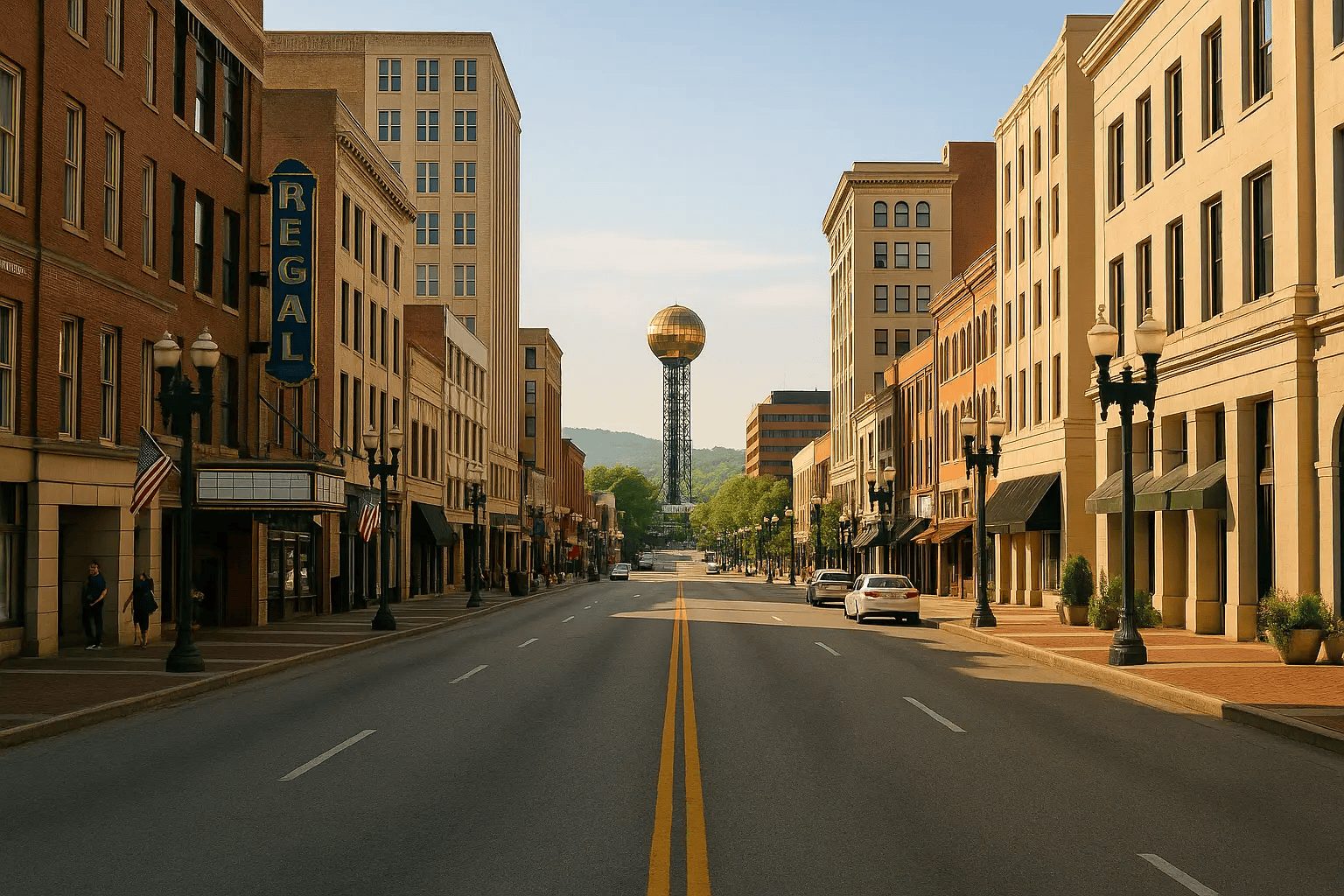
Is Knoxville Tennessee Safe?
Is Knoxville Tennessee Safe?
Knoxville, Tennessee: home of the University of Tennessee Volunteers, a lively downtown scene, and the breathtaking foothills of the Great Smoky Mountains off in the distance. You’ve seen the highlight reels—the picturesque waterfront along the Tennessee River, the Orange-and-White fandom that swarms Neyland Stadium on game days, and the laid-back charm that makes you think, “Hey, maybe this is my next hometown.” But before you pack up a U-Haul and head for East Tennessee, there’s a big question hanging in the air: Is Knoxville safe?
In this unfiltered, real-deal guide, we’re digging into Knoxville’s safety situation: the good, the bad, and the messy in-between. We’ll talk about crime rates, where the trouble spots might lie, and how local culture and economics influence the conversation. If you’re on the fence about moving here—or just want raw intel beyond the polished PR—read on.
Knoxville at a Glance: A Tale of Two Cities?
Knoxville is not a monolith. We’re talking roughly 193,000 residents (in the city proper), plus thousands more spread across Knox County’s suburbs and rural areas. It’s a place where a block of high-end condos can abut a street grappling with blight and petty crime. People often describe Knoxville as having a “small-town feel,” despite being the third-largest city in Tennessee (after Nashville and Memphis). That dichotomy—big city amenities, small-town vibe—makes for an interesting security landscape.
A Snapshot of Contrasts
- Downtown and Surrounding Neighborhoods: Downtown Knoxville has experienced a revitalization wave, with Market Square and Gay Street acting as tourist-friendly hubs brimming with restaurants, bars, and shops. Safety here often mirrors typical urban concerns: petty theft, occasional late-night altercations, and that ever-present possibility of car break-ins if you’re careless about valuables.
- Suburban Spread: The suburbs—like Hardin Valley, Farragut, or Cedar Bluff—are where you’ll find quieter streets, cul-de-sacs, and big-box shopping. Crime rates here lean lower, typically involving property offenses or the odd petty theft. You’re more likely to deal with car burglaries or porch pirates than random acts of violence.
- College Influence: The University of Tennessee (UTK) is a huge presence. During football season, the population swells with out-of-towners, tailgaters, and partygoers. Campus security is robust, but where you have large gatherings (and sometimes alcohol), you can see spikes in fights, theft, or opportunistic crimes.
The Crime Numbers: What’s Really Going On?
Let’s talk about stats—though with a side of caution. Knoxville’s official crime rates, as reported by the Tennessee Bureau of Investigation (TBI) or other agencies, can fluctuate yearly. Plus, “crime rate” is a broad term that lumps everything from a stolen bike to assault into a single metric. That said, numbers can still give a sense of scale.
A Quick Data Dive
- Violent Crime: Historically, Knoxville’s violent crime rates have been higher than the national average but lower than Memphis’s or some comparably sized cities. Local law enforcement lumps together assault, robbery, rape, and homicide under the “violent crime” umbrella. Most violent incidents cluster in specific neighborhoods dealing with socio-economic challenges.
- Property Crime: Theft, burglary, and vandalism are more common than violent acts. Vehicle break-ins are notoriously frequent in certain downtown parking areas—especially around big events. Catalytic converter theft has also become a point of frustration in recent years (as it has in many US cities).
- Trends: Some years see dips in overall crime, while others witness spikes—particularly in categories like auto theft. The pandemic era disrupted typical patterns, with some areas seeing less property crime (fewer tourists on the streets) but more domestic incidents. By 2025, partial normalization has returned, but the aftershocks linger in certain neighborhoods.
Key Neighborhood Differentials
- Downtown & Old City: Typically safer than the citywide average for violent crime, but petty theft and late-night assaults can happen, especially around bar closing times.
- North & East Knoxville: Certain areas have a reputation for higher crime, especially pockets with entrenched poverty or ongoing gang issues. Gentrification is creeping in, but the transformation is a mixed bag—some blocks feel safer, others remain raw.
- West Knoxville & Farragut: Generally lower crime, though not crime-free. Porch pirates, minor vandalism, and automotive break-ins are the most common.
- South Knoxville: This area historically got a rap for some rough pockets, but significant revitalization (particularly around the waterfront) has changed the dynamic. Still, you’ll want to do your homework on a block-by-block basis.
Bottom Line: Knoxville’s crime rate is not cartoonishly high, but it’s not a Mayberry fantasy. Where you live or hang out matters. Consider your comfort level with city living and do a local deep-dive before you commit.
Knoxville’s Specific Safety Concerns
So we’ve talked about broad crime categories, but what about the nitty-gritty concerns that locals and newcomers often ask about? Let’s break it down:
Gun Violence & Gang Activity
The Reality
Gun violence can crop up in certain Knoxville neighborhoods, particularly where gang activity or drug trafficking is prevalent. Don’t mistake Knoxville for some kind of warzone—most residents aren’t ducking bullets on the daily. But the local news occasionally reports shootings, some tied to personal disputes, others connected to deeper criminal networks.
What Locals Say
Many longtime Knoxvillians note that gun violence is usually confined to small pockets. If you don’t involve yourself in dangerous circles, your chances of being an innocent victim are relatively low. Still, it’s something to be aware of—especially if you’re thinking about living in or near those high-incident zones.
Drug-Related Issues
The Reality
Opioid abuse has hit East Tennessee hard. In some Knoxville communities, prescription drug misuse and heroin or fentanyl use have spiked. This can lead to property crime (people stealing to fund habits) and a general sense of unease.
What Locals Say
Many residents see the drug crisis as Knoxville’s silent epidemic. You might not see open-air drug markets, but you could notice subtle signs: more frequent ambulance calls, or families quietly struggling with addiction. Law enforcement and nonprofits are working to stem the tide, but it remains an underlying safety concern.
Car Break-Ins & Porch Pirates
The Reality
These crimes might sound petty, but they happen a lot—especially in more affluent neighborhoods where thieves assume there’s decent loot to snag. Public parking areas downtown can become prime spots for “smash and grab” theft, and big online shopping waves (like holiday season) often coincide with package theft from front porches.
What Locals Say
Ask any West Knoxville resident about porch piracy, and you’ll likely hear a gripe or two. Meanwhile, downtown dwellers learn quickly: don’t leave laptops or bags visible in your car. It’s not that you’re guaranteed to be robbed, but an unlocked door or an enticing item on the seat can tempt would-be thieves.
Late-Night Downtown Altercations
The Reality
Downtown Knoxville, especially Market Square and Gay Street, turns into a bustling scene come weekend nights. Bars stay open late, and intoxicated patrons can sometimes escalate tensions. Fistfights, vandalism, or the occasional mugging—though not rampant—do occur.
What Locals Say
Most folks feel safe downtown if they stick to well-lit areas and avoid picking fights. But “drunk drama” isn’t unusual. If you close down a bar at 2 AM and wander alone down an empty side street, you’re increasing your risk of an unpleasant encounter.
The University of Tennessee Influence
Knoxville’s biggest icon? The University of Tennessee, hands down. UT’s presence shapes everything from local traffic patterns to the job market—and yes, safety considerations too.
Campus Security
UTK’s campus boasts its own police force (UT Police Department), security cameras, and emergency phones. While campus crime happens—laptop theft, underage drinking busts, the occasional assault—the presence of a dedicated police department helps keep incidents in check. Students can request safety escorts, and many campus areas are well-lit at night.
Off-Campus Housing Realities
Knoxville’s real safety wrinkles often surface in neighborhoods adjacent to campus, where students blend with long-term residents. You’ve got older houses turned into cheap rentals, plus a wave of new apartment complexes marketing to the college crowd.
- Pros: Living near campus is convenient, with easy access to downtown and UT events.
- Cons: Parties, noise complaints, and petty theft. Students sometimes let their guard down, leaving doors unlocked or storing pricey electronics in cars.
5. Policing & Community Initiatives: What’s Being Done?
Knox County Sheriff vs. KPD
Knoxville has multiple law enforcement agencies: the Knoxville Police Department (KPD) within city limits and the Knox County Sheriff’s Office in the broader county. Jurisdictional boundaries can confuse newcomers. Some suburban enclaves rely on the sheriff’s department, while KPD handles the city core. Both agencies collaborate on larger issues—gang enforcement, drug rings—but day-to-day policing can vary.
Community Outreach & Nonprofits
Knoxville is big on community-driven solutions. Various nonprofits and church groups partner to tackle youth violence, addiction treatment, and re-entry programs for former inmates. These grassroots efforts don’t eradicate crime overnight, but they do create safer pockets through after-school programs, job training, and mentorship.
Surveillance Tech & Controversies
Like many American cities, Knoxville has dabbled in camera surveillance in high-traffic areas. Some residents applaud the approach, citing quicker suspect identification. Others worry about privacy and potential misuse. The debate continues, with city council proposals to expand or limit camera coverage hitting the docket periodically.
Neighborhood-by-Neighborhood: The Word on the Street
We’ve covered broad strokes, but let’s slice it finer. Here’s a quick, messy snapshot of specific Knoxville neighborhoods and their safety vibes:
- Farragut/Hardin Valley: Master-planned communities, well-rated schools, and relatively low crime. The biggest annoyance? Car break-ins if you leave your doors unlocked.
- West Hills/Bearden: Established older suburban area with an eclectic mix of shopping and dining. Mostly safe, but watch out for petty theft.
- North Knoxville (Fountain City, Inskip, Norwood): Historically lower-income pockets, though some areas have stable middle-class enclaves. Crime can spike in certain neighborhoods—do your research carefully.
- Downtown/Old City: Vibrant, walkable, but no stranger to nighttime scuffles and occasional property crime.
- South Knoxville: Gaining traction with its breweries and outdoor adventure offerings. Overall a safer vibe than it was a decade ago, but still some rough patches near the industrial zones.
- East Knoxville: Known for higher violent crime rates in certain corridors. However, local efforts to revitalize and unify the community are in progress.
- UT Campus & Fort Sanders: Student-dense environment with typical college-town issues—noise, minor theft, the occasional serious incident. Heavily policed by campus and city authorities.
Pro Tip: Use these descriptions as a starting point. If you’re serious about moving or investing, drive around at different times of day—weekdays vs. late Saturday nights. A quick spin can reveal a lot that real estate photos hide.
Is Safety Improving or Getting Worse?
Whether Knoxville is trending safer or more dangerous depends on who you ask—and which data sets you examine. Some official metrics suggest certain violent crimes have inched downward, while property crimes see sporadic spikes. Local sentiment is a mixed bag. Some older residents recall wilder times in the ’80s and ’90s and insist it’s calmer now. Younger folks might see the proliferation of opiates and housing insecurity as new sources of tension.
Economic & Social Factors
- Gentrification: As formerly neglected neighborhoods gentrify (looking at you, North Central), some crime types shift or disperse. Improved housing can lead to lower crime, but it also can push issues further into surrounding areas.
- Tourism & Events: Big events like UT football games, music festivals, or downtown celebrations bring cash to local businesses—but also petty thieves or scammers preying on out-of-towners.
- Pandemic Hangover: Job losses and stress from the COVID era linger, sometimes fueling domestic disputes or mental health crises that can escalate into public safety problems.
In short: Knoxville isn’t spiraling into chaos. But like many cities in the post-pandemic landscape, it’s juggling new stressors. The net effect on safety? Mostly stable with pockets of concern.
The Local View vs. the National Lens
Knoxville often gets overshadowed by Nashville’s glitz or Memphis’s gritty reputation. On a national scale, Knoxville’s crime data might put it in the same conversation as many midsize American cities: some safe pockets, some not-so-safe. For many residents, day-to-day life feels stable—an after-work grocery run, evening dog walks, weekend hikes in the Smokies—without a sense of looming danger.
But the underside is real, too: there are pockets grappling with violence, drug use, and socioeconomic strife. Knoxville is a living, breathing place, not a tourist pamphlet. If you’re considering relocating for a job, college, or just the love of East Tennessee’s rolling hills, come visit. Explore the neighborhoods on foot. Talk to the folks behind the coffee shop counter. You’ll probably find the reality falls somewhere in the middle: safe enough to enjoy daily life, but with caution and awareness if you’re around higher-risk areas.
Making Your Decision: Is Knoxville the Right Fit?
So, is Knoxville safe? The honest answer: it depends on where you live, how you live, and what your tolerance is for typical urban challenges. If you’re used to big-city hustle, Knoxville might feel like a calmer alternative with a handful of quirks. If you’re from a rural background, the city’s bustle might spook you at first, but you’ll quickly see it’s more “town with a city vibe” than a sprawling metropolis.
Key Takeaways
- Overall Safety: Moderately good, with the usual urban caution required.
- Specific Concerns: Property crimes (car and porch theft), localized violent incidents, drug-related issues in certain pockets.
- Trends: Some improvement in certain crime categories, while others fluctuate. Gentrification is reshaping neighborhoods in both positive and problematic ways.
- Local Solutions: A mix of law enforcement efforts, nonprofit interventions, and community watch groups.
- Lifestyle Fit: If you want a friendly city with quick access to the Smokies, a decent cost of living, and a lively college scene, Knoxville can deliver—just keep your eyes open for the messy parts.
Final Thoughts
Knoxville, Tennessee, is a city in transition—a place where old Southern charm meets a rising wave of development and diversity. Like any city, it has corners you’d be wise to avoid late at night, and neighborhoods where the biggest safety threat is a raccoon rummaging through your trash. It has booming areas flush with restaurants and breweries, and it has hardscrabble blocks still wrestling with poverty and crime.
No single statistic or blog post can fully capture Knoxville’s safety profile. The best approach is to come see for yourself. Drive around the potential neighborhoods you’re eyeing. Chat with local shop owners or your future colleagues. Look up crime maps for specifics, but don’t become paralyzed by them. When you weigh all the factors—job opportunities, cost of living, proximity to nature, sense of community, and yes, the potential for petty or serious crime—Knoxville might just strike the balance you’re searching for.
Is Knoxville Tennessee Safe?
Safe enough for families to thrive, for college students to roam, and for retirees to enjoy calm evenings on the porch. Dangerous enough that you still need to lock your doors, keep your wits about you downtown, and pick your neighborhood carefully. In other words, it’s a real city with real complexities—no sugarcoating here. But for countless Knoxvillians, that blend of opportunity and caution is part of the allure, weaving into the fabric of daily life in one of East Tennessee’s most storied hometowns.
Is Gatlinburg Tennessee Safe? Your 2025 Guide
Is Gatlinburg Tennessee Safe? Your 2025 Guide
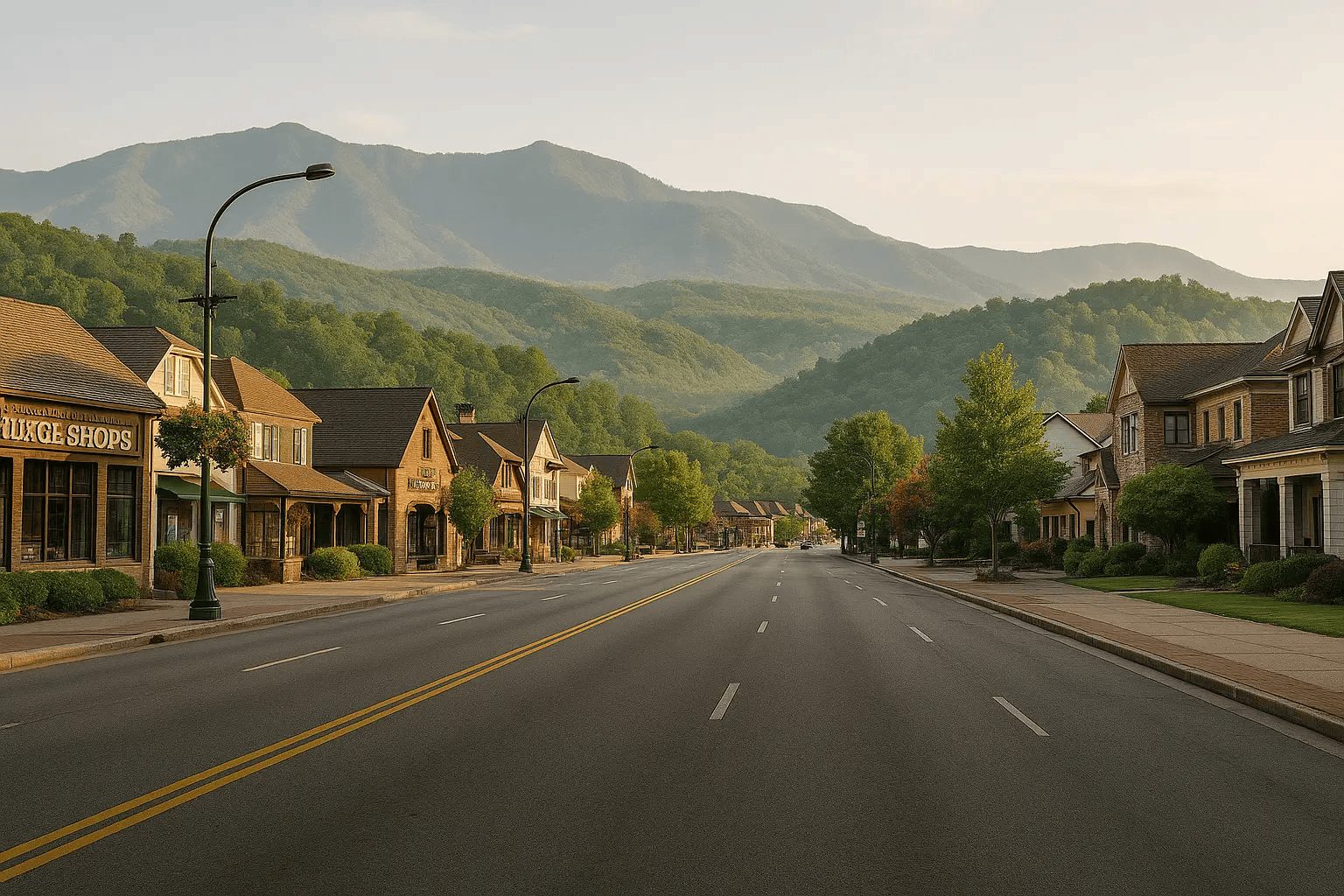
Gatlinburg, Tennessee: a quaint mountain town perched on the edge of the Great Smoky Mountains National Park, complete with black bears, log cabins, and a neon-lit tourist strip that never seems to quit. But before you pack your bags (or even start scrolling Zillow for that dream cabin) you might pause: Is Gatlinburg Tennessee safe?
This place may be postcard-perfect, but real life doesn’t always match the curated snapshots. From jam-packed tourist crowds to the memory of devastating wildfires, Gatlinburg’s safety story has layers.
Below, we’ll dive deep into overall safety, highlight specific concerns that go beyond petty theft, and reveal the safest neighborhoods for those thinking about putting down roots. If you’re looking for that no-BS perspective, you’ve come to the right place.
Gatlinburg at a Glance: A Tourist Hotspot with a Resident Core
Gatlinburg is small—just over 4,000 permanent residents as of 2025—but you’d never guess that from the constant influx of tourists. On any given weekend, especially in summer or peak fall foliage season, the Parkway might host tens of thousands of visitors. This disparity fuels a unique dynamic: a bustling, crowded downtown overshadowed by serene pockets of mountain cabins a few minutes away.
The Tourism Tidal Wave
One of the first factors impacting safety here is the staggering volume of tourists. More people means more potential for petty crime, traffic accidents, and sometimes rowdy late-night behavior on the main drag. But it also means a robust local economy, with law enforcement and emergency services accustomed to dealing with seasonal surges.
The Mountain DNA
Peek beyond the Parkway, and you’ll find hillside neighborhoods, winding roads, and enough black bear sightings to keep your adrenaline pumping. Living in Gatlinburg can feel as remote or as busy as you want it to, depending on your choice of location. But with mountain living comes challenges: steep driveways, potential wildfires, and storms that knock out electricity. Safety in Gatlinburg isn’t just about crime; it’s about nature, terrain, and the intersection of tourism and real life.
Crunching the Numbers: What the Crime Stats Say
You can’t talk about safety without acknowledging crime rates. Data from the Tennessee Bureau of Investigation (TBI) and local law enforcement can paint a partial picture, even if it doesn’t fully capture the “feeling” on the ground.
Violent Crime
Gatlinburg’s violent crime rates hover below those of major Tennessee cities like Memphis or Nashville, largely because the year-round population is so low. Incidents like assault, robbery, or more severe crimes are relatively rare—but they do happen. Especially on busy weekends, alcohol-fueled altercations can pop up around the bars or outside tourist attractions.
Property Crime
Far more common in Gatlinburg are property crimes: theft from vehicles, shoplifting in the tourist district, and occasional cabin break-ins. With so many visitors lugging around cameras, wallets, and souvenirs, opportunistic thieves can find easy targets. Cabin communities also see break-ins, though many have ramped up surveillance or rely on property management firms to keep tabs on guest traffic.
Tourist Season Spikes
One important nuance: crime stats in Gatlinburg can fluctuate based on season. Summer and autumn, when the crowds swell, see more petty theft and property crimes. Off-season months (like January or early spring) are calmer, with fewer police call-outs. Locals joke that you can stroll downtown in early February without spotting another soul—but come spring break, it’s an entirely different story.
Takeaway: If you’re used to living in a larger metro area, Gatlinburg might feel relatively safe. But keep your wits about you, secure your car, and don’t leave valuables in plain sight—especially around tourist central.
Beyond Crime: The Smoky Mountain Wild Cards
Wildlife Encounters
This is East Tennessee, so you’ll see black bears—often rummaging in trash cans or wandering near cabin decks. While generally not aggressive, they’re still wild animals. Leave your garbage unsecured, and you might wake up to a trashed driveway. Familiarize yourself with local bear-smart guidelines: use bear-proof trash bins, don’t feed them, and keep your distance if one meanders into your yard.
Pro Tip: Some cabin neighborhoods have HOA rules about trash bins or feeding wildlife. Adhere to them—violations can incur fines, and you don’t want a curious bear pounding on your front door at midnight.
Fire Risk & 2016 Wildfires
It’s impossible to talk about Gatlinburg’s safety without recalling the 2016 wildfires that scorched parts of the area, tragically resulting in loss of life and destroying over 2,000 structures. While that event was partially caused by arson and exacerbated by high winds, it remains an emotional scar on the community.
- Present-Day Realities: Gatlinburg has improved evacuation routes, boosted emergency alert systems, and increased coordination between local and federal agencies. That said, wildfire risk persists in any heavily wooded, mountainous region—especially during drought conditions.
- What Residents & Buyers Should Know: Check if your home sits in a higher-risk zone. You might face higher insurance premiums or be required to take extra fire-prevention steps (like clearing brush or using fire-resistant materials for decks and siding).
The Terrain & Weather Hazards
Steep mountain roads can be treacherous in winter or after heavy rain. Flash floods occasionally hit low-lying areas near streams or creeks, and black ice in cold months can make your morning commute a slip-and-slide adventure. If you’re not comfortable with winding switchbacks, you may want to stick to neighborhoods closer to town or ensure your car is equipped for mountain conditions.
Day-to-Day Safety: Life in Tourist Central
Traffic & Pedestrian Woes
The Parkway can transform into a mini Theme Park queue, especially on holiday weekends. With out-of-state license plates everywhere, your quick grocery run might devolve into 45 minutes of inching forward. Accidents do occur—often low-speed fender benders, but more serious crashes can happen on the outskirts where roads curve around the mountains.
Tips:
- Avoid Peak Hours: If you can, run errands in the morning on weekdays rather than a Saturday at noon.
- Stay Alert Downtown: Pedestrians can be unpredictable, darting between shops, lulled by the carnival-like atmosphere.
Late-Night Shenanigans
While Gatlinburg isn’t known for a raucous nightlife like big cities, the bar scene near the Parkway can get rowdy on weekends. Tourists on moonshine tastings or brewery hops can occasionally spill out onto the streets and cause minor scuffles or public intoxication incidents. Overall, serious assaults aren’t rampant, but if you’re out late, keep your group close, stay in well-lit areas, and maybe skip that pitch-dark shortcut behind the souvenir shop.
Short-Term Rentals & Stranger Danger?
Gatlinburg thrives on short-term rentals (STRs). It’s not unusual to have a rotating cast of neighbors if you’re in a heavy cabin rental area. This can be a safety double-edged sword:
- Pros: Higher presence of property management or HOA security in some developments, as owners want to safeguard their lucrative rentals.
- Cons: More foot traffic from travelers who might be unfamiliar with local rules, plus occasional partying or noise issues.
If you’re buying a property in these zones, check how the HOA handles security or if they require background checks for renters (rare, but some premium developments do it).
Crime Trends & Local Efforts to Improve Safety
Policing & Community Partnerships
Gatlinburg has a modest police force, plus a close relationship with Sevier County Sheriff’s Office. They’re used to dealing with everything from lost tourists to black bear calls. Communication lines with the National Park Service are vital—especially for search-and-rescue missions on nearby trails or for coordinating during events like the 2016 fires.
Community watch groups in certain neighborhoods (like Chalet Village or Cobbly Nob) keep an eye on suspicious activity. Some resort communities hire private security, patrolling overnight, which can deter break-ins. Typically, these measures keep petty crime in check.
“Bear-Wise” Initiatives
Since wildlife interactions are a major safety focus, local authorities, nonprofits, and park rangers push “BearWise” education. Tourist ignorance can lead to bad decisions—like feeding that “friendly” bear from your car window. The city has signage, brochures, and sometimes even volunteer ambassadors reminding people not to treat wildlife like cartoon mascots.
Wildfire Prevention Measures
Since the 2016 tragedy, Sevier County has upgraded evacuation routes and introduced reverse 911 systems to blast out emergency alerts. The county occasionally conducts controlled burns to reduce fuel buildup. Homeowners near forested areas receive guidelines on brush clearance and building materials. While you can’t eliminate wildfire risk, these steps help mitigate it.
Safest Neighborhoods & Areas to Consider
Let’s be clear: “safest” doesn’t mean zero crime or zero risks. But some areas in and around Gatlinburg are known for their quieter, more secure vibe—either because they’re gated, upmarket, or just well-managed.
Chalet Village
Overview: Perched on the slopes of Ski Mountain Road leading to Ober Gatlinburg, Chalet Village is a mix of older mid-century chalets and newer cabins. HOA-run clubhouses and pools are common, and the area sees a blend of permanent residents and short-term renters.
Why It Feels Safe:
- A strong sense of community—residents often know each other’s routines, and watchful neighbors deter petty crime.
- Some sections are behind gates or have security cameras at entrances.
- The topography can be tricky for criminals; it’s not exactly easy to break into a hillside chalet and make a quick getaway.
Potential Drawbacks:
- Winter travel can be hazardous; steep roads and ice are no joke.
- Wildlife is more frequent at higher elevations—hello, bear sightings.
Cobbly Nob
Overview: Located east of Gatlinburg along Highway 321, Cobbly Nob is centered around Bent Creek Golf Course. Known for a laid-back, semi-rural ambiance, it’s popular with retirees and second-home owners.
Why It Feels Safe:
- It’s off the main tourist drag, reducing random foot traffic.
- Many cabins and homes have caretaker or property management oversight, ensuring vacant properties don’t sit untended for long.
- Neighbors are fairly spread out, yet you still have a cohesive community vibe.
Potential Drawbacks:
- Further from grocery stores and city amenities, so you’ll rely on personal vehicles—and watch out for windy roads at night.
- The area was impacted by the 2016 fires, though it’s rebuilt significantly.
Glades Arts & Crafts Community
Overview: The Arts & Crafts Community along Glades Road is known for its artisan shops, studios, and a quieter, more local feel. Some new live-work developments are popping up, attracting creative types who want to steer clear of the neon hustle.
Why It Feels Safe:
- Smaller tourist crowds, mostly day-trippers seeking handcrafted souvenirs rather than rowdy bar patrons.
- Many shop owners live nearby, creating an eyes-on-the-street effect.
- The road is well-traveled by locals who quickly notice anything off.
Potential Drawbacks:
- Not all roads are well-lit, so evening strolls might feel isolated.
- If you’re looking for a heavy resort infrastructure or security gates, you won’t find it here.
Gatlinburg Falls Resort
Overview: A more upscale resort community featuring new or newer-build cabins designed for the short-term rental market. It’s right on the outskirts of downtown.
Why It Feels Safe:
- Gated entrances, security patrols (especially in peak tourist seasons).
- Cabins often have modern security systems and ring-style doorbells, so suspicious activity can be monitored.
- High property values mean owners typically invest in upkeep and community guidelines.
Potential Drawbacks:
- Very tourist-centric; you might deal with a constant rotation of renters.
- HOA fees and restrictions might be a headache if you want complete autonomy over your property.
Specific Concerns for Buyers & Residents
Short-Term Rental Neighbors
If you buy a home in a neighborhood dense with Airbnb cabins, prepare for weekenders who might not share your daily routines. Noise complaints, stray cars blocking driveways, or trash bin fiascos are real. On the flipside, some rental-savvy communities maintain strong HOAs with strict rules to keep peace.
Wildlife Safety Essentials
Bears might be the headliner, but you’ll also find raccoons, deer, and occasionally coyotes. Secure your trash, don’t leave pet food outside, and educate guests or kids about wildlife encounters. If you do see a bear, keep your distance, avoid sudden movements, and never feed it—common sense that, sadly, some tourists lack.
Evacuation Plans
After the 2016 wildfires, many neighborhoods established or revised evacuation plans. Know your route, sign up for local emergency alerts, and consider a fireproof safe for important documents—especially if your property sits on or near forested land.
Weather Surprises
- Flash Flooding: If your home is near a creek or at the bottom of a slope, heavy rains can cause rapid water rise. Check flood zones, consider flood insurance, and maintain drainage ditches.
- Winter Storms: Gatlinburg doesn’t get hammered like Northern states, but a few inches of ice can paralyze those switchback roads. Keep a winter emergency kit in your car if you must drive the mountain roads.
Practical Tips for Staying Safe in Gatlinburg
- Lock It Up: Even if you’re used to small-town living, lock your doors and secure vehicles. Tourists might be laissez-faire, but that can attract petty thieves looking for easy pickings.
- Use Bear-Proof Bins: If your neighborhood doesn’t provide them, invest in one. The biggest nuisance calls to local authorities revolve around bears rummaging through poorly secured trash.
- Avoid Peak Traffic: If possible, plan grocery runs or errands outside the weekend tourist rush. Not only do you save time, but you also dodge potential fender-benders.
- Stay Aware on Trails: Gatlinburg’s main drag is only half the story—many folks come for the Great Smoky Mountains National Park. On popular trails, keep your valuables hidden in the trunk, not in a visible backpack on the dashboard.
- Respect Weather Warnings: If the local forecast warns of wildfire danger or winter storms, don’t brush it off. That “won’t happen to me” mindset can catch you off guard in these mountains.
Does the Tourist Profile Affect Safety?
Tourists bring money—and headaches. On one hand, the city invests heavily in tourism infrastructure, from enhanced police presence downtown to improved roads. On the other, large seasonal crowds can spark an uptick in petty crime or late-night disturbances.
Who’s the Typical Tourist? Families, retirees, honeymooners, adrenaline junkies seeking zip lines or whitewater rafting. People from all over the world. Most come with an “on-vacation” attitude, which can mean letting their guard down, overspending at the moonshine distilleries, or ignoring local bear warnings. This does lead to the occasional scuffle or property crime, but it also fuels job creation and economic growth. Gatlinburg wouldn’t be Gatlinburg without them.
Local Sentiment: What Residents Really Say
The Optimists
Longtime locals, especially those who run businesses, love the unique vibe. They’ll tell you that if you treat the town with respect, it’s safe enough for small-town living. Many keep their screen doors unlocked (outside the busiest tourist pockets), claiming serious crime is rare if you mind your own business.
The Realists
Others recall the heartbreak of the 2016 fires, dealing with floods, or the occasional break-in wave that hits a particular cabin community. They’ll advise newcomers to be eyes-wide-open: learn mountain safety, join local Facebook groups for real-time intel, and embrace the unpredictability of living in a place that’s half tourist trap, half tight-knit mountain community.
In a Nutshell: Gatlinburg can feel like a theme park by day and a cozy hamlet by night, but nature and tourism keep life interesting—and sometimes complicated.
Conclusion: Is Gatlinburg Tennessee Safe?
At the end of the day, “safe” is subjective. If you compare Gatlinburg to major urban centers, it’s a breath of fresh mountain air—literally and figuratively. Violent crime is relatively low, and petty theft is mostly contained to busy tourist stretches. But you also face unique Smoky Mountain risks: wildlife encounters, potential wildfires, winding mountain roads, and an ever-changing cast of short-term visitors.
So, is Gatlinburg Tennessee safe? For the vast majority of folks—yes, as long as you approach it with a dash of common sense and respect for the mountains. Secure your trash, heed local warnings, avoid leaving valuables in plain sight, and don’t treat black bears like Instagram props. Do that, and you’ll probably find Gatlinburg’s safety profile more than enough for a peaceful (but never boring) Smoky Mountain life.
8 Exciting Developments Transforming Gatlinburg, TN
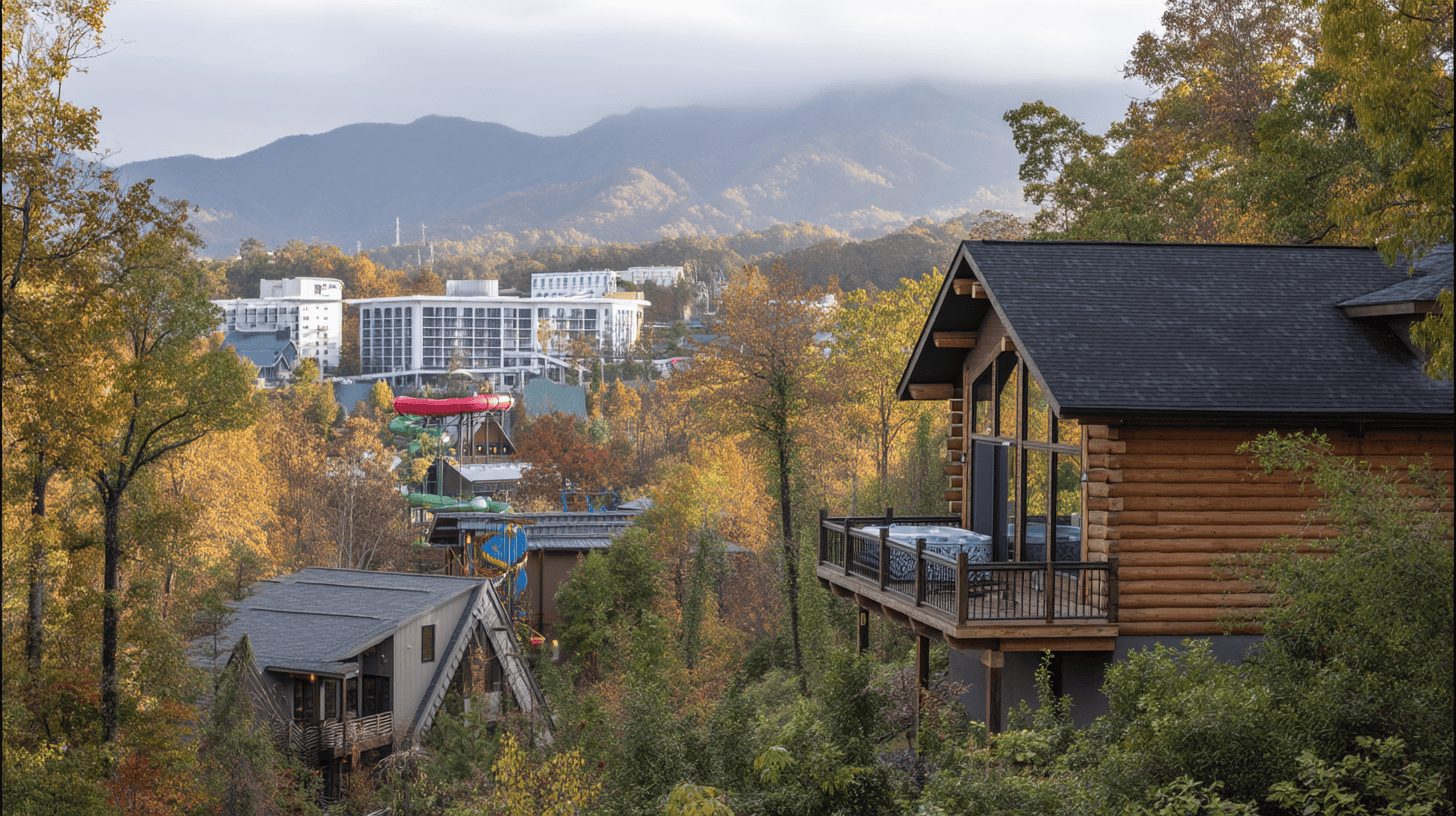
Gatlinburg, Tennessee—a mountain town woven into the foothills of the Great Smoky Mountains National Park—has always been a magnet for tourists seeking scenic views and Southern hospitality. But there’s another side to the story: the flurry of new and revitalized developments that are reshaping the local real estate landscape. If you’re eyeing a purchase in Gatlinburg or simply want to keep your finger on the pulse of the area’s transformation, you’re in the right place.
Below, we’ll spotlight eight developments—some brand-new, some reimagined expansions—that stand out in 2025. We’re going to keep things raw and real, cutting through the glossy brochures to give you the unvarnished scoop. Whether you’re a savvy investor, a nature-loving retiree, or just plain curious about what’s shaking up Gatlinburg, read on.
Gatlinburg Falls Resort: New Phases, New Vibe
Quick Facts
- Type: Cabin community & resort-style development
- Location: On the outskirts of downtown Gatlinburg, off Hidden Hills Road
- Notable For: Luxury cabins with killer mountain views, robust short-term rental scene
When people think “Gatlinburg cabins,” Gatlinburg Falls often pops up as the poster child for that iconic Smoky Mountain aesthetic. While Gatlinburg Falls has been around for a while, 2025 is bringing new phases that are more than just carbon copies of older builds.
What’s New?
Developers are leaning into modern-meets-rustic finishes: think high ceilings with exposed beams, but also open-concept floor plans that maximize those panoramic mountain vistas. You’ll see floor-to-ceiling windows, stone fireplaces, and the all-important hot tub perched on a spacious deck. Many of the new cabins come furnished or at least “rental-ready,” featuring interior design that aims to stand out on Airbnb or VRBO listings.
The Real-Deal Pros & Cons
Pros:
- Rental Income: Gatlinburg Falls has a solid track record for short-term rentals, drawing steady bookings year-round.
- Turnkey Options: Investors can snap up newly built cabins with property management in place.
- Community Amenities: Outdoor pools, clubhouse access, and quick commutes to downtown Gatlinburg.
Cons:
- Higher Price Tags: The new builds command a premium, sometimes pushing past $650,000 for a three-bedroom layout.
- HOA Restrictions: The resort environment means you’ll deal with HOA fees and rules—no wild color schemes on your cabin’s exterior.
- Crowded Market: The short-term rental scene here is competitive. If you plan to buy for investment, be ready to hustle for bookings.
Gatlinburg Falls may not be the scrappy underdog pick, but if you’re seeking consistent rental potential (or a polished second home), it’s hard to ignore these brand-new builds and expansions. Just be sure your budget can handle it.
Glades Arts & Crafts Community Expansion: The Creative Side of Gatlinburg
Quick Facts
- Type: Mixed-use, artisan-friendly development
- Location: Along Glades Road, in the heart of Gatlinburg’s historic Arts & Crafts Loop
- Notable For: Craft shops, art studios, and newly constructed live-work spaces
The Arts & Crafts Community has been a Gatlinburg staple for decades, a hub where you can find everything from hand-blown glass to custom leatherwork. In 2025, an ongoing expansion is blending fresh commercial spaces with residential lofts—an unusual combo for a town better known for log cabins and timeshares.
What’s New?
Thanks to a city-backed revitalization effort, you’ll see modern, eco-friendly buildings that respect the old-school Appalachian vibe but come decked out with solar panels, native landscaping, and communal courtyards. Some new structures even have first-floor retail or gallery space, with apartments or studio lofts above—perfect for artists who want a short commute from bed to workshop.
The Real-Deal Pros & Cons
Pros:
- Unique Culture: Living among artisans means you’ll have easy access to events, workshops, and a truly creative community vibe.
- Less Short-Term Rental Pressure: This area tends to attract owners who appreciate the arts scene more than nightly turnover, though some owners do rent out lofts for extra income.
- Walkability: Gatlinburg is notoriously car-heavy, but the Glades area’s layout and pedestrian-friendly expansions can mean less reliance on your vehicle for daily errands.
Cons:
- Zoning Quirks: Mixed-use developments can carry extra permitting hurdles, so if you’re planning to run a small business here, anticipate a bit of bureaucratic dance.
- Price Per Square Foot: These new or revitalized units might not look like your traditional Gatlinburg cabin, but the costs can rival or exceed cabin rates, especially given the unique commercial-residential combos.
- Limited Inventory: The area is smaller in scope than major cabin resorts, so new listings can be scarce—and snatched up quickly by artists and entrepreneurs.
For anyone who loves the Smokies but wants an artsy twist on the typical tourist shtick, the Glades expansion offers a refreshingly different side of Gatlinburg.
Westgate Smoky Mountain Resort & Water Park: Rebuild and Revitalization
Quick Facts
- Type: Resort development with timeshares, condos, and family-friendly amenities
- Location: On the main Parkway between Gatlinburg and Pigeon Forge
- Notable For: On-site water park, large-scale resort amenities, a storied rebuilding process after past fire damage
Westgate has been through a lot, particularly after the 2016 wildfires that ravaged parts of the property. Fast-forward to 2025, and you’ll find a resilient, reimagined resort that doesn’t shy away from big splashy attractions (yes, the indoor water park is still a major draw).
What’s New?
The ongoing revitalization includes updated condo units with sleek interiors—an unexpected contrast to the log-cabin aesthetic typically found in Gatlinburg. Marble countertops, modern lighting, and contemporary furniture packages are standard in these new sections. Developers also launched new restaurants on-site, plus expanded spa facilities for that “full-service” vibe.
The Real-Deal Pros & Cons
Pros:
- Loaded Amenities: You’ve got restaurants, pools, mini-golf, and a spa at your fingertips—no need to trek into town for entertainment.
- Timeshare & Condo Options: You can buy a slice of resort life via timeshares or go all-in on a deeded condo.
- Family-Friendly Appeal: The water park alone can be a rental goldmine if you plan to short-term rent your unit.
Cons:
- HOA/Resort Fees: Expect monthly or annual fees that could rival a car payment—these funds go toward resort upkeep and amenities.
- Corporate Environment: This is not your quiet mountain retreat. It’s a bustling resort, full of families on vacation.
- Limited Customization: Buying into a development like Westgate means accepting their design and management approach—no major renovations or personal touches without jumping through hoops.
If you’re the type who wants an all-inclusive resort experience and doesn’t mind the hustle-and-bustle, Westgate’s new and revitalized sections may fit the bill. Just be prepared for the corporate flavor.
Chalet Village: Upgraded Classics in the Hills
Quick Facts
- Type: Established chalet community with mid-century vibes and ongoing reboots
- Location: On the slopes of Ski Mountain Road, near Ober Gatlinburg
- Notable For: Iconic A-frame chalets, mountain vistas, older cabins getting modern makeovers
Chalet Village is a Gatlinburg icon—think 1970s-era chalets perched on winding roads with some of the best vantage points of the Smokies. Lately, a fresh wave of renovations and new builds has given Chalet Village a second wind.
What’s New?
Many older chalets, often sporting that quirky mid-century style, are getting gutted and reimagined with open floor plans, glass railing decks, and upscale finishes. You’ll also find brand-new construction that nods to Chalet Village’s A-frame heritage but incorporates modern lines and more energy-efficient materials.
The Real-Deal Pros & Cons
Pros:
- Vintage Flair: If you’ve had enough of cookie-cutter cabin developments, Chalet Village’s eclectic chalets might be your jam.
- Close to Skiing: Ober Gatlinburg is practically next door, which is a rare perk for a southern ski spot (even if “skiing” in Tennessee is more novelty than hardcore slope action).
- Striking Views: Being perched high means you’ll score some of the best panoramic glimpses of downtown Gatlinburg and Mount LeConte.
Cons:
- Narrow, Steep Roads: Driving up Ski Mountain Road in winter can be dicey. Four-wheel drive is practically a must when ice hits.
- Property Age: Renovations can’t fix every quirk. Some older chalets still have foundation or insulation issues.
- Maintenance Costs: Steep lots can mean pricey upkeep—gravity and heavy rainfall can wreak havoc on driveways and retaining walls.
Chalet Village is perfect for buyers who love that classic Smoky Mountain A-frame vibe but still want to be close to town. Just keep your shovel (and maybe tire chains) handy in winter.
Anakeesta Village Expansion: Beyond the Theme Park
Quick Facts
- Type: Mountain-top entertainment venue with new lodging and retail expansions
- Location: Downtown Gatlinburg (park entrance on the Parkway, summit access via scenic chairlift or chondola)
- Notable For: Zip lines, tree canopy walks, nighttime events—and now, rumored lodging additions
Anakeesta opened a few years ago as a downtown Gatlinburg adventure park, best known for its sky lift up to a mountaintop full of ziplines, treehouses, and restaurants. In 2025, rumors and early-phase planning indicate lodging and retail expansions on the horizon—something more than just a day-trip attraction.
What’s New?
Though details are still hush-hush, insiders whisper about boutique cabins or “treehouse lodging” integrated into the existing attraction. The idea is to let visitors literally sleep in the forest canopy, albeit with modern comforts. There’s also talk of new retail shops, more dining, and potential after-dark experiences to keep visitors on-site longer.
The Real-Deal Pros & Cons
Pros:
- Unique Stay: If you want something that merges an eco-adventure vibe with Gatlinburg’s bustle, these rumored lodging options could be a game-changer.
- Future Investment: If Anakeesta indeed builds private cabins or timeshare-like units, early adopters might see huge rental potential—everyone loves a novelty.
- Built-In Entertainment: Zip-lining, nature trails, live music events—no shortage of things to do.
Cons:
- Speculative: Much of this is “coming soon,” so there’s always the risk that final plans change or get scrapped.
- Tourist-Centric: Anakeesta is a big tourist draw; if you’re craving peace and quiet, this might not be your scene.
- Limited Info: Without final blueprints, it’s hard to gauge cost, HOA details, or even timeline.
If you’re a gambler who loves the concept of a high-profile entertainment park branching into lodging, keep your ear to the ground. Anakeesta’s expansion could be the next big Gatlinburg development.
Cobbly Nob’s Next Chapter: Revitalizing an Old Favorite
Quick Facts
- Type: Established cabin community near the national park boundary
- Location: East of Gatlinburg along U.S. Highway 321
- Notable For: Golf course adjacency, older cabins with huge decks, close to Greenbrier entrance of the Smokies
Cobbly Nob often flies under the radar compared to Gatlinburg’s more famous developments, but it has a devoted following. Lately, there’s been a push to update older cabins and add new builds that capture the area’s underrated charm.
What’s New?
Developers have spruced up the golf course (Bent Creek Golf Course is part of the community), and some new cabins are cropping up along the fairways—offering what’s essentially a “Smoky Mountain golf resort” vibe. Certain owners are banding together to rebrand the area with more consistent marketing, which might open the door for better short-term rental income.
The Real-Deal Pros & Cons
Pros:
- Quiet Locale: It’s a bit removed from downtown Gatlinburg chaos, perfect if you’d rather see black bears than bumper-to-bumper traffic.
- Greenbrier Access: One of the less crowded entrances to the Great Smoky Mountains National Park is minutes away—ideal for serious hikers who hate the busy Newfound Gap Road.
- Established Community: Cobbly Nob has been around for decades, so utility hookups and roads are well-maintained.
Cons:
- Less Nightlife: You’ll need to hop in the car and drive 15 minutes to Gatlinburg’s main strip for restaurants, bars, or attractions.
- Older Infrastructure: Not every property is shiny and new; some “revitalized” cabins still need updated plumbing or electrical systems.
- Golf Course Fees: If you’re not into golf, you might be paying for an amenity you rarely use. Some owners resent the forced “golf identity.”
Cobbly Nob is your sweet spot if you crave a laid-back mountain vibe with the occasional tee time. Just be sure to confirm how “revitalized” your prospective cabin truly is.
The Village Overhaul: Downtown’s Hidden Renewal
Quick Facts
- Type: Commercial complex turned tourist hotspot
- Location: Downtown Gatlinburg, near traffic light #6
- Notable For: Old-world European aesthetic, boutique shops, coffee houses
“The Village” is that enchanting cluster of shops and eateries that feels like you’ve strolled into a storybook. But behind the scenes, owners and the local business association have quietly embarked on a major overhaul—improving structural integrity, adding new shops, and possibly introducing small lodging units above the retail spaces.
What’s New?
They’re restoring vintage architectural elements, upgrading old facades, and weaving in modern fire safety codes. Some rumors suggest micro-apartments or short-term rental suites might occupy previously unused attic or storage spaces—aimed at travelers wanting a “live in the heart of Gatlinburg” experience.
The Real-Deal Pros & Cons
Pros:
- Prime Location: You can’t get more central. Step outside, and you’re on Gatlinburg’s bustling Parkway.
- Quaint Aesthetic: The Village’s old-world charm remains a huge draw for tourists.
- Potential Rental Gold: If lodging units materialize, they’d be prized for convenience—no need to drive anywhere.
Cons:
- Crowds: Peak season crowds can feel claustrophobic. You’ll hear street performers and late-night chatter year-round.
- Limited Privacy: Living above a bustling coffee shop is romantic, but you might not love it at 6 AM when deliveries roll in.
- Price Premium: Downtown real estate is never cheap, and the historic nature of The Village might add a restoration tax to every last plank of wood.
For those who adore Gatlinburg’s old-fashioned flair and want a piece of the action, keep an eye on The Village’s evolving plans—it could be your chance to own a distinctive slice of downtown.
The Mountain Shadow Estates Revival: Community-Driven Upgrades
Quick Facts
- Type: Established hillside community, mix of long-term residents and rentals
- Location: Just off East Parkway (Hwy 321), heading toward Pittman Center
- Notable For: Secluded vibe, older cabins in need of TLC, community-led improvements
Mountain Shadow Estates flew under the radar for years—a modest hillside development overshadowed by flashier resorts. But in 2025, a group of local homeowners has banded together to revitalize roads, upgrade signage, and attract new construction that complements the area’s quiet, forested setting.
What’s New?
Some community members have created an “adopt-a-cabin” initiative, helping absentee owners connect with local contractors to fix neglected properties. You’ll also see new cabins popping up with more modern layouts—still rustic on the outside, but featuring 2025 must-haves like strong Wi-Fi, large windows, and open-concept kitchens.
The Real-Deal Pros & Cons
Pros:
- Community Spirit: Because residents are driving the upgrades, there’s a more personal, grassroots feel here than in corporate-run developments.
- Price Range: You can still find a relative bargain on older cabins if you’re willing to invest in updates.
- Less Tourist Traffic: Tucked away from the main strip, you’re likely to have more peace and quiet.
Cons:
- DIY Upkeep: With a volunteer-driven approach, improvements might be uneven. Some roads could still be bumpy or partially paved.
- Slow Market Recognition: It’s not a well-known name, so short-term renters might skip over your listing unless you do extra marketing.
- Limited Amenities: No big clubhouse or community pool—this is more of a neighborhood than a resort.
If you’d rather be part of a grassroots revival than pay top-dollar for a brand-new resort cabin, Mountain Shadow Estates could be your hidden gem.
Tips for Buying in Gatlinburg’s Developing Hotspots
- Check HOA & Resort Rules: Before you sign on any dotted line, skim through the dreaded HOA or resort covenants. They might ban certain exterior colors or limit the number of vehicles in your driveway.
- Ask About Rental History: If you’re banking on short-term rental income, grill the developer or realtor for actual occupancy rates and nightly averages—fluffy marketing numbers can hide reality.
- Inspect (Even New Builds): Gatlinburg’s terrain can be unforgiving. A “brand-new” cabin might have questionable foundation work if the builder cut corners on a steep slope. Always hire your own inspector.
- Beware of Tourism Cycles: While Gatlinburg is becoming more of a year-round destination, certain months (January, for instance) can see a lull in rental demand. Plan your finances accordingly.
- Insurance Realities: These hills have seen wildfires and flooding. Make sure your new property isn’t in a high-risk zone—or if it is, budget for higher insurance premiums.
The Gatlinburg Development Scene: Final Thoughts
Gatlinburg isn’t just about pancake houses, black bears, and neon-lit souvenir shops anymore. A wave of developments—some brand spanking new, others lovingly revitalized—are reshaping this Smoky Mountain haven in 2025. Whether you’re drawn to the artsy nooks of the Glades, the steep roads of Chalet Village, or the all-inclusive vibe of Westgate, there’s a little something for every taste (and budget—if you’re lucky).
But let’s keep it real: building on mountainous terrain can be pricey, HOAs can be heavy-handed, and the short-term rental game gets cutthroat in peak seasons. None of these expansions are a guaranteed ticket to easy money or hassle-free homeownership. Still, for those who do their homework, these developments unlock a side of Gatlinburg that goes beyond the tourist façade—where modern meets rustic, creativity meets commerce, and the Great Smoky Mountains stand guard just outside your window.
So, if you’ve been pining for a cabin in the hills, or you’re an investor looking for the next big thing, keep an eye on these eight developments. Gatlinburg is evolving fast. Jump in, and you just might catch a ride on the next wave of Smoky Mountain magic.
Living in Gatlinburg: What It’s Really Like to Call the Smoky Mountains Home

If you’ve ever driven through the Smoky Mountains with the windows down—listening to the wind in the pines while you drift past log cabins and pancake houses—you’ve probably wondered what it’d be like to put down roots in Gatlinburg. Maybe it’s the dream of morning coffee on a cabin porch, or that feeling you get when the mountain fog rolls in and turns everything hazy and still. It’s easy to picture yourself settling into the rhythms of a small mountain town, far from the chaos of city life.
But is living here really as peaceful and magical as the brochures and Instagram photos suggest? Or will you find yourself swamped by traffic jams in tourist season, exhausted by the hustle of cabin rentals, and longing for the anonymity of a bigger city? That’s what we’re going to hash out in this guide. Think of it like a conversation with a neighbor who’s pulled up a folding chair on the porch next to you and is ready to spill the good, the bad, and the dusty in-between of life in Gatlinburg.
We’ll walk through the cost of living, the job market, the best parts of local life, and all those little quirks that only locals notice. By the end, you’ll have a more honest sense of whether living in Gatlinburg is right for you—or if this mountain getaway should remain a dreamy weekend escape.
Cost of Living
The Rising Real Estate Tide
Let’s talk real estate first, because if you’re relocating to the Smoky Mountains, you’ll notice quickly that owning a home here isn’t always as cheap as people assume. Back in the early 2010s, you could snag a rustic cabin for what felt like pocket change compared to big-city prices. But by 2025, everything has climbed. Vacation rental demand pushed up property values, which in turn pushed up the cost of living. If you poke around Zillow or any local MLS, you’ll see prices for small cabins easily edging toward the mid-$400,000 range—or higher if there’s a killer view or modern updates.
New construction chalets closer to town can run significantly more, often in the $500,000 to $700,000 range, especially if they’re built with short-term rentals in mind. Meanwhile, older single-family homes in less touristy pockets of Sevier County might still hover around $300,000 to $350,000, but those deals are getting harder to find. If you’re not ready to buy, rental rates range widely, from $1,200 a month for an older apartment or small house, up to $3,000+ for a higher-end cabin with a couple of bedrooms and a slope-side view.
Mountain Taxes and Hidden Costs
The state of Tennessee doesn’t levy a personal income tax on wages (though there is the “Hall tax” on certain investments, gradually phased out in recent years). Sounds great, right? But keep in mind that Gatlinburg has a tourism-driven economy, and you’ll encounter some higher taxes in certain categories. Sales tax in Sevier County sits around 9.75%, which can add up quickly when you’re buying everyday goods—or even big-ticket items like a new ATV or home appliances.
Property taxes in Gatlinburg are generally reasonable compared to many other states, yet they’ve crept up in the past five years to help fund local infrastructure stressed by constant tourism. For folks who plan to turn their home into a part-time vacation rental, you’ll also need to factor in business licenses, lodging taxes, and additional insurance costs that come with short-term rentals. Some neighborhoods restrict or heavily regulate rentals, so always check local ordinances before purchasing if that’s part of your plan.
Utilities and Weather Surprises
Living in a mountain climate means you might see extremes you didn’t budget for. Winters can be mild at lower elevations, but a single snowfall can spike your heating bills if your place isn’t well insulated. Electricity rates from the local utility (Sevier County Electric System) can be lower than national averages, but if your cabin has those big floor-to-ceiling windows, you’ll pay more to keep it warm in January—or cool in July when humidity hits a sticky peak.
Water and sewer services generally come from the local utility district, and costs are relatively moderate. But if you live in an unincorporated area or high on a ridge, you could be on well water, septic, or even propane for heat, which adds maintenance expenses. One more sneaky cost: home insurance. Because of storm threats, potential for flooding in certain valleys, and wildfire risks (we all remember the 2016 fires), you might face higher premiums than you would in a milder suburban setting.
Price Jumps During Tourist Season
When 12 million people visit your backyard every year, you can expect surges in grocery prices, gas rates, and dining tabs. Many local restaurants raise their prices a bit during peak tourism months—summer and autumn—since they know travelers are looking for that iconic mountain meal. Locals learn to time their grocery runs during midweek mornings to avoid the chaos, but you’ll still see some price fluctuations. Over time, though, you get used to planning around seasonal rhythms. And in the quieter off-season, you might find yourself with better deals—like cabin renovation services or a discount on local produce at the farmer’s market.
So does Gatlinburg truly have that “low cost of living” reputation you might have heard about? Yes and no. Compared to major metro areas, you’ll still likely come out ahead on certain costs. But tourism has driven up housing prices, taxed local resources, and created subtle surcharges that can catch newcomers off guard. Budget carefully, and you can still make it work—just don’t expect mountain life to automatically mean cheap living.
Job Market & Economy
Tourism: The Big Fish
You can’t talk about Gatlinburg’s economy without talking about tourism. Hotels, cabin rentals, attractions, shops, restaurants, distilleries—there’s a reason the main strip is always jam-packed. Many year-round residents work directly or indirectly in the hospitality industry. If you’re open to that line of work, there’s usually a hustle available, especially during peak seasons. Expect to see plenty of seasonal gigs, from waiting tables to guiding zipline tours to manning the counter at a souvenir store.
Work-From-Home Possibilities
One of the positive side effects of Gatlinburg’s popularity is that reliable internet has expanded significantly. With so many rental cabins demanding good Wi-Fi for their guests, local providers have stepped up. These days, it’s possible to work remotely from a mountainside home with a decent broadband connection—though your signal strength can fluctuate based on your exact location and the weather. If your job is location-independent, you can join a small but growing community of remote workers who decided that daily life is more inspiring with a Smoky Mountain backdrop.
Co-working spaces aren’t as common as in big cities, but nearby Pigeon Forge and Sevierville have a few entrepreneurial hubs. Or, you might opt to set up shop in a cozy coffee house that welcomes laptop warriors. Just be prepared to explain what you do for a living to your older, more traditional neighbors—they might still think you’re just playing video games all day.
Beyond Tourism: Construction and Real Estate
With the steady influx of new homebuyers and second-home investors, construction is booming. If you’re skilled in carpentry, plumbing, HVAC, or general contracting, you’ll find plenty of work building and maintaining these cabins and chalets. Real estate professionals also stay busy, from property managers overseeing short-term rentals to realtors assisting folks who are moving to Gatlinburg for the first time. There’s also a consistent demand for landscaping, housekeeping, and home renovation services, since many out-of-towners want a slice of that “rustic yet modern” vibe.
Local Grit and Side Hustles
Outside the tourism circuit, many locals juggle multiple side gigs. You’ll find cabin owners who also work at the local distillery part-time, or teachers who run a small photography business capturing Smoky Mountain weddings on the weekends. Gatlinburg fosters a sort of frontier spirit—if you’re willing to be flexible and creative, you can carve out a decent living. However, if you’re a specialist looking for a corporate career path or a thriving tech scene, you might feel limited. Knoxville is roughly an hour’s drive away and offers broader employment horizons if you’re up for the commute.
Entertainment & Things to Do
Gatlinburg isn’t just one giant tourist trap—though it might look that way at a glance. Once you settle in, you’ll discover local pockets and seasonal habits that shape your free time. Yes, there are endless T-shirt shops and chains, but there’s also a deeper culture that tourists rarely see.
Outdoor Life
If you’re an outdoors junkie, the Great Smoky Mountains National Park is practically your backyard. People move here specifically to have easy access to some of the country’s best hiking and fishing. Trails like Alum Cave or Chimney Tops get crowded on weekends, but savvy locals know to hit them at sunrise or in the off-season for some real peace. Fishing in these parts can be phenomenal—trout in mountain streams, quiet afternoons knee-deep in the Little Pigeon River.
And let’s not forget the less official outdoor adventures: scenic drives on the Foothills Parkway, hidden swimming holes in Greenbrier, or even just finding that perfect vantage point for a Sunday picnic with a panoramic view. Winters can be cold and occasionally snowy, but that never stops true nature lovers. Just be sure you invest in some decent all-weather tires and keep an emergency kit in your trunk in case you find yourself on an icy back road in January.
Tourist Traps vs Local Favorites
We all know the image: the bright lights of Downtown Gatlinburg, candy shops on every corner, haunted houses, mini-golf, and endless lines of people weaving up and down the Parkway. Locals usually avoid the main drag on summer weekends or during the peak of fall foliage, unless they’ve got guests in town. Yes, it can be fun to pop into those touristy haunts once in a while, but the novelty wears off quickly when you realize you can’t find a parking spot or a quiet place to stand.
Locals prefer spots like the Arts & Crafts Community along Glades Road, where real artisans blow glass, carve wooden sculptures, and paint the rolling landscapes around them. Or they’ll head over to Townsend, affectionately called the “Peaceful Side of the Smokies,” for a more laid-back vibe. Over time, you learn to time your runs into town—Monday mornings, off-peak weeks, and especially those misty winter days when the tourists have gone home, but you can still snag a fudge sample without a massive line.
Food and Drinks
When it’s time to refuel, Gatlinburg has a surprising range of options—if you know where to look. Sure, you can hit the usual pancake houses that get all the headlines, but you might fall in love with little BBQ shacks tucked off the main road that serve smoky pulled pork alongside sweet tea in Mason jars. BBQ joints like Hungry Bear (just an example name) or those lesser-known smokehouses up near Pittman Center can make you want to lick the sauce right off your fingers.
For craft beer lovers, nearby Sevierville is starting to boast a few microbreweries that pair local hops with scenic mountain views. Distilleries are a huge draw in Tennessee, and Gatlinburg is home to some well-known spots offering moonshine and whiskey tastings—though locals will tell you which ones are tourist traps and which ones serve real, strong stuff. Eating out in Gatlinburg can get pricey if you stick to the main tourist corridor, so don’t be afraid to explore back roads and shopping centers on the outskirts where locals actually dine.
Schools & Education
If you’re raising a family or thinking about it, you’ll want to understand the local education landscape. Sevier County Schools serve Gatlinburg, Pigeon Forge, Sevierville, and surrounding towns, with small neighborhood elementary schools feeding into a few larger middle and high schools. Class sizes can be smaller than bigger-city districts, but so can the range of extracurriculars. Sports like football, basketball, and baseball are popular. Some schools boast strong arts programs, too, especially those that celebrate Appalachian heritage.
There are a handful of private or charter school options in the broader region, but they may require a commute to Sevierville or beyond. Homeschooling is also more common than you might think, thanks to families who prefer an alternative approach or live in remote cabin areas. For higher education, the nearest large institution is the University of Tennessee in Knoxville, about 35 miles away. It’s doable if you’re okay with the drive, and there are smaller community colleges in the region for adult learning or continuing education. Retirees often find local community centers or extension programs that offer classes in pottery, woodworking, and other hands-on crafts—perfect for staying social and learning new skills.
The Vibe
Here’s where we shift from data to feeling. Gatlinburg has a unique energy. It’s small-town life in a place that swells to city-size proportions during peak tourism. Locals see each other at the grocery store or pass by each other in heavy traffic on the Parkway. It’s not uncommon to recognize the same faces in local Facebook groups, at church potlucks, or at the high school football game on Friday nights.
Who thrives here? People who love nature, can handle the unpredictability of tourism, and appreciate a slower pace of living (at least when the tourists aren’t around). You’ll see a mix of retirees soaking up the mountain serenity, families who’ve been here for generations, and younger folks chasing the next wave of hospitality or remote-work opportunities.
Who burns out? Those who crave late-night city excitement, cultural variety, or job security in corporate sectors might feel claustrophobic after a while. While the Smokies draw a wide variety of visitors, the everyday local life can feel insulated. Some folks move here expecting a permanent vacation, only to realize real life doesn’t pause just because you live in a postcard scene.
Dress code? It’s mountain casual. On any given day, you’ll see folks in jeans, flannel shirts, and boots, with maybe a Carhartt beanie or a baseball cap. The speed of conversation might be a little slower, more neighborly, with a nod to Appalachian traditions. Festivals and gatherings often revolve around crafts, bluegrass music, heritage events, and seasonal celebrations—like the insanely beautiful fall festivals when the leaves turn fiery shades of red and orange. By February, though, the tourists thin out, the days are short, and it’s just you, your neighbors, and the quiet hush of the mountains. If you lean into it, it can be a deeply restorative time of year.
There’s also that aspect of tourist fatigue. People will ask you for directions constantly, traffic will clog up the main roads, and it can feel like you’re living in a fishbowl. But locals adapt. They have their own backroads, hidden shortcuts, and private hangouts. Many rent out extra rooms in their homes or own dedicated cabins for the vacation crowd, turning the tourism wave into an income stream rather than a hassle.
Is Living in Gatlinburg Right for You?
You’ve probably noticed by now that living in Gatlinburg isn’t a simple “yes” or “no” proposition. It’s a tapestry of experiences: crisp mountain mornings, rowdy tourist weekends, chilly winters where the mountains look downright moody under a low grey sky, and autumn days so beautiful it hurts.
If you crave the hum of a lively city nightlife or want unlimited shopping options, you might feel stifled here. But if you’re drawn to endless forests, a close-knit community, and the ability to get lost in the mountains after just a short drive, Gatlinburg might be calling you home. Some folks find their forever place here; others realize they’d rather keep it as a sweet escape. The only way to know is to spend enough time soaking in both the hustle of peak season and the hush of off-season life.
Wrapping Up
At the end of the day, Gatlinburg is a town that thrives on contrasts. It can be loud and neon-bright one moment, then peaceful and mist-shrouded the next. For some, that constant give-and-take of energy is exactly what they need to feel alive. For others, it’s too much or not enough, depending on the season.
So, when it comes to living in Gatlinburg, you’ll find beauty, community, and possibility—alongside a few headaches from navigating tourists and rising housing costs. If you can handle the quirks, embrace the slower moments, and still appreciate the mountain magic when the crowds roll in, you might just discover that permanent sense of awe you came here to find. But you’ve got to be up for the challenge: it’s real life, not a postcard. And sometimes, real life means the store runs out of milk because every tourist decided they needed a gallon for their cabin pancakes.
Still, if you can breathe in that pine-scented air on a cool evening and think, I’m exactly where I’m meant to be, then this might be the perfect place to call home.
FAQs
1. Is Gatlinburg a good place to live year-round?
Yes, if you enjoy four distinct seasons and don’t mind the ebb and flow of tourists. Summers can be hot and busy, while winters are quiet and can be icy at higher elevations. If you embrace the seasonal shifts, living here all year can be deeply rewarding.
2. How bad is the traffic during peak season?
It can be pretty intense on the main strip, especially on summer weekends and during fall foliage. Locals learn to use backroads and plan shopping or errands for off-peak times. If you value convenience, you may get frustrated, but most residents adapt and schedule around the crowds.
3. Can you live in Gatlinburg and work remotely?
Absolutely. High-speed internet has improved significantly due to vacation rental demand. Many remote workers settle here to enjoy the mountains, but do note that weather and location can affect connectivity. The further up you go, the trickier it can get, so choose your spot wisely.
4. What are the downsides of living in a tourist town?
Tourist traffic and crowds are the biggest complaints, along with higher prices during peak seasons. Some folks also experience “tourist fatigue” from constant crowds and the same questions about directions. But plenty of locals turn these challenges into opportunities through side businesses or rentals.
5. Is Gatlinburg safe for families or retirees?
Generally, yes. Crime rates are relatively low compared to many larger cities, and the community is tight-knit. Families appreciate the close-knit schools, and retirees enjoy the slower pace. Just be mindful of steep driveways, potential wildfires, and winter weather if mobility is a concern.
9 Exciting Developments Transforming Knoxville, TN
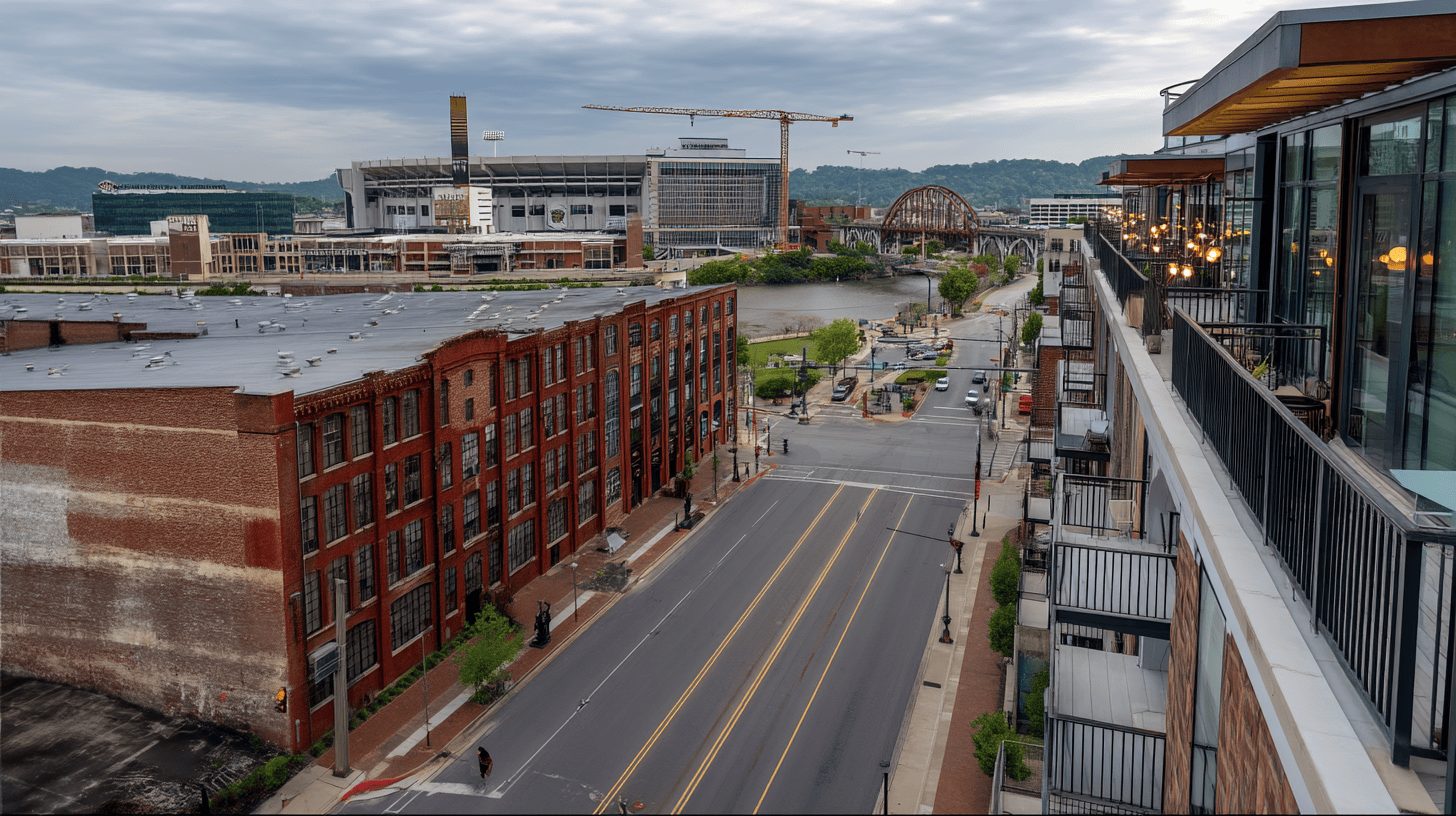
Knoxville, Tennessee—a city of hidden contrasts, where the Tennessee River’s placid flow meets the roar of Neyland Stadium on a Saturday. Blink, and you’ll see a city that’s quietly reinventing itself through a mix of new builds and revitalized gems. This isn’t your glossy visitor’s guide or a stale real-estate pitch. We’re diving deep into the raw side of Knoxville’s development scene: the hotspots and hidden corners shaping 2025. If you’re looking to buy, invest, or just keep your finger on the pulse of a city in flux, keep reading.
Below, we spotlight nine of the most fascinating developments across Knoxville—some brand-new, some reimagined after years of neglect. Expect a dose of the “messy, authentic, and raw” because, let’s face it, progress seldom comes wrapped in a neat little bow. Let’s get started.
Regas Square: High-End Living Meets Downtown’s Grit
Quick Facts
- Type: Mixed-use redevelopment (condos + retail)
- Location: Downtown Knoxville, corner of Gay Street and Depot Avenue
- Notable For: Upscale condos, walkability to Market Square, transformation of an iconic local site
What’s Happening?
Regas Square took over the old site of Regas Restaurant—an institution dating back to 1917. Many locals cried foul when the beloved eatery closed, but the new project aims to honor some of that old-school charm while dragging the spot into the 21st century. The big draws? Luxury condos with hardwood floors, high ceilings, and balconies overlooking the downtown skyline. The ground-floor retail has curated shops, artisanal coffee, and, rumored to be launching soon, a craft cocktail bar that nods to the building’s storied past.
- Pros:
- Perfect for downtown devotees who want to walk to the Tennessee Theatre, Market Square, or UT events.
- Condo owners can tap into building amenities like a gym, private parking, and a rooftop lounge (depending on the floor plan).
- Good potential for short-term rental or corporate housing—though building rules may vary.
- Cons:
- Luxury price tags for “standard” square footage. You’re paying for location.
- Urban living means you’ll deal with downtown noise—rumbling trucks, early-morning deliveries, late-night revelers.
- Some locals roll their eyes at yet another high-end spot replacing what was a comfort-food mecca.
Despite the sticker shock, Regas Square is the poster child for Knoxville’s downtown renaissance. If you love walkability and a brand-new take on a historic site, you’ll want to at least walk through the lobby and see if the vibe fits your dream home.
2. The Mill & Mine District: Revitalizing the Warehouse Scene
Quick Facts
- Type: Entertainment venue meets urban lofts and creative workspaces
- Location: Downtown’s Warehouse District, off West Depot Avenue
- Notable For: The Mill & Mine music venue, industrial-chic architecture, small-batch breweries
What’s Happening?
Once a run-down industrial area, The Mill & Mine District has morphed into one of Knoxville’s coolest corners—at least by local standards. While the music venue has been rocking out for a few years, 2025 brings fresh expansions: new lofts aimed at young professionals, breweries tapping into local flavors, and coworking spaces that smell like freshly brewed espresso and ambition.
- Pros:
- A playground for those who thrive on creative energy. You’re never far from a live concert or an art pop-up.
- The industrial-chic lofts have authentic design elements—exposed brick, polished concrete floors, high ceilings—rare for a city that usually leans more suburban.
- Great synergy with downtown. Hop on your bike or scooter and Market Square is a few minutes away.
- Cons:
- Parking can be a nightmare on event nights. Be ready to jockey for a spot or shell out for a private garage pass.
- Noise is part of the deal. Living near a music venue means you’ll hear the bass thumping if your windows aren’t well-insulated.
- Property values are climbing fast, and the time to buy “cheap” may have already passed.
If you’re the type who’d rather be in the middle of everything, The Mill & Mine District might scratch that itch. But get ready to pay for the privilege—especially as new condo buildings and modern apartments pop up to meet demand.
South Waterfront Renaissance: From Neglected Shore to Riverside Hotspot
Quick Facts
- Type: Mixed-use (residential + commercial + recreational)
- Location: South side of the Tennessee River, facing downtown Knoxville
- Notable For: Riverwalk, scenic views of the skyline, a once-underutilized area springing to life
What’s Happening?
Knoxville’s south waterfront used to be a stretch of battered warehouses, vacant lots, and a scattering of older homes. But city initiatives have poured fresh life into the area, focusing on walkable greenways, improved river access, and new housing developments. You’ll find modern townhomes with floor-to-ceiling windows that flaunt that riverside panorama—some even come with rooftop terraces.
- Pros:
- Killer views of the downtown skyline across the water, especially at sunrise or after dark when lights shimmer on the river.
- A legitimate sense of “community rebirth.” If you love underdog neighborhoods on the rise, you’ll dig it.
- Easy access to city-sponsored amenities like Suttree Landing Park, boat ramps, and walking trails.
- Cons:
- Infrastructure is still catching up. Some roads feel half-finished, and certain pockets remain a bit rough around the edges.
- Depending on the building’s elevation, flooding can be a concern. Investigate flood insurance (and hold your breath for insurance quotes).
- Prices for river-facing units have soared—don’t expect a discount just because the area’s under revitalization.
If you’re looking to blend nature with city living, the South Waterfront might be your sweet spot. Just know you’re signing up for an evolving neighborhood, complete with the occasional growing pain.
Cedar Bluff Overhaul: Suburban Redux
Quick Facts
- Type: Retail and residential expansions in a well-known suburban corridor
- Location: West Knoxville, near Cedar Bluff Road and Kingston Pike
- Notable For: Busy commercial center, close to top-rated schools, multiple ongoing redevelopments
What’s Happening?
For years, Cedar Bluff was the “convenient but soulless” shopping strip of West Knoxville. In 2025, however, we’re seeing an influx of more thoughtfully planned developments. The old strip malls are being razed or revamped into mixed-use complexes with office space upstairs and restaurants or shops below. A few adjacent subdivisions are launching new phases, boasting modern single-family homes with smaller lots and lower maintenance.
- Pros:
- Superb access to I-40, Pellissippi Parkway, and every big-box store your heart desires.
- Great school zones, which can help property values hold strong even if markets fluctuate.
- You’ll find a good mixture of older homes (often cheaper) and brand-new builds.
- Cons:
- Traffic. Cedar Bluff can be a logjam at rush hour, with frustrated commuters weaving between service roads.
- Lacks the uniqueness of downtown or Hardin Valley’s new developments; some see it as a sea of chain stores.
- Prices aren’t exactly bargain-bin, thanks to the area’s popularity. You might pay a premium for the suburban convenience.
If your top priority is convenience—close to Costco, Target, and well-rated schools—Cedar Bluff’s transformation might be calling your name. Just be prepared for plenty of red lights on your daily commute.
Old City Revitalization: Historic Buildings with a Modern Edge
Quick Facts
- Type: Adaptive reuse of historic structures, plus new infill projects
- Location: Knoxville’s Old City, roughly centered on Central Street
- Notable For: Music venues, craft breweries, eclectic restaurants in century-old buildings
What’s Happening?
The Old City has danced on the edge of transformation for ages, flirting with revival but never quite crossing the finish line. Over the last few years, though, we’ve seen a real push: new restaurants with local flair, upper floors of historic buildings converted into loft apartments, and talk of a “creative corridor” that fosters art studios and coworking spaces. Old industrial buildings are being gutted, retaining exposed brick and steel beams—just what the “urban pioneer” set loves.
- Pros:
- Rich in character—no cookie-cutter exteriors here. The old bones exude a gritty charm that’s hard to fake.
- Proximity to downtown events and UT campus. You can stumble home from a WDVX concert or volunteer at a festival without needing a car.
- The bar and music scene is alive and well, attracting an artsy, young demographic.
- Cons:
- Revitalization is a slow burn. Some blocks remain vacant or have stubborn absentee landlords.
- Parking is famously difficult, and some older buildings come without dedicated parking at all.
- Nightlife noise and the occasional rowdy crowd might test your patience if you’re seeking peace.
For those who want authenticity and don’t mind a little grit under their fingernails, Old City developments can be a gem. Just know you’re signing up for an evolving district where the line between “charmingly edgy” and “slightly sketchy” can blur.
Hardin Valley Boomtown: The Suburb That Won’t Quit Growing
Quick Facts
- Type: Rapid suburban expansion with new subdivisions, schools, and commercial centers
- Location: Northwest of Knoxville, off Pellissippi Parkway (I-140)
- Notable For: Master-planned communities, spanking-new schools, serious commuter appeal
What’s Happening?
Hardin Valley used to be farmland. Fast forward a decade, and it’s a near-frenzy of new neighborhoods, each with their own brand of suburban paradise. In 2025, the pace hasn’t slowed. Builders continue to fill open fields with single-family homes featuring open-floor plans, Craftsman facades, and two-car garages. A new commercial development or two are rumored, complete with trendy cafes and big-box staples. Think Farragut minus some of the older (and pricier) legacy subdivisions.
- Pros:
- Shiny new everything: roads, schools, grocery stores, chain restaurants. Perfect if you love brand-new construction.
- Often cheaper than Farragut for comparable square footage, though that gap is narrowing.
- Family-friendly vibe with sidewalks, playgrounds, and community pools aplenty.
- Cons:
- Cookie-cutter design. If you crave historic charm or unique architecture, you’ll be disappointed by the “builder’s catalog” look.
- Traffic is already straining roads not built for the population surge. Expect future congestion.
- Rapid growth can mean noisy construction sites for years to come.
Hardin Valley is the darling for families seeking a brand-new suburban dream. If you can handle the longer drives and prefer the convenience of chain stores over mom-and-pop shops, this is your sweet spot.
North Central Corridor: Gentrification or Revival?
Quick Facts
- Type: Street-by-street transformation of older neighborhoods and commercial strips
- Location: North of downtown, around North Central Street extending into Happy Holler area
- Notable For: Quirky local businesses, mid-century homes in need of TLC, a slow (and sometimes controversial) wave of gentrification
What’s Happening?
Once an afterthought, North Central is attracting small-scale developers and entrepreneurial homebuyers who see the potential in neglected bungalows and wide sidewalks. On the commercial side, you’ll see coffee shops, art collectives, breweries, and vintage clothing stores, some popping up in old auto garages or vacant storefronts. The city has also improved sidewalks and streetscaping to encourage foot traffic.
- Pros:
- Prices can still be relatively affordable—especially if you’re comfortable tackling a fixer-upper.
- Vibrant, local-first vibe with folks who genuinely want to see the neighborhood thrive.
- Easy access to downtown, Old City, and other hotspots.
- Cons:
- Some streets are still rough around the edges. Crime rates can vary significantly by block.
- If “gentrification” is a dirty word to you, be aware that rising property values displace longtime residents. This is a contentious point for the area.
- Not all houses are up to modern code—some might need costly rewiring, new plumbing, or structural repairs.
If you’re the type who loves an underdog neighborhood with soul—and you’re okay rolling up your sleeves for renovations—North Central might surprise you in the best possible way.
8. West Town Commons: From Mall Sprawl to Mixed-Use Marvel
Quick Facts
- Type: Large-scale redevelopment near West Town Mall
- Location: Kingston Pike corridor, just west of Papermill Drive
- Notable For: Retrofitted mall surroundings, adding office and residential components to the retail scene
What’s Happening?
West Town Mall has anchored West Knoxville’s shopping scene for decades, but now developers want to push beyond the cookie-cutter mall experience. The West Town Commons project envisions a “lifestyle center” blending new apartments, shared office spaces, rooftop bars, and more green space. Think strolling from your condo to a coffee shop, then maybe heading to a coworking office—without crossing a single dreaded parking lot.
- Pros:
- Convenience: You’re near major highways and can still walk to shops, restaurants, or a movie theater.
- Potential for live-work-play: If the plan succeeds, you could handle a day’s errands on foot (rare in Knoxville).
- Upgraded landscaping and community spaces—less asphalt jungle, more tree-lined walkways.
- Cons:
- Construction madness in an already congested area. If you hate detours and traffic cones, brace yourself.
- New apartments or condos likely won’t be cheap, riding the wave of “upscale suburban living.”
- The vibe could remain chain-heavy, lacking the local flair you’d find downtown.
Still, if you’re a die-hard West Knox fan, West Town Commons might offer a slice of that “urban-suburban” hybrid. Sure, it’s a developer’s vision in a big retail hub, but it might just bring a spark to an area once defined by endless parking lots.
9. Maplehurst & UT Fringe: The Next College-Centric Hub
Quick Facts
- Type: Student-oriented housing, revitalized historic homes, and new apartment complexes
- Location: Between the University of Tennessee campus and downtown, around the Maplehurst neighborhood
- Notable For: Quirky older homes, close to UT events, a blend of students and permanent residents
What’s Happening?
As UT continues to grow, so does the demand for nearby housing. Maplehurst has long been a hidden gem with hundred-year-old homes perched on bluffs overlooking the river. In 2025, some of these older houses are getting polished up, while new apartment complexes cater to a mix of students, faculty, and young professionals who want to walk or bike to campus. Expect modern floor plans that hold multiple roommates comfortably, or smaller units with built-in desks, ideal for grad students.
- Pros:
- Unbeatable location if you’re tied to UT—no wrestling with campus parking nightmares.
- Potential rental income if you buy a multi-bedroom property near campus. Students always need housing.
- The older homes here have a genuine historic flair, many with wraparound porches and vintage architectural details.
- Cons:
- Student neighbors can mean noise, parties, or that dreaded post-game street mess.
- The hillside geography can complicate driveway layouts or expansions.
- Some UT expansions have bulldozed entire blocks—stability in the immediate area can feel uncertain.
If you crave an academic atmosphere and don’t mind the occasional frat party echo, Maplehurst might be the sweet spot. Just be sure to do your homework on the property’s condition and potential for campus-driven turnover.
Knoxville’s Development Playbook: Tips for Prospective Buyers
- Dig Beneath the Sales Pitch
- A slick brochure can hide a multitude of sins. Always hire your own inspector, even for new builds, because Knoxville’s hills, flood zones, and older infrastructures can create sneaky structural problems.
- Watch the Traffic Patterns
- Knoxville’s highways and arteries get clogged fast—especially Kingston Pike or Cedar Bluff Road at rush hour. Map out your daily commute before committing to a purchase.
- Check on Zoning & HOA Rules
- From downtown condos to suburban developments, know the rules. Some HOAs ban short-term rentals or even certain paint colors. Downtown historic overlays may limit exterior changes.
- Mind the Noise
- New developments often come with ongoing construction. In established “hip” districts, you’ve got music venues, bars, or student parties. Figure out your noise tolerance ahead of time.
- Floodplains & Insurance
- The Tennessee River and its tributaries can flood. If you’re eyeing a waterfront or low-lying property, factor in potential flood insurance costs or site-specific building considerations.
- Future-Proof Your Investment
- Knoxville’s population is growing, meaning more traffic, more services, and more competition for real estate. Bet on areas with strong fundamentals (school districts, job growth, or unique location perks) if you’re seeking long-term value.
The Bottom Line: Knoxville’s Not Stopping Anytime Soon
Knoxville’s development scene in 2025 is a living, breathing patchwork: from the gritty charm of Old City to the brand-new expansions of Hardin Valley, from the polished condos at Regas Square to the experimental pockets of North Central. The city is no longer the sleepy “little brother” to Nashville—it’s forging its own identity, fueled by a mix of local passion, corporate investment, and the unstoppable tide of newcomers who’ve discovered East Tennessee’s secrets.
Yes, some of these developments come with corporate gloss, or maybe they’re overshadowing beloved local haunts. And yes, traffic can be a daily headache if you’re not strategic. But that’s the price of growth—an evolving city stumbles here and there, but eventually finds its rhythm.
If you’re scouting for a future home or an investment property, take the time to walk these areas. Talk to the locals (Knoxville folks are famously friendly, or at least they like to think they are). Keep an eye on the small details—a neighborhood coffee shop that’s always packed, a quiet street ripe for flipping older homes. This is the real Knoxville story: a city rewriting its narrative one development at a time, refusing to be pigeonholed as just another Southern college town.
In the end, whether you’re drawn to the bright lights of downtown’s nightlife, the suburban sprawl of Hardin Valley, or the quirky underbelly of North Central, there’s a corner of Knoxville waiting for you to make your mark. Just be ready for the ride—because there’s no going back once the orange-and-white spirit seeps into your bloodstream.
8 Must-Know Tennessee Laws Before You Make the Big Move
Thinking about packing your bags and heading to Tennessee? You’re not alone. The Volunteer State’s star has been on the rise, thanks to its low cost of living, booming real estate scene, and year-round Southern charm. But let’s cut through the polite “Bless Your Heart” veneer and get real about what you need to know—legally—before you pull that U-Haul into a new zip code. From the state’s famously no state income tax rule to the nitty-gritty of real estate disclosures, plus the Castle Doctrine that might just surprise you, here’s the unfiltered 2025 guide to Tennessee laws every newcomer needs to know.
No State Income Tax: The Myth, The Legend, and The Fine Print
The Headline
One of the biggest magnets pulling newcomers to Tennessee is the big, bold “No State Income Tax” on wages. That’s right: your paycheck stays yours, at least in the sense that you won’t see a line item for state income tax. It’s a main selling point for folks fleeing high-tax states, especially from the Northeast and the West Coast.
The Real Story
But hold your horses—just because you’re free from wage-based state income tax doesn’t mean you’re off the hook entirely.
- Sales Tax: Tennessee compensates for that missing revenue with one of the highest combined sales taxes in the country. Base state tax is 7%, and local add-ons can push that total to 9.75% or higher. Grab a new TV or stock up on groceries, and you might do a double-take at your receipt.
- Groceries: Although groceries have a slightly lower sales tax rate (usually around 4% state plus local adds), it’s still a punch to the wallet if you’re used to a less punishing system.
- Property Taxes: The good news is that property taxes are generally lower than in many other states—but they vary by county, and fast-growing metro areas like Nashville and Knoxville can surprise you.
Pro Tip
If you’re moving from a high income-tax state, you’ll probably celebrate the difference come payday. Just don’t forget to factor in everyday purchases. Between grocery hauls and home-improvement sprees, those extra sales tax pennies add up fast.
Establishing Residency: It’s (Mostly) Straightforward—Until It’s Not
The Basics
Want to make it official and call yourself a Tennessee resident? Generally, you’ll need to:
- Live in the state: Typically, six months is the “safe” timeframe for many legal definitions of residency, but there’s no ironclad rule across all state matters.
- Get a TN Driver’s License: If you’re planning to drive, you’ve got 30 days from the moment you move here (some say it’s 60, but 30 is the safer bet) to swap that old license for a shiny Tennessee one.
- Register Your Vehicle: You’ll also need to get TN plates, which might require an emissions test depending on the county—though some counties have phased those tests out in recent years.
- Update Voter Registration: If you want a say in local politics, or you’re just tired of all the out-of-state spam from your old district, you can sign up to vote as soon as you have a verified TN address.
The Curveballs
- College Tuition: If you have kids or you’re heading to school yourself, be aware that in-state tuition at public universities requires proof of residency for at least 12 consecutive months (with some exceptions).
- Municipal Variances: Certain city services—like library cards or local tax breaks—might require extra proof of address. Don’t be surprised if you need a utility bill or lease agreement in your name.
- Remote Workers: If you’re telecommuting for an out-of-state employer, your “residency” for tax and legal purposes might raise eyebrows elsewhere, but as far as Tennessee is concerned, you’re golden once you fulfill the standard criteria.
Pro Tip
Get on these tasks quick. Technically, you can get fined if you’re driving around with out-of-state plates for too long, though it’s not super common. Still, better safe than sorry—especially if you’re driving around with the moving truck’s rental license plate from another state.
The Castle Doctrine: Your Home Is Your Fortress—With Limits
The Basics
Tennessee is a “Castle Doctrine” state, which in plain English means you have the right to defend yourself (and others) in your home—or sometimes in your vehicle—if you reasonably believe you face an immediate threat of death or serious bodily harm. That said, the laws can be quite nuanced.
How It Works
- Inside Your Home: If a stranger breaks in, the law presumes you had a reasonable fear of imminent harm. This legal presumption can protect you from prosecution if you use lethal force.
- Vehicle & Business: The state extends similar protections to your occupied vehicle and your place of business, though the specifics can be murkier.
- No Duty to Retreat: Tennessee doesn’t impose a “duty to retreat” if someone threatens you in these protected spaces. That’s different from some states where you must try to escape first.
Proceed With Caution
Just because Tennessee leans pro-self-defense doesn’t mean you have a green light to escalate every tense situation. Prosecutors still look at whether your actions were “reasonable.” If you chase someone down the street after they’ve run off, you’re way outside the Castle Doctrine’s domain.
Pro Tip
If you’re considering buying a firearm for home defense, take a certified safety course. You’ll learn the intricacies of Tennessee’s self-defense laws and how to avoid landing yourself in a legal quagmire after the fact.
Real Estate Disclosures: Sellers Can’t Hide All Their Skeletons
The Skinny
Buying property in Tennessee? Know this: the state requires sellers to provide a Property Condition Disclosure form detailing issues like plumbing problems, foundational cracks, or neighborhood disputes. Gone are the days (hopefully) of a seller conveniently “forgetting” to mention the leaky basement that turns into a swamp every spring.
What’s Required
- Defects & Damage: Sellers must reveal known structural, electrical, plumbing, or HVAC issues.
- Pest Problems: Termites, rats, you name it—if the seller knows about it, they should disclose it.
- Environmental Hazards: Presence of lead paint, mold, or asbestos must be on the table.
- HOA or Covenants: If the property falls under a homeowners association, you need to know about fees, special assessments, and those infuriating rules about what color you can paint your shutters.
Exceptions & Loopholes
- “As Is” Sales: Even with an “as is” clause, a seller can’t lie or withhold information they’re aware of. But watch out—some might claim ignorance or claim it’s never been an issue.
- Foreclosures & Estates: Lender-owned homes or estate sales might be exempt from certain disclosures. That doesn’t mean there are no problems, just that the bank or executor might not know or be required to share them.
Pro Tip
Always—always—hire a qualified home inspector. The cost might sting upfront, but if you discover hidden foundation issues before signing on the dotted line, you’ll be grateful.
Short-Term Rental Rules: The Great Airbnb Tug-of-War
The Lowdown
Tennessee’s tourism game is strong, and that means short-term rentals (STRs) are big business. Nashville’s been in a high-profile battle over Airbnb regulations for a while, but even in Knoxville or Chattanooga, local governments have started imposing rules on how and where you can run an STR.
Common Regulations
- Permits: In many cities, you need an STR permit, which might come with an annual fee.
- Occupancy Limits: Don’t expect to cram 20 people into a 2-bedroom bungalow without raising official eyebrows.
- Zoning Restrictions: Some areas simply won’t let you run a short-term rental unless it’s owner-occupied or meets specific neighborhood guidelines.
- Hotel Tax: Depending on the county, you might have to charge and remit local occupancy taxes on top of the usual sales tax.
Why It Matters
If you’re buying in Tennessee with an eye toward renting out your place on weekends, do your homework. The wrong zip code could mean zero income potential, or worse, fines. On the flip side, an area friendly to STRs might yield a side hustle that covers half your mortgage—just be prepared to navigate the evolving web of local laws.
Pro Tip
Call the county clerk’s office or local zoning department before you close on the property. They’ll clarify whether you can (legally) run that Smoky Mountain Airbnb you’ve been daydreaming about.
Tenant-Landlord Laws: From Late Fees to Evictions
The Basics
Planning to rent out a property? Or maybe you’re a tenant wanting to keep your security deposit safe? Tennessee’s landlord-tenant laws strike a balance, but you’ll want to know a few specifics:
- Security Deposits: Landlords must keep the deposit in a separate account (in most cases) and return it within 30 days of lease termination—unless you parted ways leaving major damage.
- Late Fees: Tennessee law caps how late fees can be structured. Typically, you can’t slap on a late fee until rent is at least five days overdue, and the total fee must be “reasonable.”
- Maintenance: Both parties have responsibilities. Landlords must keep the place habitable (heat, water, etc.). Tenants must not trash the property beyond normal wear and tear.
- Evictions: The “Uniform Residential Landlord and Tenant Act” (URLTA) applies in counties with more than 75,000 people. There’s a standard notice period (14 days for non-payment) before you can file for eviction, but the timeline can vary.
Lesser-Known Quirks
- Grace Periods: Some landlords will still charge you if you’re a day late, but the law says you can’t be slapped with a fee until that five-day grace. Doesn’t mean they can’t start the eviction process, though—just the fee.
- Non-URLTA Counties: If you live in a rural county with fewer than 75,000 residents, the rules might be less strict, though you’re still bound by basic state statutes.
Pro Tip
If you’re a prospective landlord, consider joining a local property owners association. They’ll keep you updated on changing rules and local court tendencies (like which judges are tough on evictions vs. those who push mediation).
Homestead Exemptions & Property Tax Relief: Protecting Your Castle
The Gist
Tennessee offers a homestead exemption that protects a certain amount of equity in your home if you end up in bankruptcy. It’s not as generous as some states (like Florida or Texas), but it’s something. Beyond that, there are property tax relief programs for elderly, disabled, and veteran homeowners.
Homestead Exemption Basics
- Standard Amount: Tennessee’s homestead exemption is typically $5,000 for an individual or $7,500 for a joint filing. That said, the amounts can scale up if you have dependents, or if you’re over 62.
- Why You Need It: In a worst-case scenario (say, catastrophic medical bills or a failed business venture), the exemption can keep a portion of your home’s value out of creditors’ reach.
Property Tax Relief
- Elderly Homeowners: If you meet certain age (65+) and income requirements, you can get a chunk of your property taxes reimbursed by the state.
- Disabled & Veterans: Additional programs offer tax breaks or caps, especially if you’re a disabled veteran.
- Local Variations: Counties and cities sometimes tack on their own relief schemes, so check with your local trustee’s office.
Pro Tip
If you’re close to retirement or worried about future financial storms, read up on these exemptions before you buy. A property that qualifies for certain local tax caps might save you a bundle in your golden years.
Fireworks, Liquor Laws & The “Weird Stuff” You Need to Know
Tennessee’s not just about big-ticket laws like taxes and property rights. Sometimes, the local quirks are what trip newcomers up. Here’s a quick sampler:
Fireworks
- Permits & Restrictions: Some counties let you buy and set off fireworks year-round (with certain noise restrictions), while others have tight windows around the Fourth of July and New Year’s Eve.
- City vs. County: Many cities ban fireworks within city limits unless you get a special permit. Cross the county line, and you might find a roadside stand selling everything from sparklers to mortar shells, no questions asked.
Liquor & Beer Laws
- Wine in Grocery Stores: Relatively new (passed in 2016), it allows wine sales in groceries, but only during certain hours (8 AM to 11 PM, Monday-Saturday, and on Sunday after 10 AM in some locales).
- Liquor Stores: They can sell beer, but grocery stores can’t sell liquor. Also, be prepared for “dry” pockets in some rural areas—yes, that still happens.
- Open Container: No open containers in the car for the driver, obviously. Passengers? Tennessee’s laws are a bit murky—some jurisdictions strictly ban it for passengers, while others look the other way. But don’t push it.
Sunday Laws & Other Oddities
- Car Dealerships: Many counties forbid car dealerships from operating on Sundays. Don’t be surprised if you show up ready to negotiate a deal and the lot’s closed.
- Hunting & Fishing: Licenses are mandatory, and bag limits can be strict. If you plan to enjoy the outdoors, get the correct permit or risk a hefty fine.
Pro Tip
Whether you’re lighting a sparkler or picking up a six-pack on a Sunday, check local ordinances. Tennessee might be loosening up over time, but old traditions (and restrictions) still run deep, especially in smaller towns.
Final Thoughts: Read the Fine Print, Then Read It Again
Moving to Tennessee can feel like you’re stepping into a simpler life—rolling hills, friendly neighbors, and no state income tax, baby! But behind that sweet tea exterior lies a tapestry of laws, regulations, and quirks that can catch newcomers off-guard. Understanding how the Castle Doctrine really works, what it takes to establish residency, and the nuts and bolts of real estate disclosures could save you from some major headaches—and possibly a chunk of change—in the long run.
If you’re unsure about any specifics, consult a local attorney or a reputable realtor. Laws can change rapidly, especially with the state’s growing population and evolving housing market. Whether you’re a first-time buyer aiming for a piece of the suburban dream or a retiree wanting a quiet cabin in the Smokies, a little legal homework goes a long way in smoothing your transition.
So, welcome to Tennessee: land of high sales tax, strong property rights, and a fierce sense of independence. Learn the ropes, stay flexible, and you’ll settle in just fine. And once you’re nestled in, you might never leave—because once that mountain view and mug of sweet tea get under your skin, there’s just no turning back.
10 Best Suburbs of Knoxville in 2025
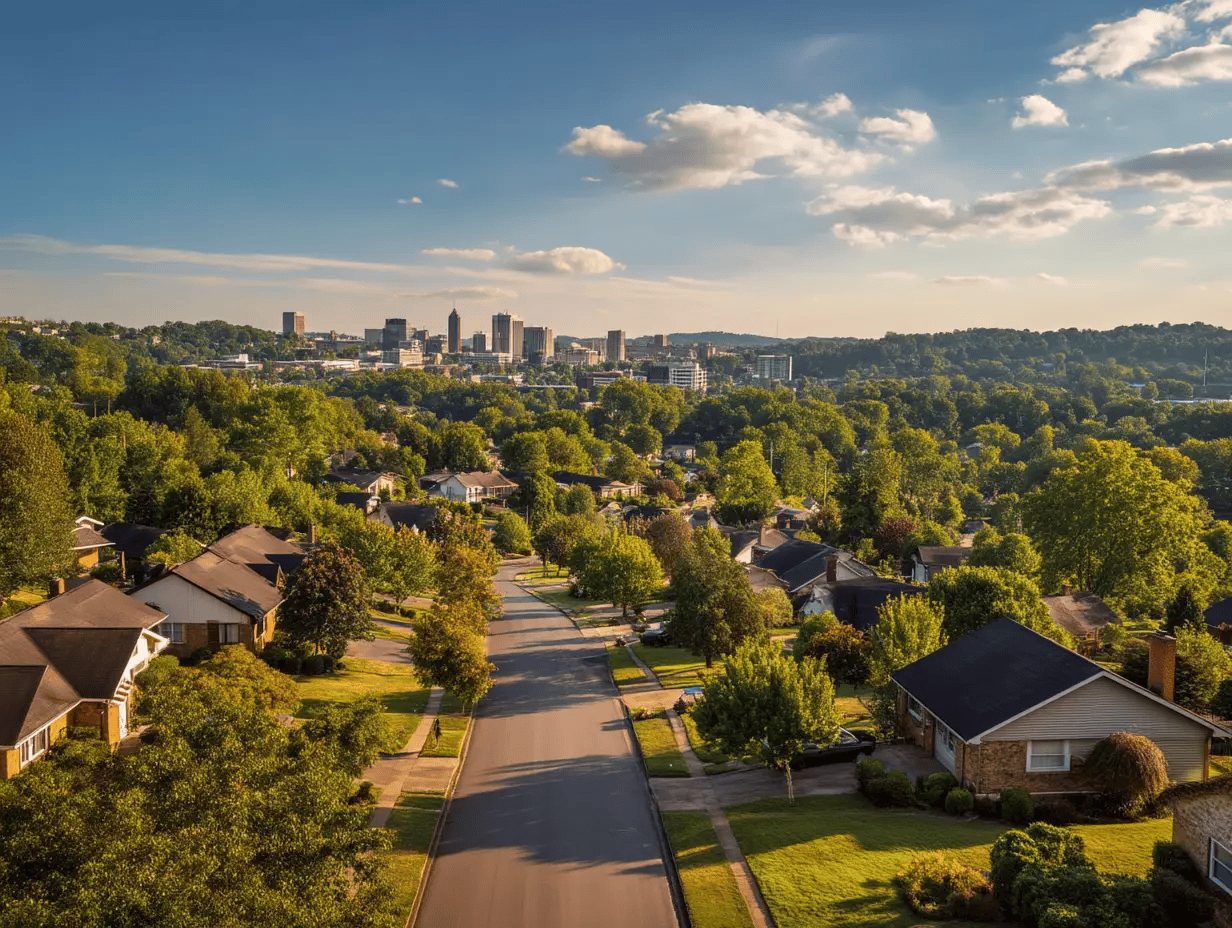
Knoxville, Tennessee has long been the scrappy underdog of the Southeast less flashy than Nashville but still dishing out that sweet Southern flavor and a healthy dose of Appalachian grit. It’s also a city of contrasts, where a short drive can take you from a college football mecca (the University of Tennessee, of course) to rolling farmland. If you’re planning to plant roots in the Knoxville area, there’s a whole ring of suburbs that might fit your vibe, each with its own quirks. We’re going to strip away the tourist brochures and walk through some of the best suburbs for buyers who want a piece of that East Tennessee life.
The following 10 suburbs are diverse, each offering something unique—whether it’s top schools, quieter living, or easy access to lakes, mountains, or the downtown scene. Let’s jump right in.
1. Farragut: The Old Standby for Suburban Comfort
Population & Vibe
If you’ve poked around Knoxville at all, you’ve probably heard of Farragut—and with good reason. It’s one of the more “polished” suburbs, with manicured lawns and big-box shopping galore. Officially, about 24,000 people call Farragut home, but it feels bigger because the commercial sprawl bleeds into surrounding areas. It has that planned-community vibe, which some folks love and others find too uniform.
Housing & Cost
Farragut’s got some of the priciest real estate in the Knoxville region. Think sturdy brick two-stories, newer developments with homeowner associations, and a lot of “starter mansions” in the $500,000–$800,000 range. Older ranchers and townhomes pop up here and there, but if you’re on a tight budget, Farragut might be a stretch. On the flip side, that consistent growth often means decent resale value if you have to move later.
Schools & Commute
Farragut High is repeatedly touted as one of Knox County’s top public schools. Traffic on Kingston Pike can be a slog during rush hour, but you’ll have easy access to I-40, so you can zip into downtown in about 20-25 minutes if you time it right. Just know that “if you time it right” is doing a lot of heavy lifting—Knoxville traffic is no Atlanta, but it can surprise you in peak hours.
Local Insider Take
Farragut can feel more like a suburban bubble than a true East Tennessee town. Some folks love the convenience—Target, Costco, and chain restaurants all within a stone’s throw—while others might miss a more eclectic neighborhood vibe. If you want predictability, strong schools, and tidy neighborhoods, Farragut delivers.
2. Maryville: Gateway to the Mountains
Population & Vibe
Maryville (pronounced more like “Murr-vull” by locals) sits about 20 miles south of Knoxville and has around 31,000 residents. It’s a smaller city in its own right, serving as a gateway to the Great Smoky Mountains. There’s a college-town feel thanks to Maryville College, plus a historic downtown that’s actually got some charm—local shops, coffee spots, even a craft brewery or two.
Housing & Cost
Prices in Maryville are rising but still more approachable compared to Farragut. You’ll find a mix of older ranch homes from the 1970s-80s in the $250,000–$350,000 range alongside bigger new construction developments inching toward $500,000. Locals say you can still snag a fixer-upper on a couple of acres if you’re willing to head a bit further into the countryside.
Proximity to the Smokies
Maryville sits right on the path to Townsend and the quieter side of the Smokies. If you love hiking or scenic drives and want to avoid the “touristy” chaos of Pigeon Forge or Gatlinburg, Maryville is gold. Weekend trips to Cades Cove or Big Meadow Campground are practically in your backyard.
Local Insider Take
Maryville still retains a small-town vibe despite its growth. People look out for each other, and if you’re an outdoors enthusiast, you’ll have easy access to some of the best hiking in the Southeast. The commute to Knoxville can be 30-40 minutes depending on your route, but if you work remotely or don’t mind the drive, you’ll get the best of both worlds: city amenities nearby and a mountain playground to the south.
3. Alcoa: Home of the Aluminum Legacy
Population & Vibe
Alcoa is Maryville’s neighbor, and you can practically trip across the city line. With about 10,000 residents, it’s smaller and historically built around the Aluminum Company of America (hence the name). Don’t expect a robust downtown—Alcoa’s more about strip malls and the Alcoa Highway corridor—but it’s an extremely convenient launch point if you travel often, thanks to McGhee Tyson Airport sitting right there.
Housing & Cost
Housing here is more modestly priced than in Maryville or Farragut. You can find older homes in established neighborhoods running from $220,000 to $350,000. A handful of new developments cater to first-time buyers or small families who want a quick commute to Knoxville or the airport. Alcoa also has some rental opportunities if you’re not ready to buy immediately.
Commute & Amenities
You’re about 15-25 minutes from downtown Knoxville via Alcoa Highway—assuming you don’t get stuck in construction (and there’s often construction). Shopping is easy, with major retailers sprinkled along the highway, and Maryville’s downtown is just a few minutes away if you crave a more quaint restaurant scene.
Local Insider Take
Alcoa flies under the radar for a lot of relocators, but its location can’t be beat. You can be at the Smoky Mountains or UT campus in less than half an hour, and if you fly frequently, you can practically roll out of bed and be at the airport. Just be aware that the area around the highway is heavily commercial, so if you’re looking for scenic farmland, Alcoa might not scratch that itch.
4. Powell: The Underdog Suburb North of Downtown
Population & Vibe
Head north of Knoxville proper, and you’ll find Powell, an unincorporated community with a more rural flavor. There’s no official city population count, but estimates hover around 13,000 to 15,000 folks. Powell’s had a growth spurt lately, with new subdivisions popping up alongside farmland that’s been in families for generations. It’s a balancing act between modern suburban sprawl and old-school East Tennessee farmland.
Housing & Cost
Compared to the pricier west side suburbs, Powell can be a relative bargain. It’s not unusual to see 3-bedroom, 2-bath ranch-style homes for under $300,000 if you jump on listings quickly. Newer builds go up to the $400,000–$500,000 range. Because it’s unincorporated, you may not have the same city services, which can be a plus (lower taxes) or a minus (less infrastructure) depending on how you see it.
Commute & Lifestyle
Commute times to downtown Knoxville can be 20-30 minutes, but I-75 can get clogged, especially around rush hour. Powell doesn’t have a flashy downtown, but it’s got its local diners, a few chain restaurants, and some community-centered events. If you’re looking for a place that’s less developed than Farragut or Turkey Creek, Powell might give you a little breathing room.
Local Insider Take
Some folks who grew up in Powell feel protective about preserving its rural heritage, while newcomers might want modern amenities. That tension can boil up in local Facebook groups or county meetings about new developments. Overall, Powell is for the buyer seeking a more laid-back, less cookie-cutter environment, with a (slightly) easier price point than the western suburbs.
5. Karns: Unincorporated Gem with a Community Vibe
Population & Vibe
Karns is another unincorporated spot west of downtown Knoxville, sandwiched between Powell and Hardin Valley. This area has exploded in recent years, attracting families who want a suburban life but can’t afford the premium of Farragut or Hardin Valley. Karns has more of a cohesive community vibe than you might expect—locals identify strongly as “Karns kids” (if they went to Karns High).
Housing & Cost
Expect typical suburban subdivisions with a range of house styles from 1990s brick to new builds. You can find mid-size homes in the $300,000–$400,000 bracket. Many neighborhoods have decently sized lots, sometimes backing up to farmland or wooded areas. Like Powell, Karns lacks an official city center, so it feels more sprawling.
Schools & Commute
Karns High School is central to community life—Friday night football is a big deal. You’re 20-25 minutes from downtown if traffic cooperates, and Turkey Creek shopping (in Farragut) is about the same distance in the other direction. Roads are a mix of two-lane highways and suburban sprawl, so if you commute daily, plan for some morning backups.
Local Insider Take
If you want the convenience of West Knoxville but can’t stomach the Farragut price tag or HOA-laden developments, Karns is a sweet middle ground. It’s not the most walkable area, so you’ll probably rely on a car for everything. But you’ll get a sense of community if you engage with the local schools or youth sports leagues.
6. Hardin Valley: The Rising Star
Population & Vibe
Hardin Valley used to be a bunch of farmland and a smattering of houses. Fast-forward to 2025, and it’s arguably the fastest-growing suburb in the Knoxville region. You’ll find strip malls sprouting up, along with modern subdivisions and the popular Hardin Valley Academy anchoring it all. The vibe is suburban, leaning toward upper-middle-class families and professionals who want new construction.
Housing & Cost
New construction rules here—tract-home builders are everywhere, putting up 4-bedroom, 2.5-bath homes with open floor plans and granite countertops. Prices usually start around $400,000 and climb from there. It’s not out of the question to see brand-new builds for $550,000–$600,000 if they’re in a fancy development with amenities like a pool or clubhouse.
Commute & Lifestyle
Hardin Valley is close to Pellissippi Parkway (I-140), which makes commuting to Oak Ridge or downtown Knoxville fairly straightforward—15-25 minutes, depending on traffic. It’s also near Turkey Creek’s massive shopping district, so chain restaurants, movie theaters, and big-box stores are within a quick drive. If you crave a local bar or coffee shop, you’ll find a few, but Hardin Valley is still figuring out its identity as a new suburban hotspot.
Local Insider Take
If you want shiny, brand-new everything and a strong public school system, Hardin Valley is your jam. But you will see constant construction, and some of the once-lush farmland is disappearing under asphalt and subdivisions. If that’s a bummer, look elsewhere. But if a modern, tightly knit suburban community with convenient commutes is your dream, it’s worth a look.
7. Oak Ridge: Science Town Turned Commuter Haven
Population & Vibe
Oak Ridge sits a bit northwest of Knoxville, historically famous as one of the key sites for the Manhattan Project. The city of about 31,000 residents still houses a significant national lab and a tech scene. That translates to a population that’s a mixture of scientists, engineers, families, and retirees who appreciate the relatively quiet lifestyle.
Housing & Cost
You’ll see everything from mid-century homes built for the Oak Ridge National Laboratory staff to newer subdivisions catering to those who commute to Knoxville or the lab. Prices range widely—renovated mid-century houses can hover around $250,000–$350,000, while larger homes in newer developments push $500,000 or more.
Commute & Culture
Oak Ridge is 20-35 minutes from Knoxville via Pellissippi Parkway. You can also easily hop over to Clinton or Hardin Valley for shopping. Locally, Oak Ridge has some surprising cultural offerings—museums, parks, the Melton Lake waterfront for rowing events, and a decent scattering of restaurants and breweries.
Local Insider Take
If you’re okay being a bit away from the hustle and bustle, Oak Ridge has stable housing prices, a unique local history, and the perks of the national lab’s presence (like good schools). For some, it’s too “removed” from Knoxville’s main action, but for others, that’s exactly the point.
8. Halls (Halls Crossroads): Quiet North Knoxville
Population & Vibe
Halls Crossroads (often just called Halls) is another unincorporated community north of Knoxville with a population around 11,000. It’s quieter than Powell in some ways, with a more “rural-suburban” blend. Residents are fiercely proud of their community, and if you’re not local, you might have trouble distinguishing Halls from Powell. Locals sure can, though.
Housing & Cost
Home prices in Halls can be quite affordable—anywhere from the mid $200,000s for older ranch homes to $400,000 or more for newer construction with scenic farmland views. Like other unincorporated areas, property taxes can be lower, which is a big draw.
Commute & Lifestyle
You’ll spend about 25-35 minutes driving to downtown Knoxville, mostly along TN-331 or US-441, which can get jammed during peak times. Halls has the typical suburban chain stores, but also pockets of farmland where you might occasionally get stuck behind a tractor on the road. It’s that classic East Tennessee scenario of old meeting new.
Local Insider Take
Halls is perfect if you want a relaxed pace of life and are okay with minimal nightlife. Locals joke that if you want a good time, you’ll drive into Knoxville. But families love the strong sense of community and the easy access to outdoor spaces like Beaver Creek or House Mountain.
9. Fountain City: Quirky, Tree-Lined Streets Close to Downtown
Population & Vibe
Often considered a neighborhood of North Knoxville, Fountain City feels like a suburb in its own right. It’s one of the older, established areas, with a population that merges families, retirees, and younger folks who can’t afford West Knoxville. Known for its namesake fountain and duck pond, Fountain City has a unique character—lots of mature trees, older homes, and a kind of “Mayberry” vibe if you get off the main drag.
Housing & Cost
You can find mid-century ranchers, Craftsman homes from the early 1900s, and a sprinkling of new builds shoehorned into older lots. Prices vary a lot—some older homes need updating but can go in the mid $200,000s. Renovated properties easily climb into the $400,000 range.
Proximity to Downtown
Fountain City is only about 10-15 minutes from downtown Knoxville, depending on traffic. Broadway is a straight shot to the city center, though it can get backed up at rush hour. The upshot? You can enjoy a suburban atmosphere while still having quick access to UT games, Market Square, and the Old City nightlife.
Local Insider Take If you’re looking for suburb-like living but want more personality than cookie-cutter subdivisions, Fountain City could be your sweet spot. Just expect some older infrastructure and occasional issues with traffic lights on Broadway. If you don’t mind a bit of an “urban-suburban hybrid,” Fountain City is a hidden gem.
10. West Hills/Bearden: Suburbia Right in the City
Population & Vibe
We’re cheating a bit here because West Hills and Bearden are technically part of the City of Knoxville, but they feel suburban enough to make the list. Located west of downtown, these areas are a blend of older established neighborhoods, commercial corridors, and upscale shopping centers. The vibe is suburban-luxe in parts, especially near West Town Mall, but you can also find some quirkier pockets.
Housing & Cost
Expect older ranch-style homes from the 1960s-70s in the $300,000–$450,000 range, depending on renovations. Some new infill developments push the $600,000 mark or higher. These neighborhoods are popular for their convenience—close to downtown, UT campus, and the interstate.
Lifestyle & Amenities
You’re near everything: West Town Mall, Trader Joe’s, Whole Foods in Bearden, plus a string of local restaurants, breweries, and coffee shops. The Third Creek Greenway offers a slice of nature for biking or jogging, connecting to other greenways around the city. The location is A+ if you want an easy 10-minute commute to downtown (outside of rush hour) and the “hip” local spots that pop up around Bearden.
Local Insider Take
West Hills/Bearden is ideal if you want suburban comfort mixed with city convenience. You’ll pay a premium for that location and might deal with busier streets. But the upside? You can be at a fancy dinner or a UT football game in minutes, then retreat to a tree-lined neighborhood that doesn’t feel cramped or chaotic.
Which Knoxville Suburb Is Right for You?
Knoxville’s suburban scene is anything but one-size-fits-all. From Maryville’s mountain gateway to Hardin Valley’s new-construction boom, and from Farragut’s upscale sprawl to Fountain City’s vintage charm, each option caters to a different type of buyer. Want a quick drive to the Smokies? Maryville or Alcoa might be perfect. Craving bigger houses with modern finishes? Hardin Valley has you covered. Searching for a deal and a bit more elbow room? Powell or Halls might fit the bill.
One thing’s for sure: East Tennessee’s growth isn’t slowing down. These suburbs are transforming fast, meaning that what’s true today could shift drastically in a couple of years. If you’re eyeing a move soon, do the legwork—drive around on a Saturday, check out local shops, talk to neighbors, and get a feel for the place beyond the glossy brochures and real estate listings.
And remember: “Knoxville nice” is a real thing. People here tend to be down-to-earth, quick with a smile, and ready to help newcomers navigate the region. Just don’t be shocked when your neighbor invites you to a University of Tennessee tailgate or a church potluck within days of meeting you. That’s East Tennessee hospitality in action.
Final Word: Locals-Only Tips
- Traffic Timings: Rush hour can be unpredictable. If you commute, do a few test drives at your usual travel times before you commit to a suburb.
- Weather: East Tennessee is humid and can get serious storms. Keep an eye out for flood plains—some suburban homes sit near creeks that swell with heavy rain.
- Local Food: No matter where you go, you’ll find local restaurants that blow chain spots out of the water—hunt them down.
- Outdoor Life: You’re never far from a park, greenway, or lake. Even the “most suburban” suburb has an East Tennessee outdoor gem tucked away.
- Community Events: Each suburb has its own vibe and local happenings—parades, farmers markets, craft fairs. Getting involved is the quickest way to feel at home.
No matter which suburb you settle on, Knoxville and its surrounding areas pack a lot into a relatively manageable region. So do your research, keep your eyes open, and trust your gut. You just might find that perfect slice of East Tennessee life you’ve been dreaming about.
Average Home Prices in Gatlinburg, TN
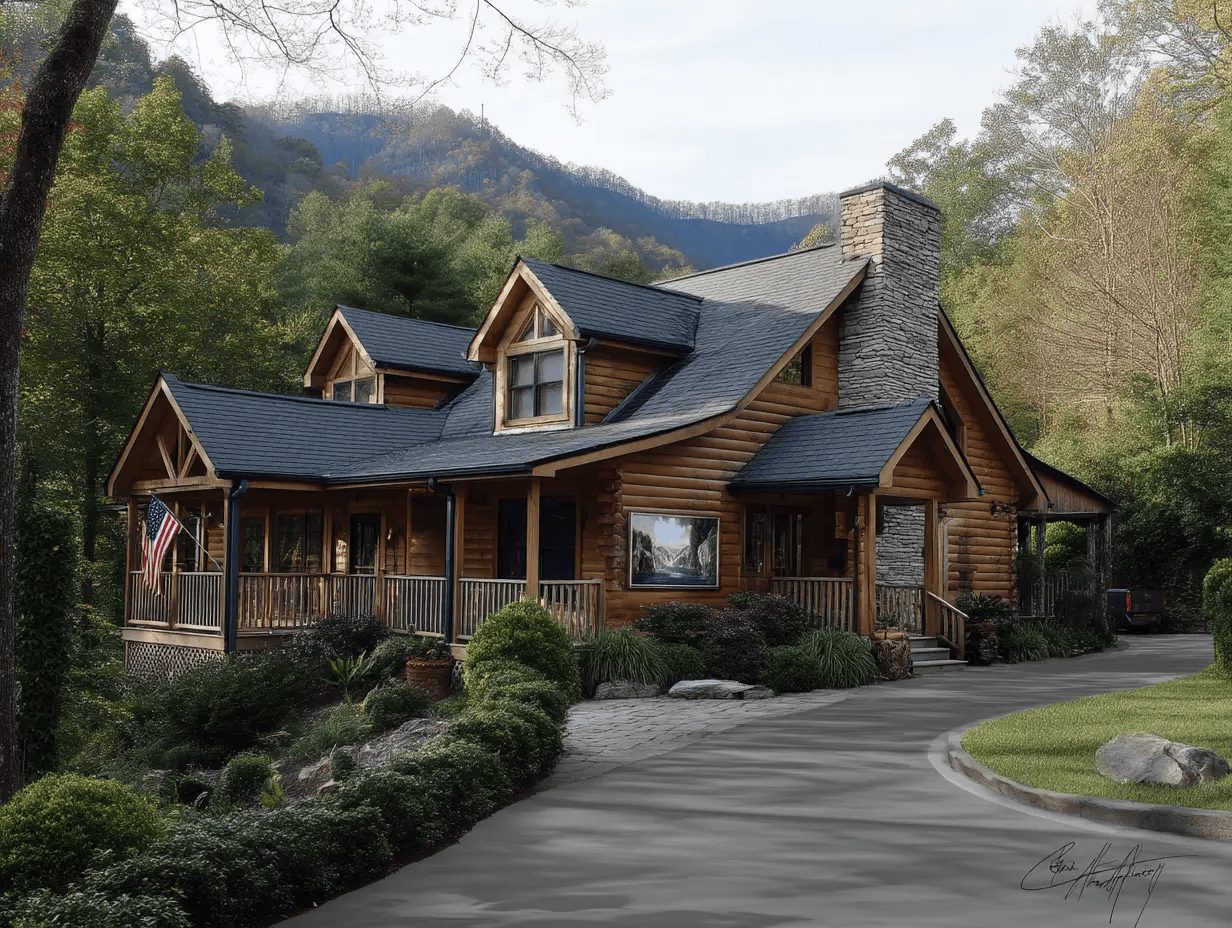
Average Home Prices in Gatlinburg, TN
Gatlinburg, Tennessee: one minute it’s a picture-perfect mountain town, the next it’s a bona fide real estate frenzy thanks to short-term rentals and a year-round tourism boom. If you’re eyeing a slice of this Smoky Mountain paradise, you probably already know the basics: breathtaking views, endless cabin rentals, and enough pancake houses to feed an army of hungry tourists. But what about the actual numbers behind Gatlinburg’s housing market in 2025? Where do home prices stand, are they trending up or down, and how long can you expect your dream home to stay on the market before it’s snatched up?
This is the messy, authentic, and unfiltered look at Gatlinburg’s average home prices—beyond the glossy brochures and pastel Instagram shots. We’ll dig into data you won’t find plastered across every Google result, from real estate trends to “time to pending,” and the reasons behind the year-over-year shifts. Whether you’re dreaming of a cabin with a mountain view or a small home tucked away from the tourist hotspots, let’s get down to the nitty-gritty of buying in Gatlinburg, Tennessee right now.
Setting the Scene: Gatlinburg’s Housing Landscape in 2025
Before we get into the real weeds—numbers, median prices, and market quirks—let’s lay out a bit of local context. Gatlinburg’s population sits around 4,200 permanent residents, but don’t let that small number fool you. On any given weekend, the town can feel like it’s bursting at the seams with tourists. Seasonal foot traffic? That’s ancient history; these days, Gatlinburg attracts travelers all year long, thanks to everything from fall foliage to winter ski runs at Ober Gatlinburg.
This near-constant influx of visitors has a huge impact on real estate. In 2025, short-term rentals remain the name of the game. Whether it’s a downtown condo or a secluded cabin, if it’s got decent mountain views, you’ll find it listed on Airbnb or VRBO. Naturally, that’s jacked up home prices beyond what you’d expect from a sleepy East Tennessee town. Meanwhile, retirees, remote workers, and second-home buyers all scramble to get a piece of the Smoky Mountain lifestyle. The result? A competitive market, a range of listing prices, and lots of nuance that doesn’t make it into the usual “10 Best Places to Live” roundups.
Keep in mind, Gatlinburg still carries the scars of wildfires past, especially from 2016. But resilience is baked into the local DNA. Newer builds mix with older cabins, and the real estate market has adapted to an evolving tourism environment. By 2025, you’ll see neighborhoods that are half short-term rentals and half permanent residents—an interesting mosaic that continues to shape price points and market behavior.
Average Home Value: Around $460,000 (and Rising)
One of the first questions hopeful buyers ask: “What’s the average home value in Gatlinburg?” In 2025, you’re looking at around $460,000. That figure can sway depending on who’s crunching the numbers and which pockets of Gatlinburg you’re zooming in on, but it’s a solid ballpark if you’re trying to budget for your Smoky Mountain digs.
Why So High?
For starters, short-term rentals (STRs) have a chokehold on the local inventory. Owners can rake in a decent chunk of change renting out their properties to tourists—meaning plenty of sellers hold out for top-dollar offers. Throw in the natural appeal of living next to the Great Smoky Mountains National Park, and you’ve got a recipe for inflated prices.
Not All Homes Are Created Equal
At this average, you might be picturing a nice cabin with a porch swing and a killer view. But be warned: in tourist-heavy areas close to downtown, or with panoramic vistas, you’ll often see values shoot well above $460,000—sometimes by six figures. On the flip side, older homes needing some TLC can still hover under $350,000 if you know where to look.
The Airbnb Effect
Like it or not, Airbnb has changed the game in Gatlinburg. Property owners see an opportunity for high nightly rates, and that potential income factors into how they price their homes. It’s not uncommon for sellers to tout a property’s short-term rental history (“Grossed $50k last year!”) in the listing. If you’re buying primarily for your own residence, that might make your eyes water. But if you’re game to rent it out part-time, it could offset your mortgage.
The bottom line? That $405,000 average is real, but be prepared for sticker shock if you’re targeting prime tourist corridors or modern, fully updated cabins. If you’re flexible on location and open to some sweat equity, you might still find deals well under the official average.
Median Sale Price: $687,000 and Holding
While “average” home value gives a broad snapshot, the median sale price often paints a more accurate picture of where most real estate transactions land. For 2025, Gatlinburg’s median sale price sits above $650,000—above the average home value, which indicates there are still plenty of properties selling at lower numbers (though high-end sales skew the average upward).
What Goes Into the Median Sale Price?
- Property Condition: Gatlinburg is full of older cabins built in the 70s, 80s, or 90s—some in need of serious updates. These can sell for under $300,000 if they’re structurally sound but cosmetically outdated.
- Location: Closer to downtown or a prime mountain view? Expect the median to climb well north of $400,000. Deeper in the hills, or in lesser-known spots, you could snag a property for under $350,000.
- Seller Motivation: Some sellers hold out for dream prices, citing potential STR income. Others want a quick sale and are willing to negotiate.
The Role of Tourist Season
Tourism doesn’t just spike gas prices and restaurant tabs—it influences the real estate calendar. During high-traffic times (summer, fall foliage, and holiday breaks), demand for rentals is strong, so sellers often get more bullish. Interestingly, that can mean a slight bump in median sale price during peak tourist season, but also more overall transactions throughout the year.
The Local Buyer’s Perspective
Local buyers who’ve lived in Gatlinburg for generations often lament that “affordable” is a relative term in 2025. They’re competing with out-of-state investors or retirees with deeper pockets. For them, $385,000 might be a steep climb. Still, if you’re strategic—perhaps by searching off the main drag or considering a small fixer-upper—you can manage to land a home closer to the median price. Just brace yourself for multiple offers in popular neighborhoods.
Median Home Sold Price: $679,000—What’s the Difference?
So, we’ve got Median Sale Price and Median Home Sold Price—aren’t those the same? Not exactly. The difference can hinge on concessions, final negotiations, or off-market deals. In Gatlinburg, the Median Home Sold Price tends to hover slightly below the Median Sale Price, currently around $687,000.
Why the Gap?
Sometimes sellers list homes higher, anticipating strong demand. Then the property ultimately sells for a few thousand less after inspections or negotiation. Another factor: last-minute price adjustments if the house sits on the market longer than expected, though that’s not too common in Gatlinburg’s sizzling environment. But it does happen—maybe the cabin is too remote or needs more work than initially disclosed.
Negotiation in the Smokies
Unlike big metropolitan markets, Gatlinburg’s negotiation factors can be unique:
- Inspection Surprises: Mountain homes can reveal hidden issues like foundation concerns on steep slopes or mold from high humidity. Sellers might reduce the price if the buyer uncovers costly repairs.
- Furniture & Rental Setup: In STR-heavy neighborhoods, sellers might throw in furniture or existing rental management systems to sweeten the deal. That can affect the final sold price if you’re basically buying a turnkey rental business.
Cash vs. Financing
Out-of-state investors sometimes swoop in with all-cash offers, hoping to undercut the listing price in exchange for a quick close. Local or first-time buyers might rely on traditional mortgages that take longer to process. In a competitive market, cash can talk louder, leading to a slight reduction in the final price but a guaranteed, swift transaction. All these dynamics can nudge the median home sold price up or down relative to the initial median sale price.
Time to Pending: 28 Days
No one wants to watch their dream home vanish while they’re still lining up a mortgage. Time to Pending is a crucial metric, revealing how fast homes in Gatlinburg go under contract. Right now, the typical property takes about 28 days to shift from “Just Listed” to “Pending.” Some even get snatched up within a week if they’re priced right and marketed well.
Seasonal Swings
Gatlinburg’s real estate landscape doesn’t neatly follow the “spring is prime home-buying season” script you see in suburban markets. In tourism-driven areas, the timeline can revolve more around the tourist calendar. Properties often hit the market in early spring, anticipating the summer crowd, or in late summer to catch those fall-foliage buyers. If a cabin goes live in October—peak leaf season—it could vanish in days if it’s a proven rental performer.
Don’t Snooze
If you see a property in your budget that checks off your wishlist—mountain view, close to downtown, or maybe a quaint retreat far from the hustle—don’t dawdle. Talk to a lender, have your financing ready, and jump on scheduling a viewing. With a median time to pending under a month, you don’t want to be the buyer stuck in analysis paralysis.
The Exception: Overpriced Listings
Not every home flies off the shelf. Some overpriced cabins languish for 60, 90, or even 120 days. Usually, the seller is clinging to an unrealistic “Airbnb gold” price. If you’ve got patience and aren’t afraid of a bit of negotiation, these slow-moving listings can become opportunities—especially if the seller gets antsy after weeks of minimal interest.
Market Trend: Up About 5% from Last Year
We’ve been dancing around the big question: Is Gatlinburg on an upward or downward trajectory? The short answer: Up, by about 5% compared to 2024. That’s enough to catch the attention of investors but not so high as to signal an unsustainable bubble—at least not yet.
Why the Increase?
- Tourist Demand: Gatlinburg’s year-round tourism funnel shows no signs of slowing down. That means consistent rental income, which props up home prices.
- Limited Inventory: It’s a mountain town with finite developable land. Zoning restrictions and natural terrain limit how many homes can be built. Basic supply and demand at work.
- Remote Work Wave: Post-2020, remote workers still flock to scenic spots like Gatlinburg to blend work and nature. This new demographic fuels competition for available homes.
Could It Plateau?
Sure, no market climbs forever. If short-term rental regulations tighten, or if there’s a shift in tourism patterns (such as new pandemic-related issues or economic downturns), Gatlinburg’s upward swing could flatten. But for 2025, the trends are pointing steadily north.
Buyer Tips
Lock in your deal sooner rather than later if you’re serious. A 5% yearly increase might not sound like a rocket ship, but each month you wait could mean thousands more in mortgage costs. If you’re on the fence, keep tabs on local legislation regarding rentals. Any big changes could alter the demand dynamic overnight—but for now, Gatlinburg’s market remains hot.
Median Listing Home Price: $687,000 and Gaining Steam
If you’re scrolling through Gatlinburg listings, you’ll see a fair share of properties at or around $687,000. That’s the current median listing home price, a middle-ground number that’s stayed pretty consistent throughout the start of 2025. Some months it creeps up, especially during high tourism buzz.
Listing vs. Selling
Remember, median listing price is what sellers hope to get, not what buyers ultimately pay. The gap between listing and final sale can be a few thousand dollars—or tens of thousands—depending on how realistic the seller is. But in a market as active as Gatlinburg, the difference isn’t always huge. Some sellers test the waters by listing 10% higher than similar properties, aiming to snag an out-of-towner who’ll pay a premium for a turn-key rental. Others are more conservative, pricing within the median range to spark immediate interest.
Location, Location, Location
In downtown or near the Parkway, listing prices easily push up for smaller homes or condos, thanks to prime rental proximity. Up in the mountains, the sky’s the limit if you’re overlooking the Smokies. For those seeking a budget-friendly approach, you may need to look toward the outskirts or older neighborhoods with less tourist traffic. There, you’ll see listings around $350,000 or even lower if the home needs updates.
Rising Tide, Rising Prices
Most local agents predict the median listing price to keep inching upward—nothing dramatic, but enough to notice. Gatlinburg’s brand as a top-tier vacation destination continues to attract outside money, whether from retirees wanting a mountain escape or investors chasing rental ROI. If you’re a buyer, you might face limited bargaining power if you can’t move quickly and confidently. At the same time, an overpriced listing could be waiting for the right buyer who never shows up, opening the door for your negotiations down the line.
Median Price Per Square Foot: $391 and Counting
Everyone loves to talk about total price, but the price-per-square-foot metric offers a sharper comparison across different property types. In Gatlinburg this year, that median figure sits around $391. Again, that’s a citywide median, so you’ll find smaller cabins pushing well over $300 per square foot in top-tier locations, while larger homes in less sought-after areas might dip closer to $200.
Why So High?
- Limited Flat Land: Building on these steep hillsides can get expensive, and that cost gets passed on to buyers.
- Tourist-Grade Upgrades: Sellers often invest in flashy renovations—hot tubs, wraparound decks, custom woodwork—to make their property stand out in a crowded rental market. All those perks inflate the price-per-square-foot.
- Low Inventory, High Demand: Combine the scenic draw of the Smokies with year-round tourism, and you’ve got a classic supply-and-demand crunch.
Does Bigger Mean Cheaper?
Sometimes in real estate, larger homes have a slightly lower price-per-square-foot. But in Gatlinburg, the short-term rental potential can flip this logic. A 1,000-square-foot cabin might be meticulously designed for maximum rental revenue and priced through the roof per square foot, while a sprawling 3,000-square-foot house in a quieter area might have a lower ratio.
The Renovation Dilemma
If you’re buying an older cabin, be prepared for potential investments in updating. In Gatlinburg, modern, well-maintained properties fetch a premium. If your new place needs renovations to keep up with the market, you might find a cheaper initial price-per-square-foot, but factor in that post-purchase outlay for remodeling or repairs (especially if you plan to rent it out).
Is Gatlinburg Competitive? You Bet
We’ve tiptoed around it, but let’s be blunt: Gatlinburg is competitive, especially for properties under $400,000. Multiple-offer scenarios aren’t uncommon, and cash buyers often edge out those with financing contingencies. If you’re seeking a turnkey rental property with proven income, brace yourself for a bidding war.
Reasons for Fierce Competition
- Strong ROI: Even after the pandemic-era shifts, Gatlinburg’s rental market remains robust. Investors from out of state see an opportunity for year-round bookings and quick returns.
- Lifestyle Appeal: If you can work remotely or are looking for a retirement spot, the idea of living near the Great Smoky Mountains is irresistible.
- Limited Inventory: The geography alone limits new construction. Add in local regulations and the desire to preserve the area’s natural beauty, and you don’t get a flood of new builds.
Strategies to Stand Out
- Pre-Approval: Don’t even think about shopping without a mortgage pre-approval letter if you’re financing.
- Flexible Terms: Offering a quick close or fewer contingencies can entice sellers who want a hassle-free transaction.
- Local Expertise: Work with an agent who knows Gatlinburg’s ins and outs—back roads, hidden gem neighborhoods, and the real vibe beyond the touristy strip.
Don’t Get Discouraged
Competitive doesn’t mean impossible. Patience, persistence, and a willingness to compromise on certain wishlist items can help you lock down a property. Some buyers even snag off-market deals by networking with local owners or property managers. Just be ready to adapt and move fast when the right listing pops up.
The Factors Driving (and Restraining) Price Changes
So far, we’ve mentioned a 5% year-over-year rise for 2025. But real estate is more than just a straight arrow. Here are the push and pull forces at play in Gatlinburg:
Push (Upward) Factors
- Tourism Growth: Gatlinburg’s year-round events and the allure of Great Smoky Mountains National Park keep visitor numbers high. More tourists = more demand for rentals = higher prices.
- Remote Work Migration: People who can work from anywhere keep drifting toward scenic locales, adding to demand.
- Limited Buildable Land: The mountains impose natural limits, making each parcel all the more valuable.
Pull (Downward) Factors
- Rental Regulation Changes: If Sevier County enacts stricter STR regulations or higher taxes on vacation rentals, investor appetite could cool.
- Economic Uncertainty: A nationwide downturn could slow tourism and reduce buyer budgets, though Gatlinburg’s had a knack for bouncing back quickly in past recessions.
- Competition from Surrounding Areas: Nearby towns like Pigeon Forge or Sevierville might offer slightly lower prices, pulling some buyers away from the Gatlinburg spotlight.
For now, the upward forces dominate, making Gatlinburg a consistent, if not explosive, performer. Keep your ear to the ground, though: local politics, tourism patterns, and broader economic shifts can always shift the trajectory.
Final Thoughts: Is Gatlinburg Worth the Price?
After dissecting numbers and trends, the question remains: is Gatlinburg truly worth these elevated prices? The answer depends on what you’re after. If you crave a mountain lifestyle with near-instant access to one of the country’s most stunning national parks, Gatlinburg is hard to beat. If you’re an investor chasing rental income, the steady flow of tourists can be a golden ticket—provided you navigate regulations and manage property upkeep.
But let’s keep it real: living in a tourist hotspot comes with high-season traffic jams, higher costs of living, and a competitive real estate scene that can test your patience (and your wallet). For some, that’s a deal-breaker. For others, the Smokies’ magic outweighs any hassle.
Gatlinburg isn’t for everyone, but if you’re okay with a bit of chaos, a dash of unpredictability, and a marketplace that demands you stay on your toes, you might just find that perfect cabin, chalet, or condo. And when you’re sipping coffee on your porch, watching the morning mist roll over the mountains, all those frantic moments of competing offers and scouring listings might feel more than worth it.
How Much Does It Cost to Build a House in Tennessee?
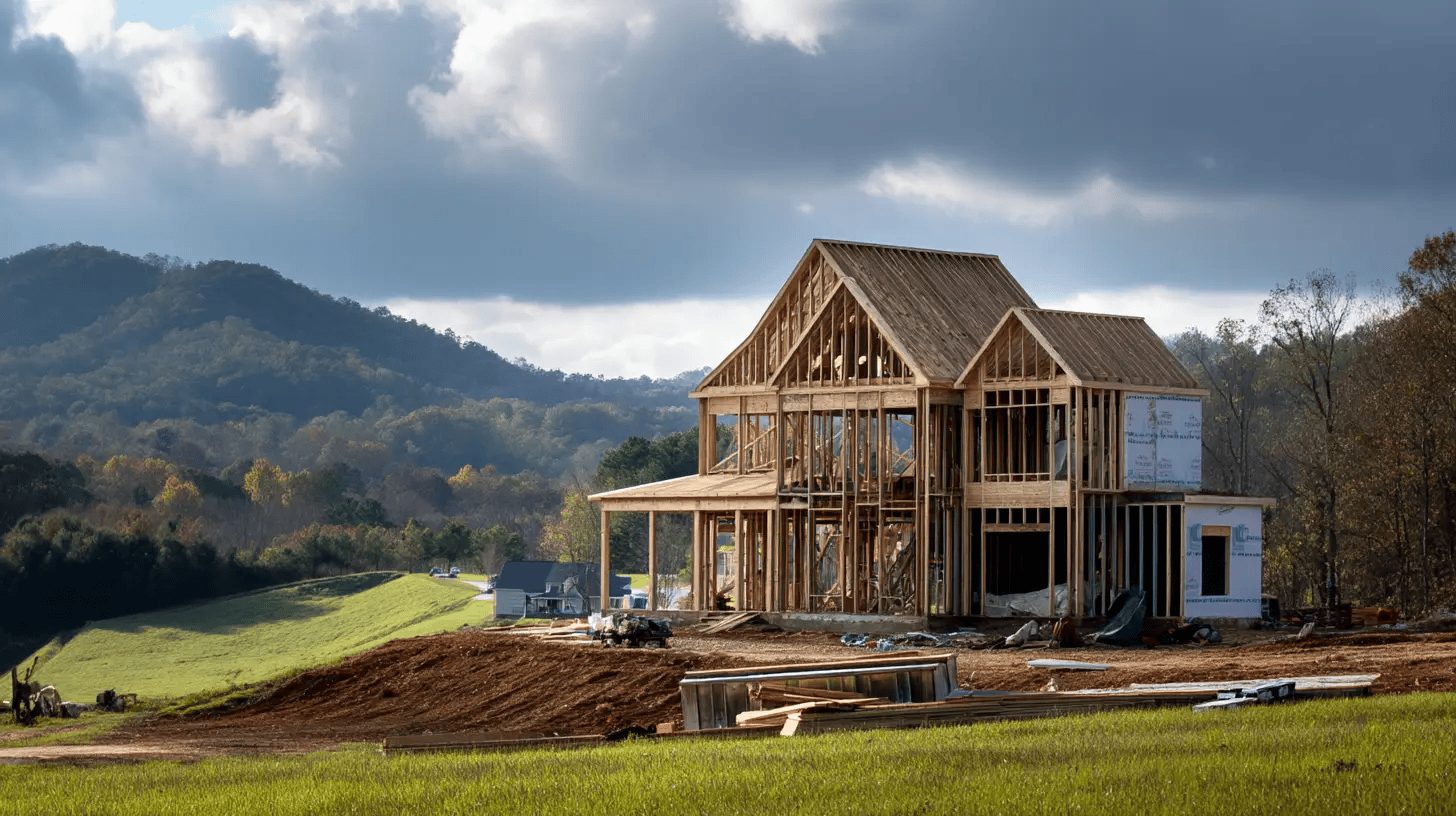
So you’re thinking about building a house in Tennessee.
Maybe you’re fed up with the bidding wars on existing homes or you just want something custom—your own personal slice of Volunteer State paradise. Here’s the catch: building can be a rollercoaster of hidden fees, supply hiccups, and surprise charges that blow your carefully curated budget to smithereens.
Below is the real, unfiltered look at how much it costs to build a house in Tennessee, along with the top 12 factors that jack up the price. We’ll also look at those sneaky “additional costs” that contractors gloss over in a 30-second phone call.
Tennessee: The Lay of the Land
Before we plow into the nuts and bolts, let’s set the stage.
Tennessee is a diverse patchwork of regions, from the flat farmland of West Tennessee to the rolling hills of Middle Tennessee, and the mountainous terrain in East Tennessee.
That geography alone means your build costs can vary wildly—not to mention local building codes, labor rates, and the market’s current appetite for construction. Some folks quote an average build cost of $120 to $150 per square foot these days, but that’s a broad brush. In prime urban areas like Nashville’s outskirts or certain Knoxville suburbs, you could see prices push $200+ per square foot.
Meanwhile, more rural pockets might come in cheaper, assuming you have easy access to utilities and a decent pool of contractors.
Note: The pandemic era and its aftermath shook up supply chains. Lumber, steel, drywall—they’ve all had wild price swings that haven’t fully stabilized. So if you’re working off an outdated estimate from 2019 or 2020, brace yourself.
12 Key Factors That Drive Up (Or Down) the Cost of Building
1. Land & Site Preparation
Why it Matters
The first big question: Where are you building? Are you scooping up a few acres in rural West Tennessee or trying to carve out a basement on a steep, rocky slope near the Smokies? Land costs can swing from $2,000 an acre in a remote corner to $100,000 or more for a modest lot in a popular suburb.
What to Watch
- Site Clearing: Trees, rocks, or sloping land mean extra excavation and grading costs.
- Utility Hookups: Is there city water and sewer, or will you need a well and septic system? Running power lines a half-mile up a mountain can eat thousands in unexpected fees.
- Soil Testing: In some areas—especially near rivers or in East Tennessee’s clay-heavy soils—you might need specialized foundation work if your soil can’t handle a standard slab.
2. Size & Complexity of the Floor Plan
Why it Matters
Sure, the average cost might be $120-$150 per square foot, but that’s just a ballpark. If you want a sprawling ranch with intricate rooflines and a three-car garage, guess what? You’re paying for it.
What to Watch
- Square Footage: More space = more materials, labor, and overall cost. But bigger homes sometimes enjoy economies of scale, spreading out certain fixed costs (like permits) over more square footage.
- Layout & Design: High ceilings, open floor plans, extra bathrooms—these add complexity. That fancy tray ceiling in the master suite? It’s not free.
3. Materials: Lumber, Concrete, & Beyond
Why it Matters
Material costs can shift monthly. Lumber prices spiked during the pandemic, then dipped, then rose again. Even small fluctuations can blow up a tight budget.
What to Watch
- Quality Tiers: You can go basic with builder-grade finishes or upgrade to premium everything—marble countertops, hardwood floors, custom cabinetry. Each choice tacks on extra dollars.
- Local Sourcing: Some builders use local suppliers for things like reclaimed wood or stone, which can add a unique Tennessee flair but might cost more.
- Eco-Friendly Options: If you want green materials or net-zero construction, be prepared to pay a premium upfront (though you might recoup some savings on utilities down the line).
4. Labor Costs & Contractor Markups
Why it Matters
Skilled labor is in high demand, especially near booming metros like Nashville or rapidly growing areas like Murfreesboro. If contractors are swamped with jobs, they’ll charge more.
What to Watch
- General Contractor (GC) Fees: GCs typically charge a percentage of the total build cost—often 10-20%. That’s no small slice.
- Specialty Trades: Electricians, plumbers, masons—these pros can command serious hourly rates. If your build requires complex electrical work or custom stonework, factor in the added labor cost.
- Rural Labor: If you’re building in a remote area, you might face travel surcharges or struggle to find specialized talent.
5. Location-Specific Building Codes & Permits
Why it Matters
Tennessee’s building codes vary by county, city, and (sometimes) the random, unincorporated patch you found on a back road. Some places are looser with codes, while others require rigorous inspections.
What to Watch
- Permits & Impact Fees: You’ll likely shell out for building permits, septic permits, driveway permits—basically, a stack of bureaucratic paperwork. Impact fees for new construction can add thousands, especially in growth-heavy counties trying to fund infrastructure.
- HOA Restrictions: If your dream lot sits in a planned community, watch out. Some HOAs impose specific architectural guidelines, minimum square footage, or mandatory materials—cha-ching.
- High-Wind or Seismic Zones: East Tennessee can have mild seismic activity. Some areas near ridgelines also require heavier wind bracing. More specialized construction = more cost.
6. Foundation Type (Basement, Slab, Crawl Space)
Why it Matters
Foundations aren’t glamorous, but they eat a good chunk of your budget. Basements are popular in hilly East Tennessee; slabs are more common on flatter land.
What to Watch
- Basement Complexity: A full walk-out basement can cost significantly more than a simple crawl space. If the land slopes, you might need retaining walls or extra drainage.
- Waterproofing: Tennessee storms can be intense. Skimping on waterproofing or drainage solutions might save now but cost you when your basement floods.
- Soil & Rock: Thick clay soils or rocky ground can demand specialized foundation footings—and specialized equipment to carve out your basement.
7. Roofing & Siding Choices
Why it Matters
From asphalt shingles to metal roofs, your exterior finish can drastically alter both the final look and the price tag.
What to Watch
- Material Lifespan: Cheaper shingles might need replacing in 15-20 years. Metal or architectural shingles last longer but cost more upfront.
- Aesthetic Upgrades: Want stone or brick veneer? That’s a premium cost. Vinyl siding is cheaper, but you lose that high-end curb appeal.
- Local Weather: Tornado-prone areas might prompt you to consider heavier shingles or more durable materials.
8. Energy Efficiency & Green Features
Why it Matters
Tennessee summers can be steamy. Invest in better insulation, higher SEER-rated HVAC systems, or solar panels, and you could see major savings on your monthly bills (and a smaller carbon footprint).
What to Watch
- Upfront Costs: Foam insulation, triple-pane windows, and advanced HVAC systems aren’t cheap.
- Rebates & Incentives: Check with local utilities—some might offer rebates for installing energy-efficient heat pumps or solar setups. Federal tax credits may also chip away at your total cost.
- Long-Term Savings: A well-sealed home in Tennessee’s climate can significantly reduce your AC bills every brutal August. Factor that into your total cost-of-ownership math.
9. Interior Finishes & Custom Touches
Why it Matters
This is where budgets go to die if you’re not careful. Granite countertops, custom cabinets, hardwood floors, imported tile—it’s a slippery slope from “nice” to “gourmet-luxury” if you don’t set a clear budget from the start.
What to Watch
- Must-Haves vs. Nice-to-Haves: Do you really need that farmhouse sink with gold fixtures and custom tile backsplash? Prioritize what matters most.
- Upgrades: Builders love upselling. You’ll see a basic allowance for items like light fixtures or flooring, then find out your dream choices are double that.
- Unseen Add-Ons: Larger windows, built-in bookcases, or custom pantries might not be on the standard checklist but add up in both labor and materials.
10. Utilities & Infrastructure
Why it Matters
Rural or semi-rural builds can come with a harsh reality: hooking up to basic services (water, gas, electric) might be a logistical headache.
What to Watch
- Septic vs. Sewer: If no city sewer is available, a septic system could cost $3,000-$8,000 or more, depending on soil percolation.
- Well Drilling: Need a well? Drilling costs vary by depth and rock type. Some wells might cost $5,000, others $20,000.
- Propane Tanks: No natural gas lines? You might rely on propane. You’ll pay for a tank install (above or underground) and ongoing refills.
11. Timeline & Construction Delays
Why it Matters
Time is money in the construction world. Every day past your planned completion date could mean extra loan interest, additional rent if you’re not moved in yet, and the dreaded “storage fees” if you have your stuff in a pod somewhere.
What to Watch
- Weather: East Tennessee rains can bog down site work. Winter chills can slow concrete curing.
- Contractor Scheduling: Good crews book out months in advance. Rush jobs or last-minute changes can spike labor costs.
- Permitting Holdups: If local officials take their sweet time approving your plans, you could be twiddling your thumbs (and paying interest) for weeks.
12. Economic & Market Fluctuations
Why it Matters
Material costs, interest rates, and labor availability can shift faster than you can say “2×4.” If we learned anything from 2020 onward, it’s that supply chain disruptions can cause havoc.
What to Watch
- Interest Rates: If you’re financing your build, a one-percentage-point increase in mortgage rates can add thousands over the life of the loan.
- Supply Chain Hiccups: The cost of windows, doors, or appliances might skyrocket if there’s a factory shutdown or shipping bottleneck.
- Negotiation Leverage: In a down market, builders might offer discounts or freebies. In a hot market, you’ll be begging to get on their schedule.
Additional Costs & “Gotchas” That Sneak Up On You
Even with the 12 factors above, we’re not done. Let’s talk about the lesser-known fees and frustrations that can blindside you if you’re new to the construction game.
- Architect or Drafting Fees
- If you don’t go with a stock plan, an architect or designer can charge thousands to draw up custom blueprints. Want multiple revisions? Ka-ching.
- Engineering or Structural Reports
- Building on a slope or in a flood zone might need a structural engineer’s stamp. That stamp isn’t free.
- Insurance
- Builders carry insurance, but you might need a builder’s risk policy as the homeowner, covering the structure while it’s under construction.
- Landscaping
- After the bulldozers leave, your yard could look like a cratered moon surface. Sod, trees, shrubs—these can easily cost $3,000-$10,000 or more, depending on your tastes and lot size.
- Driveways & Paving
- A basic gravel driveway might suffice in rural areas, but an asphalt or concrete driveway can run several thousand dollars. Longer driveways can climb to five figures.
- Fencing & Outbuildings
- If you’ve got livestock or just want privacy, fencing is not cheap. And that dream barn or workshop? Don’t forget to factor it in.
- Appliances
- Some builders include a basic appliance package. Others don’t. If you’re picking out a high-end fridge or fancy double oven, you’ll pay plenty extra.
- HOA Fees & Community Assessments
- If you build in a planned subdivision, there might be monthly or yearly HOA fees. Some developments hit you with “impact fees” to help fund roads or amenities.
- Contingency
- Most experts recommend setting aside 10-15% of your total budget as a cushion. Unforeseen issues pop up—even the best contractors can’t predict everything.
- Moving & Storage
- If your current lease or house sale ends before your new home is done, you might pay for temporary housing or storage units.
Ballpark Example: A Hypothetical Scenario
Let’s say you’re building a 2,000-square-foot home in Middle Tennessee on a gently sloping lot with decent soil. You choose moderate finishes (think mid-range flooring, basic granite counters, standard lighting). Here’s a rough breakdown:
- Land: $40,000 for a 1-acre lot just outside a growing suburb.
- Site Prep: $5,000 for clearing some brush and leveling a mild slope.
- Foundation (Crawl Space): $12,000.
- Framing, Roofing, Exterior: $120,000 ($60 per sq. ft. for structural work and basic materials).
- Plumbing & Electrical: $30,000 total.
- Interior Finishes: $50,000 (cabinets, countertops, flooring, paint).
- HVAC: $8,000.
- Permits & Fees: $5,000.
- Misc & Contingency: $20,000.
Total: $290,000 (not counting land) or about $145 per square foot. Once you include the land, you’re at $330,000. Throw in premium finishes, a basement, or complicated rooflines, and that number can soar past $400,000.
Is Building in Tennessee Worth It?
It can be. The state’s growth isn’t slowing down, and new construction can net you exactly what you want in a home—no fighting over outdated resale properties with leaky roofs or bidding wars that go 50 grand over asking. But it’s not all sunshine and sweet tea. Building from scratch demands patience, a fat contingency budget, and the ability to stay calm when things inevitably go sideways.
Pros
- Customization: You get the layout, finishes, and features you actually want.
- Potential Appreciation: If you build in a hot market, your house might be worth more than you spent once it’s finished.
- Energy Efficiency: Newer homes tend to have better insulation, windows, and HVAC systems.
Cons
- Stress & Delays: Between contractor scheduling and weather, your timeline can unravel.
- Upfront Costs: Construction loans often require more substantial down payments and involve multiple draws.
- Decision Overload: There are hundreds of little decisions—from doorknobs to plumbing fixtures. If you’re indecisive, building can be overwhelming.
Final Words of Advice
- Get Multiple Quotes: Don’t just pick the first contractor recommended by your cousin’s friend. Interview several, review their work portfolios, and check references.
- Do a Deep Dive on Land: Get a thorough land survey, test the soil, and know exactly what hooking up utilities will involve.
- Plan for Overruns: Materials can spike, your perfect kitchen tile might be backordered, or you might decide you need a bigger deck halfway through the project. Keep a cushion.
- Communicate Regularly: Stay in close contact with your builder. Ask for weekly updates so you’re not blindsided by unexpected hurdles.
- Stay Flexible: Building a home can test your patience. The more you can roll with the punches, the less stressful (and more rewarding) the experience will be.
Building a house in Tennessee can be a thrilling journey if you keep your eyes open, your wallet ready, and your sense of humor intact. Yes, the cost can surge if you’re not vigilant, and yes, you might deal with a contractor who ghosts you halfway through a job. But if you do your homework, manage your expectations, and hold a tight rein on your budget, you’ll soon be swinging open the front door of a brand-new home in the Volunteer State—cracking open a cold drink on your freshly built porch, gazing out at those rolling hills, and saying, “Hell yeah, we built this.”
5 Things to Know Before Moving to Gatlinburg, TN in 2025
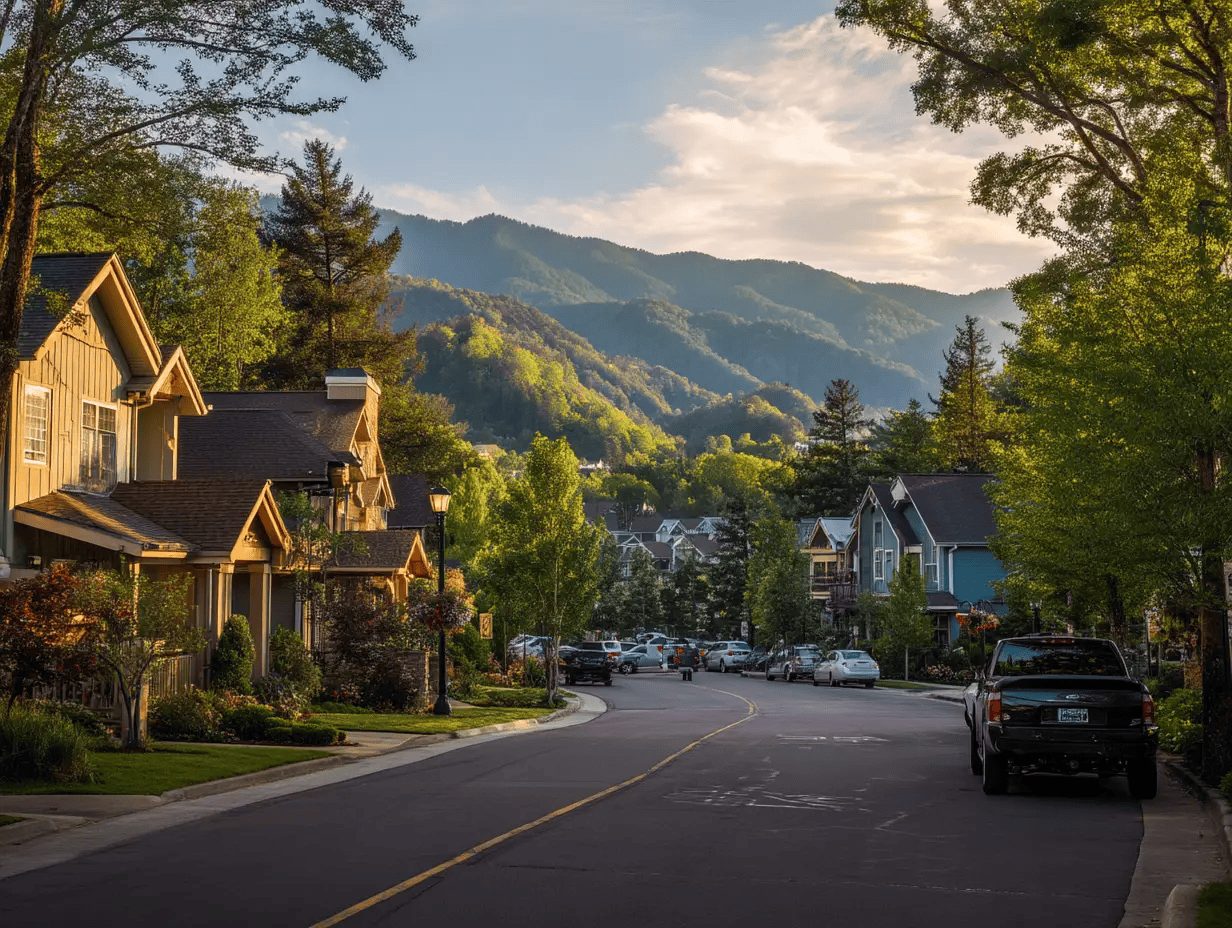
Overview
Gatlinburg, Tennessee may look like a quaint mountain postcard, but there’s a whole lot beneath that shiny tourist glow. Home to roughly 4,200 residents in 2025, the town has seen a steady uptick in real estate prices—up about 4% since 2023—thanks to its thriving short-term rental market. Buyers keep rolling in, lured by Appalachian scenery, potential rental income, and that classic Southern hospitality. But before you dive headfirst into Gatlinburg life, consider more than just the glossy travel brochures. The tourist crowds can be relentless, the wildlife a bit too friendly, and the local economy deeply intertwined with those out-of-towners. Here are five raw, real-deal truths you need to know before calling this Smoky Mountain hotspot home.
The Tourist Tsunami
Let’s start with the elephant in the room: tourists. Gatlinburg is a tourist mecca, pure and simple, and that reality can slam you in the face come peak season. If you picture peaceful country roads and small-town quiet, think again. The Parkway can turn into a bumper-to-bumper circus of out-of-state plates, and your usual 10-minute grocery run morphs into a 45-minute bumper-car fiasco. Every season seems to bring a new wave—summer break, fall foliage, winter ski crowds—so your schedule starts revolving around tourist traffic patterns and random events (like that kid’s cheerleading convention in town that you never saw coming).
The flip side? Tourism is the lifeblood here, fueling local businesses and injecting an energetic hum into the everyday. Yes, the crowds can be maddening, but they also support a bustling economy that keeps real estate values afloat. If you’re looking to set up a vacation rental or snag a piece of that short-term rental action, the near-constant flow of visitors can be a financial boon. But buckle up, because these folks don’t just vanish in the off-season anymore—“off-season” is barely a thing in Gatlinburg these days, thanks to year-round events and improved infrastructure leading into the Great Smoky Mountains National Park.
And about that park—it’s one of the most visited in the nation, which means you’re basically living next to a high-traffic national treasure. On the plus side, you get to enjoy incredible hikes, scenic drives, and wildlife sightings practically in your backyard. The downside is that “your backyard” might feel like an extension of a theme park at certain times of the year.
If the tourist hustle doesn’t scare you off, then Gatlinburg might actually be a good fit. Embrace the chaos—or at least make peace with it—and you’ll find that the energy can be oddly addictive. Just don’t say we didn’t warn you when you’re stuck behind a caravan of minivans on the Parkway at 7 PM on a Wednesday in late January.
Smoky Mountain Realities
Living in a mountain town sounds dreamy, right? Crisp air, majestic scenery, and wildlife sightings that make your Instagram followers swoon. But let’s break down the Smoky Mountain realities that don’t show up in those scenic postcards. First off, the weather can be a roller coaster—sunny and mild one minute, torrential downpour the next. Fog rolls in unpredictably, and winter storms can blanket the region, turning those winding roads into a slick obstacle course. It’s all part of the mountain DNA: if you’re not prepared, Gatlinburg’s climate can knock you sideways in a heartbeat.
Next up: wildlife. Sure, the black bears are charismatic icons of the Smokies, but they’re still wild animals that do not care about your personal space. If you haven’t budgeted for a bear-proof trash can, you might end up with your garbage strewn across the yard—or worse, a curious bear knocking over your barbecue grill. Deer, turkeys, and the occasional bobcat roam these parts, too, so you may have to pause your morning commute for an impromptu wildlife crossing. Some folks love it; others find the constant wildlife vigilance a chore. Either way, it’s definitely not suburbia.
Another hidden factor is the geography itself. Many homes sit on steep, winding roads, which can be a nightmare to navigate if you’re not used to mountain driving. You’ll want to keep an eye on your tire tread, brakes, and even your transmission—hauling up and down those inclines every day can take a toll on your vehicle. And if you live in a property tucked away off the main roads, you might have limited internet or cell service, especially during storms.
Finally, there’s the ever-present threat of natural disasters—wildfires, in particular. The 2016 Gatlinburg fires left an indelible mark on the community. While the area has bounced back, the memories and scars still linger. Homeowners insurance might be pricier if you’re in certain zones, and you’ll want to remain vigilant during dry spells. The mountains give a lot—spectacular views, endless outdoor adventure—but they also demand respect. If you’re up for the daily balancing act of terrain, weather, and wildlife, Gatlinburg’s natural allure can be an absolute dream.
The Short-Term Rental Game
Gatlinburg’s real estate scene has a split personality—half welcoming haven for those who want to call this mountain town home, and half battleground for investors chasing short-term rental gold. With the Smokies pulling in millions of tourists each year, it’s no secret that buying a cabin and listing it on Airbnb can be a sweet revenue stream. And that’s exactly why home prices have inched up (or skyrocketed, depending on your perspective). A cozy two-bedroom with a view might fetch a pretty penny, far more than you’d expect for a small Tennessee town.
But short-term rentals aren’t just an investment game; they’re also part of the culture. If you’re thinking about moving to Gatlinburg, be prepared to see your neighbors cycling in and out every few days—some neighborhoods are practically 50% vacation rentals. It can be jarring if you want the “everyone knows your name” vibe. On the other hand, if you’re ready to jump into the rental hustle yourself, this is a prime market. Just make sure you understand local regulations: licensing, taxes, and community rules that can vary from one neighborhood to the next.
Also, keep in mind the “hidden chores” of short-term rentals. Noise complaints are common when late-night tourists decide to pop open beers in the hot tub at 1 AM. Parking can become a nightmare if your scenic cul-de-sac turns into a rotating car lot for out-of-towners who overstuff cabins beyond their stated occupancy. Plus, supply and demand can be a harsh teacher—some properties simply won’t rake in the rental income you’re hoping for if they don’t have those knock-out mountain views or easy access to downtown.
Still, if you’ve got the stomach for it, the short-term rental game can offset your mortgage, or even become a main source of income. You’ll see local real estate agents touting “proven rental history” left and right. The demand isn’t slowing down in 2025; tourists still pour into Gatlinburg for that Instagram-perfect shot of mountain mist. If you’re willing to gamble on the short-term model, you might just strike gold. But if you’re looking for a tight-knit neighborhood of long-term neighbors, choose your location carefully—tourists may be paying the bills, but they sure don’t make for consistent block parties.
Cost of Living Surprises
Think moving to a small town automatically means cheap living?
Gatlinburg loves to break those expectations.
Sure, Tennessee as a whole is known for relatively low property taxes and no state income tax, but let’s not pretend living next to a top-tier national park is a discount. Everything from groceries to gas can run a little higher because you’re in a high-demand tourist zone. The tourist premium is real: some shops crank up prices during peak seasons, and restaurants know that out-of-towners aren’t shy about opening their wallets.
Housing, of course, is the biggest chunk of the monthly bill. With real estate hovering around $400,000 for a decent single-family home in 2025—and prime cabins shooting up even higher—don’t expect small-town deals. If you’re renting, watch out for short-term rental investors muscling into the market, which can tighten the supply of long-term rentals and send your monthly rent north of $1,200 for a modest place. Once you factor in utilities (which can spike in winter when you’re cranking the heat in a drafty cabin) and home insurance (which sometimes costs more due to wildfire risk), that picture-perfect view can come with a hefty price tag.
Public transportation is practically non-existent, so a car is a must—even if gas prices inch above the state average. And if you’re used to having multiple major grocery chains around the corner, you might have to drive a bit for better deals. Gatlinburg itself tends to have a smaller selection at higher prices, so many locals make monthly pilgrimages to Sevierville or Knoxville to stock up on bulk items and save a few bucks.
Then there are the hidden day-to-day costs: bear-proof trash cans, potential HOA fees if you’re in a resort-style community, or specialized home maintenance for those mountain properties (like reinforcing decks or dealing with steep driveways). In other words, Gatlinburg isn’t necessarily for the budget-conscious, unless you get strategic with your spending. If you can handle the extra tourism markups, you’ll be rewarded with a place unlike anywhere else—raw nature, a lively local scene, and the surreal perk of calling one of the country’s most visited national parks your backyard.
The Tight-Knit Community & Local Culture
Beneath the tourist chaos lies a surprisingly tight-knit community of full-timers who share a deep pride in calling Gatlinburg home. They’ve weathered floods, wildfires, and the constant churn of outsiders, and they band together when things get tough. You’ll see it in the local fundraisers for families in need, or in the way folks rally around small businesses off the main strip. Yes, some shops cater shamelessly to tourists, but scratch the surface and you’ll find local artisans who’ve been hand-carving souvenirs for generations, or family-owned diners that still serve up homemade biscuits that taste like they came straight from grandma’s stove.
Still, if you’re an outsider rolling in, brace yourself. Locals can be friendly, but there’s a guarded edge—especially when it comes to real estate investors scooping up properties left and right. They’ve seen it all before. The best way to integrate is to show genuine respect for Gatlinburg’s long-standing traditions and to get involved in community events (the ones that tourists skip). Volunteer for local cleanups, join a church or a local club, and you’ll start to form bonds that make this place feel like home.
Culture-wise, expect a blend of Southern hospitality and mountain grit. Folks here are proud of their Smoky Mountain heritage, and they love to share it—just not necessarily on command for the next wave of tourists. Social gatherings often revolve around bonfires, fishing trips, or potlucks that serve as multi-generational get-togethers. Don’t be surprised if you hear a few ghost stories—these mountains have legends older than the town itself.
One thing to keep in mind: outside of the Parkway, nightlife and entertainment can be limited. Bars and clubs aren’t exactly a thriving scene here once you get off the main tourist drag. Many residents settle for quiet evenings at home or head out to a friend’s cabin for casual get-togethers. And that’s kind of the charm—if you crave a laid-back lifestyle steeped in Appalachian tradition, you’ll find it. But if you’re looking for an urban rush, you might be disappointed. In Gatlinburg, the biggest party might just be the weekly jam session at a local music hall, and honestly, that might be enough once you settle in and embrace the mountain pace.
Wrapping Up
Gatlinburg isn’t your typical small town, and that’s both the draw and the challenge. On one hand, you have postcard-worthy mountain views, a vibrant tourism-powered economy, and a local culture that knows how to rally. On the other, there’s traffic, higher costs, and a real estate market jacked up by short-term rentals. The bear sightings and tourist crowds can either be a dream or a headache—sometimes both in the same day. If you’re cool with that, Gatlinburg can become home in the most magical way. Just do your homework, stay realistic about finances, and be ready to navigate the whirlwind of visitors who might mistake your front yard for part of the national park. At the end of the day, these Smoky Mountains have a certain pull that’s hard to resist.
FAQs
- Is Gatlinburg’s real estate market expected to keep growing?
Yes. With consistent tourism and short-term rental interest, prices have steadily climbed. Don’t expect a drastic drop anytime soon. - Is the town really overrun by tourists year-round?
“Overrun” can be subjective, but visitor traffic barely dips these days. Off-seasons aren’t as quiet as they used to be, so plan accordingly. - How’s the local job market outside of tourism?
Tourism and hospitality dominate. Some locals commute to Knoxville or work remotely. Opportunities exist, but it’s far from a bustling metropolis. - What about schools and family life?
Gatlinburg has small, tight-knit schools, which some families appreciate. However, specialized programs may require a drive to Sevier County schools elsewhere. - Do I really need bear-proof trash cans?
If you’re near the park boundary or in an area frequented by wildlife, absolutely. Bears are part of the local scenery—respect their space, and protect your garbage.


