

 Facebook
 X
X
 Pinterest
 Copy Link
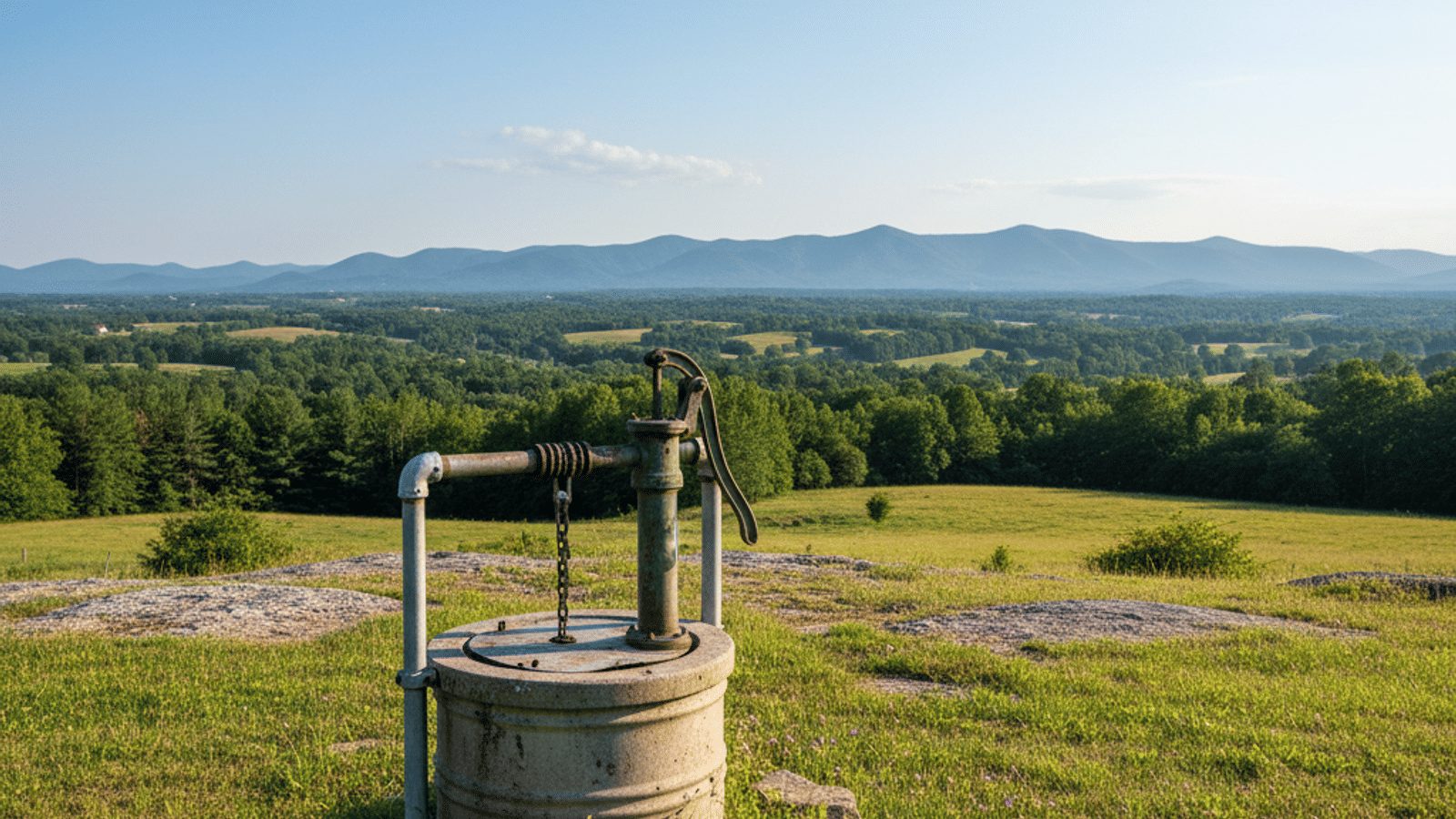
If you are thinking about moving to East Tennessee, you have probably spent plenty of time looking at square footage, school districts, and mountain views. But if you are coming from a major metro area or a dense suburb out of state, there is one line item on the property listing that might stop you in your tracks: Water Source: Private Well.
For many of my clients relocating here, water is an afterthought—until it isn’t. In the city, you turn the handle, water comes out, and you pay a bill. In the rural and mountainous parts of our region, however, it works a little differently.
The geology here—our famous mountains, valleys, and limestone bedrock—dictates how we get our water. Neither option is inherently “better,” but they offer very different lifestyles and financial pictures. Let’s break down the trade-offs so you can decide which tap is right for you.
The Landscape: Where You’ll Find Wells vs. City Water
In East Tennessee, the dividing line between city water and well water usually comes down to geography and elevation. We don’t have a perfectly uniform grid of utilities like flat states often do; our terrain makes running pipes expensive and difficult.
If you are looking at homes in the heart of Knoxville, Chattanooga, or the Tri-Cities, you are almost certainly going to be on a municipal system. Organizations like the Knoxville Utilities Board (KUB) or Tennessee American Water service these dense areas. The infrastructure is established, and you rarely have to think about where your water comes from.
However, as soon as you drive twenty minutes out toward the Great Smoky Mountains or into the more secluded ridges of Sevierville and Maryville, the utility lines often stop at the main road. If a home is set far back on a large lot or perched up a steep grade to capture that million-dollar view, it is likely relying on a private well.
We also have what I call “hybrid zones.” These are developing areas on the edge of town where new subdivisions with city water sit right next to older farmhouses that still use wells. It’s important not to assume a house has city water just because the one across the street does. Running a new line from the street to a rural house can cost tens of thousands of dollars, which is why wells remain the standard for mountain living.
Water Quality & Taste: The Limestone Factor
One of the first questions buyers ask me is, “Does well water taste weird?” The honest answer is that it depends on the aquifer, but there is one constant in East Tennessee: Limestone.
Our region sits on a massive bed of limestone and dolomite. As rainwater filters down through the soil and rock, it dissolves calcium and magnesium. This means that whether you are on city water or well water, you are going to have “hard” water.
City Water Municipal water here is treated to meet strict EPA standards. It is consistent. You know exactly what you are getting, and it’s tested daily. However, because it is surface water (usually from rivers or reservoirs), it has to be treated with chlorine and other chemicals to keep it safe as it travels through miles of pipe. Some people find the chlorine smell noticeable, though a simple fridge filter usually handles it.
Well Water Well water in East Tennessee is pulled from deep underground aquifers. Many locals prefer it because it tastes “fresh” and lacks that chemical chlorine tang. However, the taste and mineral content can vary significantly depending on how deep the well is and exactly which rock formation you’ve drilled into. While it often tastes better right out of the ground, it comes with its own set of quirks.
Common Contaminants in East TN Wells
Because we live in an area with Karst topography (a landscape formed from the dissolution of soluble rocks like limestone), our groundwater moves quickly through cracks and caves. This is great for refilling aquifers, but it means we have to be vigilant about what gets into the water.
- Sulfur: If you turn on a tap and smell rotten eggs, that is sulfur gas. It is naturally occurring in certain shale layers here. It is harmless to drink, but it smells terrible and can tarnish silverware.
- Iron: This is very common in our red clay and rock. High iron content won’t hurt you, but it will leave orange or reddish stains on your laundry, toilets, and bathtub drains.
- Bacteria (E. coli): Because Karst terrain has sinkholes and fissures, surface runoff (from heavy rains or farming) can sometimes slip into the groundwater faster than the soil can filter it.
- Radon: We talk about radon in basements, but in mountain regions, radon gas can also dissolve into groundwater. It’s rare, but it’s something to watch for.
Cost Comparison: Monthly Bills vs. Upfront Investment
When you are calculating the cost of living in Tennessee, water is a line item that looks very different depending on your source. It essentially boils down to a choice between a “forever subscription” (city) or “ownership with occasional repair bills” (well).
City Water Costs If you are on city water, you will have a monthly bill. As of early 2026, rates have ticked up slightly. You are paying a base fee plus usage. The kicker for many transplants is the sewer charge. In many municipalities, if you have city water and city sewer, your sewer bill is calculated based on your water usage—often doubling the total bill. You also have to deal with connection fees if you are building a new home.
Well Water Costs With a well, your monthly water bill is effectively $0. You own the water. However, the water doesn’t come out of the ground by magic; it takes electricity to run the pump.
- Electric Cost: Running a well pump is surprisingly cheap. For an average family, it might add $5 to $15 to your monthly electric bill.
- Hidden Costs: The real cost of a well isn’t monthly—it’s the maintenance. You need to budget for salt if you have a softener (very likely here), filter changes, and the eventual replacement of the well pump.
Cost to Drill a New Well in 2026
If you are planning on buying land in Tennessee to build your dream home, you need to budget realistically for drilling.
Drilling in East Tennessee is not like drilling in sandy coastal soil. We are drilling through solid rock. This is hard on equipment and takes time. As of early 2026, drilling costs have risen due to inflation and fuel prices.
- Drilling Only: You can expect to pay roughly $15 to $30 per foot just for the drilling.
- Complete System: Once you add the casing (the pipe that keeps the hole open), the pump, the pressure tank, and the trenching to the house, the total usually lands between $30 and $65 per foot.
- The Bottom Line: A standard residential well project generally costs between $6,000 and $15,000. However, if you are building high up in the mountains where the water table is deep, I have seen complex systems hit $20,000 or more. It is a gamble; you never know exactly how deep you have to go until you start drilling.
Maintenance & Responsibility: Who Fixes It?
This is the biggest mental shift for buyers coming from the city.
With city water, your responsibility ends at the meter near the street. If the main line breaks three blocks away, the utility company fixes it. If the water tastes funny, you call a customer service number. It is a passive experience.
With a well, you are the utility company. You are the CEO, the manager, and the maintenance crew. If you have no water pressure at 6:00 AM on a Tuesday, you are the one calling a plumber or well specialist. You are responsible for maintaining the pressure tank, adding salt to the softener, and ensuring the UV light (if you have one for bacteria) is working.
The Power Outage Factor This is critical for anyone new to the area. East Tennessee gets its fair share of storms. When the power goes out, city water usually keeps flowing because the municipal towers use gravity.
If you have a well, no electricity means no water. The pump cannot run. If you buy a home with a well, I highly recommend investing in a generator or having a large water storage tank. There is nothing quite like realizing you can’t flush the toilet because a tree branch took out a power line down the road.
Buying a Home: Loans, Inspections, and Resale
When we are writing an offer on a house, the water source triggers specific requirements, especially regarding inspections and financing.
Resale Value In rural areas, a well is standard and expected; it rarely hurts resale value. In fact, many buyers like the idea of independence and no water bill. However, if you are in a suburban subdivision where 90% of the homes are on city water and your target home is on an old well, that can be a negative for future buyers who might worry about the maintenance.
Inspections Never rely solely on a standard home inspection for a well. Standard inspectors might turn on the tap to check pressure, but they aren’t testing the aquifer. You need a dedicated well inspection that checks:
- Flow Rate: Can the well recover fast enough to let you take a shower while the dishwasher is running?
- Water Quality: Testing for bacteria, nitrates, and lead.
- Equipment Age: Well pumps typically last 10–15 years. A replacement can run $900 to $2,500, so you want to know if the current one is on its last legs.
Lending Rules (FHA/VA/USDA) If you are using a government-backed loan, the rules are strict. FHA and VA loans have specific distance requirements to ensure safety. Generally, the well must be:
- 50 feet from the septic tank.
- 100 feet from the septic drain field.
- 10 feet from the property line.
I have seen deals fall apart because a well was drilled 90 feet from a drain field years ago. Surveyors and appraisers will measure this, so it’s vital to verify these distances early in the process.
Summary: Pros and Cons at a Glance
If you’re trying to weigh the options quickly, here is how the two compare in our market:
City Water
- Pros: High reliability, low maintenance, works during power outages, consistent quality.
- Cons: Monthly bills (plus sewer fees), chlorine taste/smell, vulnerable to main line breaks.
Well Water
- Pros: No monthly bill, fresh natural taste, independence from utility rate hikes.
- Cons: You pay for repairs/equipment, dependent on electricity (needs a generator), you are responsible for safety testing.
Frequently Asked Questions
Is well water safe to drink in East Tennessee?
Generally, yes, well water in East Tennessee is safe and clean. However, because our limestone geography allows surface water to travel quickly underground, it is crucial to test your water annually for E. coli and coliform bacteria. Most safety issues are easily fixed with a UV light or filtration system.
Do I need a water softener in East Tennessee?
In almost all cases, the answer is yes. Whether you are on city water or a well, the water here is mineral-rich and hard. Without a softener, you will likely see scale buildup on your shower heads, reduced efficiency in your water heater, and dry skin.
How much does a water bill cost in Knoxville or Chattanooga?
While usage varies by family size, a typical household in the Knoxville or Chattanooga area can expect to pay between $30 and $60 per month for water in 2026. Keep in mind that if you are also connected to city sewer, that bill could double since sewer rates are often tied to water consumption.
Can I convert my house from well water to city water?
It is possible, provided a city water line runs near your property. However, it is not cheap. You will have to pay a “tap fee” to the utility company (often $1,000 or more) plus the cost of a plumber to run a new line from the street to your house and disconnect the old well system.


