 Facebook
 X
X
 Pinterest
 Copy Link
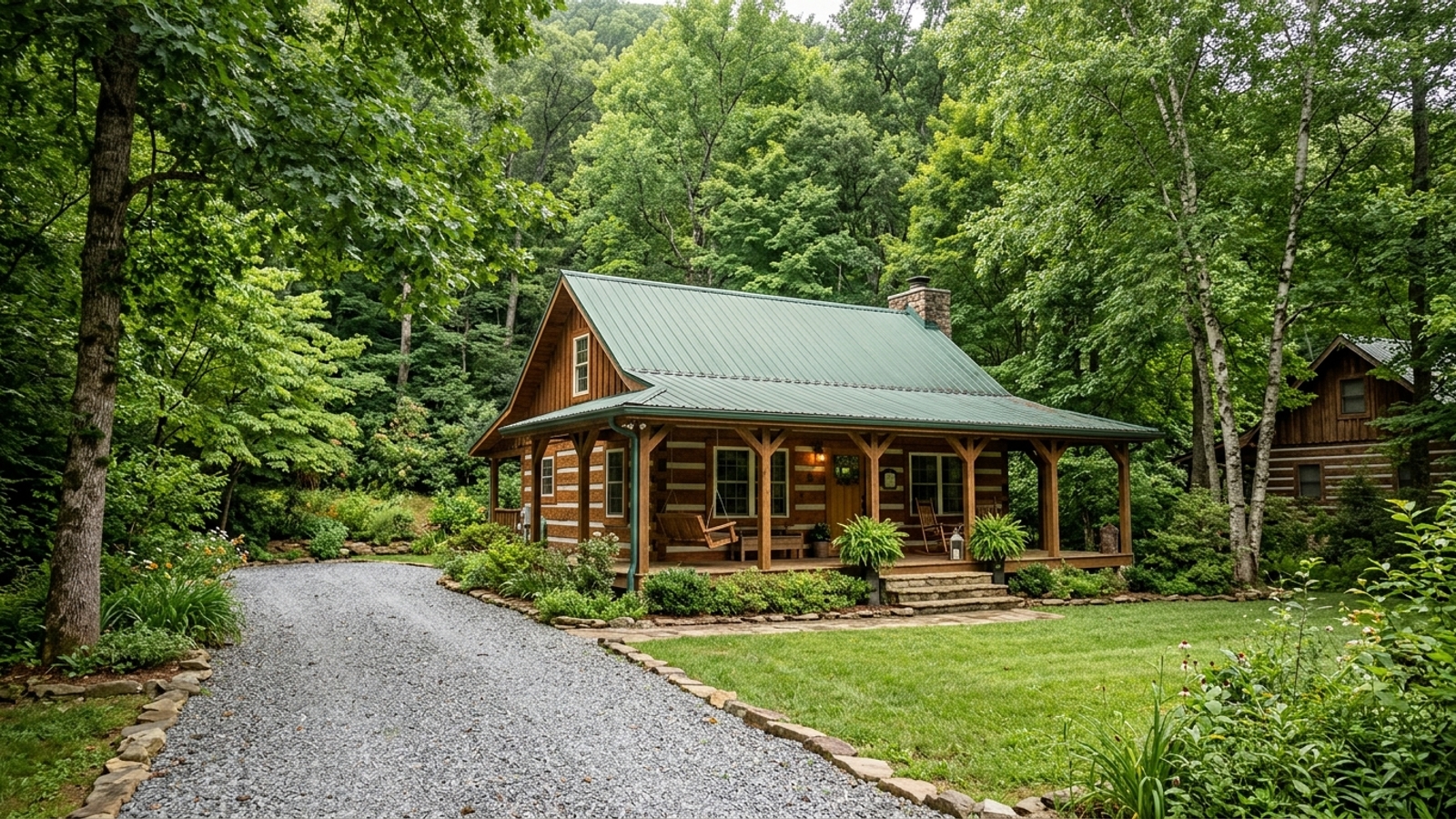
The median sale price for homes in Gatlinburg is around $802,500, with roughly 267 active listings on the market as of the middle of 2026. If you’re looking to buy a short-term rental in Gatlinburg, you’re not dealing with a standard home purchase – lenders treat these transactions differently, and the gap between “interested buyer” and “closed deal” is wider than most people expect.
Purchasing an investment property means different mortgage standards than buying a primary residence. Lenders are looking at projected rental income, local zoning regulations, and higher down payment thresholds before they’ll sign off.
What to Know About Gatlinburg Investment Property Loans
As of August 2026, the average 30-year fixed mortgage interest rate in Tennessee sits at 6.95%. That’s the baseline – but for an investment property, you’re not starting at the baseline.
Lenders add a rate premium for non-owner-occupied properties. You’ll pay a higher interest rate on a vacation rental than you would on a house you plan to live in full-time. That’s the lender covering their risk: statistically, borrowers are more likely to default on an investment property when times get hard.
The other thing underwriters look at closely is how the property generates revenue. A standard residential loan is built entirely around your personal income. Certain investment loan products, though, let you use the cabin’s projected nightly rental income to help you qualify – which changes the picture considerably if your personal debt load is already high.
The timeline for closing on a Smoky Mountains property averages around 90 days on market, which gives you room to arrange financing. Don’t use that runway as an excuse to delay. Get pre-approval before you make an offer – sellers want to know you can actually close.
Loan Options for Smoky Mountain Vacation Rentals
Buyers typically choose between three main financing paths when purchasing a cabin in Sevier County, and each one requires different documentation and different qualification standards.
The right product depends on your personal income, how much cash you have for a down payment, and the property’s historical revenue. Lenders evaluate Gatlinburg properties based on their ability to attract consistent tourism year-round, so understanding how each loan type weighs those factors will help you figure out which structure actually fits your situation.
Conventional Investment Property Loans
Conventional loans backed by Fannie Mae or Freddie Mac are the most common choice for buyers with strong personal incomes. The rates are competitive, but underwriters will go through your tax returns, W-2s, and debt-to-income ratio with a fine-tooth comb.
You’ll need to prove you can carry the mortgage payment on your own salary, independent of whatever the cabin earns in rental revenue. If you already carry a low amount of personal debt and have a high credit score, this is probably your path.
Debt Service Coverage Ratio (DSCR) Loans
A DSCR loan flips the qualifying logic. Instead of your income, the lender looks at the property’s cash flow – specifically, the ratio of the cabin’s projected annual rental revenue to its annual debt obligations, which include principal, interest, taxes, and insurance.
If the property can cover its own expenses, the lender approves the loan. This option is popular in Gatlinburg because it sidesteps personal debt-to-income limits entirely. The trade-off is a higher interest rate and a larger down payment requirement.
Tapping Into Home Equity
If you already own a primary residence, a Home Equity Loan or a Home Equity Line of Credit (HELOC) lets you borrow against what you’ve built there to fund your Gatlinburg purchase – either as a down payment or an outright cash buy. You avoid taking out a new mortgage on the cabin itself, which can simplify closing considerably. Just make sure the monthly payments on that equity line actually line up with what you expect the rental to bring in.
How Local Zoning and Permits Affect Your Loan Approval
This is the part buyers underestimate most. Gatlinburg explicitly prohibits short-term rentals in the R-1A (Low-Density Residential) and R-2A (Medium Density Residential) zones. If you purchase in one of those zones, you cannot legally operate the property as an overnight rental – full stop.
Lenders won’t approve an investment property loan on a home that can’t legally function as a vacation rental. Short-term rentals are permitted in R-1, R-2, and R-3 residential zones, as well as Tourism Development Zones, Commercial zones (C-1, C-2), and mixed-use developments. Verify the parcel’s zoning with the city Building and Planning Department before you ever submit an offer.
Operating a rental inside Gatlinburg city limits also requires a Tourist Residency Permit. The application fee is $200 for units with two bedrooms or fewer, plus $75 for each additional bedroom, and it must be renewed annually. You’ll also need business licenses from both the City of Gatlinburg and Sevier County – around $15 each.
Unincorporated areas of Sevier County operate under a different set of rules. Since January 2024, all short-term rental units outside the main city limits must obtain an annual Short-Term Rental Unit (STRU) permit from the Sevier County Fire Marshal’s Office. That permit requires passing a yearly life-safety inspection covering interconnected UL-217 smoke alarms, carbon monoxide alarms, fire extinguishers, and secondary egress routes.
Taxes matter for your debt ratios too. Within Gatlinburg city limits, the total combined lodging tax stack runs approximately 12.25% to 12.75% of gross rental revenue. In unincorporated Sevier County, operators collect a 3% lodging tax on top of the 9.75% combined state and local sales tax.
Steps to Prepare for Mortgage Pre-Approval
The average home in Gatlinburg sells for roughly 95.9% of its list price. Sellers here don’t entertain low offers, and they don’t wait around for buyers who haven’t lined up their financing.
Get your documentation together early. Underwriters will ask for two years of tax returns, recent pay stubs, and asset statements to verify your available funds. Arriving without that paperwork doesn’t slow things down a little – it stops them entirely.
Credit Score and Debt-to-Income Rules
Most lenders require a minimum credit score of 680 for an investment property loan. A score of 720 or higher is where you start seeing the best interest rates. Your debt-to-income ratio – your monthly debt payments measured against your gross monthly income – needs to come in below 45% for conventional investment loans.
If your ratio is above that, a DSCR loan is worth looking at seriously. It’s built around the property’s revenue, not your personal debt picture.
Preparing the Down Payment
Investment property loans carry higher down payment requirements than primary residence mortgages – expect to put down between 15% and 25% of the purchase price. The funds need to sit in a verifiable bank account for at least two months before closing. Lenders call this “seasoning” the money, and they’ll pull your bank statements to confirm those funds weren’t recently borrowed from an undisclosed source.
Plan accordingly. Moving money around in the weeks before underwriting creates questions you don’t want to answer.
Choosing a Smoky Mountains Lender
Financing a mountain cabin isn’t like financing a subdivision home. Appraisers have to evaluate private wells, septic systems, and steep access roads – and lenders need to be comfortable with what comes back. A national lender who’s never seen a Sevier County STRU permit or a Gatlinburg Tourist Residency Permit can slow your approval down significantly.
Local lenders already understand the distinctions between those two permit systems and know what documentation you need to prove the property is legally zoned for overnight rentals. That institutional knowledge matters more than it sounds.
Frequently Asked Questions
What is the typical down payment required for a short-term rental investment property in Gatlinburg?
Expect to put down between 15% and 25%. Conventional loans typically require at least 15%, while DSCR loans often require 20% or more. The exact amount depends on your credit score and the lender’s specific guidelines.
Can I use a Gatlinburg cabin’s historical or projected Airbnb income to qualify for my mortgage?
Yes – if you’re applying for a Debt Service Coverage Ratio (DSCR) loan. That loan type evaluates the property’s ability to cover its own principal, interest, taxes, and insurance. Conventional loans rely strictly on your personal income and debt-to-income ratio, so the rental income doesn’t factor in there.
Can I finance my Gatlinburg vacation rental as a second home to secure a better interest rate?
It depends on how you plan to use it. Second-home loans offer lower interest rates than investment loans, but they require you to occupy the home for a specific portion of the year and often restrict how much you can rent it out. If you’re operating the cabin primarily as a short-term rental, you’ll need an investment property loan.
Will a mortgage lender roll the cost of furniture into my loan for a turnkey Gatlinburg cabin?
No. Lenders won’t finance personal property – furniture, hot tubs, pool tables, none of it. The loan amount is based solely on the appraised value of the real estate itself. Pay for furnishings out of pocket or negotiate them separately with the seller outside of the mortgage.
Are there special financing hurdles or appraisal issues when buying a traditional log cabin in Gatlinburg, TN?
Yes. Appraisers need to find comparable sales of similar log cabins to establish value, which isn’t always straightforward. Unique mountain features – steep private roads, well water systems, septic tanks – also have to meet the lender’s safety and structural standards. An appraiser who knows Sevier County well is worth asking for by name.
Do I need to use a local Tennessee lender to successfully finance a short-term rental in Gatlinburg?
You don’t have to, but there’s a real practical case for it. Local professionals understand Gatlinburg’s zoning laws, Sevier County’s permit requirements, and the appraisal process for mountain cabins. A national lender unfamiliar with those specifics can misread local regulations in ways that slow down – or derail – your approval.


