

 Facebook
 X
X
 Pinterest
 Copy Link
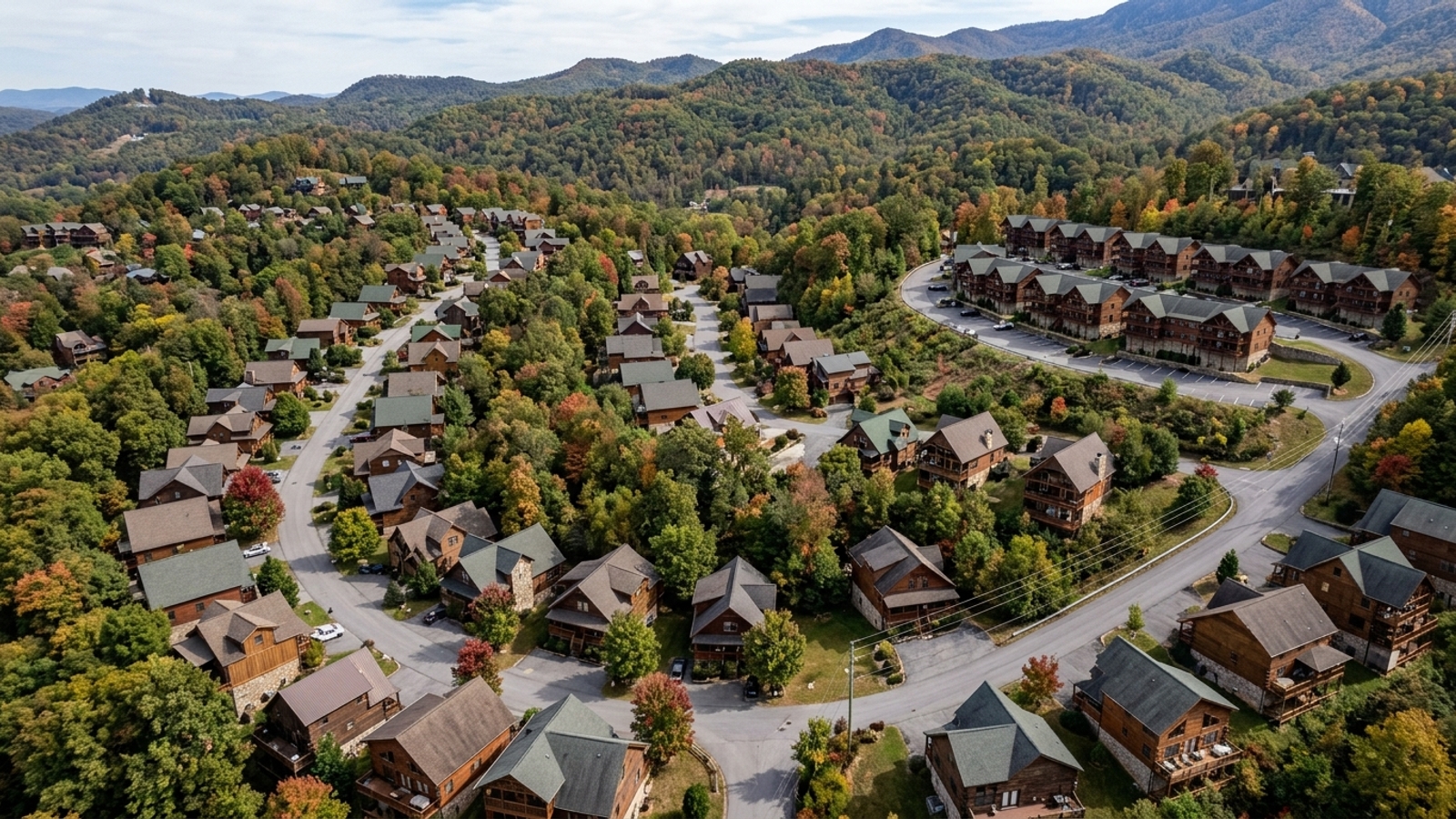
Gatlinburg’s median home sale price sits around $802,500, and that number is driven largely by vacation rental and cabin demand. If you’re looking at buying a short-term rental in Gatlinburg, TN, you have real options – but local rules determine exactly what you can do with a house once you own it. You can’t just buy anywhere in the area and start listing on a booking platform.
Figuring out where short-term rentals are actually permitted means checking municipal zoning ordinances and private community bylaws. Sevier County and the city limits operate under distinct regulations, and you need to know which jurisdiction applies to a specific property before you make an offer. That also means securing the right permits and understanding the tax obligations before you ever close.
Short-Term Rental Zoning Rules in Gatlinburg, TN
The City of Gatlinburg generally permits short-term rentals across most of its territory, but there are specific carve-outs. The municipal zoning ordinance explicitly prohibits vacation rentals in the R-1A (Low-Density Residential) and R-2A (Medium Density Residential) zones. If a property you’re considering falls inside those boundaries, you won’t be able to operate it as an overnight rental – full stop.
Most other zoned areas, including much of the downtown area and commercial-adjacent districts, are open to short-term rental use. That said, you should always verify a specific property’s zoning designation directly with the Gatlinburg Planning and Codes Department. The city’s official zoning map, updated through March 2022, is what governs the legal use of every parcel.
Differences Between City and County Rules
Properties inside Gatlinburg city limits fall under municipal zoning codes. Homes outside those lines are governed by unincorporated Sevier County regulations. The exact address determines which government entity issues your permits and conducts your inspections.
It also affects the taxes you collect and remit. Check the official county property tax records to confirm whether a home sits inside or outside the incorporated boundaries – don’t assume based on a zip code or a listing description.
Owner-Occupied and Non-Owner-Occupied Rules
Gatlinburg allows both owner-occupied and non-owner-occupied short-term rentals in the approved zoning districts. You don’t have to make the cabin your primary residence to run it as a vacation rental. Investors can buy a secondary property specifically for rental income, as long as it sits outside the restricted R-1A and R-2A zones.
Out-of-state buyers have the same property rights as local residents under the current zoning framework. You’ll still need to meet all local short-term rental regulations Gatlinburg, TN enforces, and you’ll need to designate a local contact if you live far away.
How Homeowners Associations Restrict Rentals
Even when a property sits in an approved zoning district, a private Homeowners Association can ban short-term rentals. HOA rules supersede municipal zoning allowances. If the city says yes but the HOA says no, you can’t rent the home on a short-term basis – the HOA wins.
Many residential neighborhoods in Sevier County have lease-term minimums written into their bylaws. These rules might limit rentals to 30 days, 6 months, or a full year, which effectively shuts out weekend vacationers. Review the bylaws during your due diligence period, before you’re committed to the purchase.
Covenants, Conditions, and Restrictions
CC&Rs dictate how a community operates and what owners can do with their properties. Some communities have grandfather clauses that allow existing owners to rent their homes while prohibiting new buyers from doing the same – which means you could buy into a community where your neighbor can rent and you can’t. Read the specific language around lease terms and commercial use carefully.
HOA boards can also vote to change these rules over time. A neighborhood that allows rentals today could restrict them next year if enough owners vote for an amendment.
Communities That Allow Vacation Rentals
Gatlinburg has several condo buildings and cabin communities designed specifically for vacationers. Developments like Smokies Edge near downtown and Mountainloft Resort near the Pigeon Forge corridor actively market to short-term rental investors, and their CC&Rs explicitly protect the right to rent units overnight.
Finding these properties means looking at current active inventory. As of mid-2026, the market has roughly 267 active listings, with many condos and cabins already operating as established rentals.
Getting Your STR Permit and Paying Taxes
Operating legally in Gatlinburg requires a Tourist Residency Permit. The base fee is $200 for units with two bedrooms or fewer, and you’ll pay an additional $75 for each bedroom beyond that.
You also need both a city and a county business license – $15 each – and you’ll need to register for a tax ID through the Tennessee Department of Revenue. The tourist permit requires annual renewal and a mandatory fire and safety inspection every year. There’s no skipping the inspection and hosting anyway; the permit has to be fully approved first.
The Tourist Residency Permit Application
The application process involves submitting your property details, paying the fees, and scheduling the safety inspection. The city uses this process to verify that all rental units meet basic safety standards for guests. You can’t host your first guest until the permit is officially approved and the inspection is complete.
Staying operational means staying current. Failing to renew on time can result in fines or the loss of your right to operate the rental altogether.
Calculating Occupancy and Lodging Taxes
Short-term rental stays inside Gatlinburg are subject to a combined 12.75% in lodging taxes. That breaks down as a 7% Tennessee State Sales Tax, a 2.75% Local Option Sales Tax for Sevier County, and a 3% Gatlinburg Hotel/Motel Tax.
If your property is in unincorporated Sevier County, the structure shifts slightly – the 3% city hotel/motel tax is replaced by a separate 3% county lodging tax. Either way, you’re collecting these taxes from guests and remitting them to the appropriate state and local agencies.
Property Types for Investment Homes
The Gatlinburg market offers a mix of single-family cabins and condo units for investors. Redfin data from mid-2026 shows homes spending an average of 90 days on the market, so you have time to evaluate your options and run the numbers on potential rental income rather than feeling pressured into a quick decision.
With about 13.4 months of supply currently available, this market leans toward buyers. The core choice comes down to a standalone cabin with private amenities or an attached unit with shared maintenance responsibilities.
Single-Family Cabins and Houses
Single-family homes and traditional log cabins make up a large portion of the vacation rental inventory. These properties often attract larger groups and families looking for privacy and outdoor space. Maintenance falls entirely on the owner – landscaping, exterior repairs, roof upkeep, all of it.
The median sale price in the area is around $802,500, though that varies widely based on size and location. Cabins closer to the National Park entrances typically command higher prices and stronger rental demand.
Condos and Townhome Developments
Condominiums offer a different investment model, often with a lower upfront purchase price. The median list price for short-term-rental-tagged properties sits around $575,000, which includes many condo units. These properties usually roll exterior maintenance and shared amenities like pools into the monthly HOA fee.
Factor those monthly dues into your operating budget. Condos require less hands-on maintenance, but you’re bound by the community’s rules and its shared financial health – and if the HOA is underfunded, that becomes your problem too.
Frequently Asked Questions
Which zoning districts in Gatlinburg actually allow short-term overnight rentals?
Most commercial and residential zones in Gatlinburg permit short-term rentals. The exceptions are the R-1A (Low-Density Residential) and R-2A (Medium Density Residential) zones, which strictly prohibit them.
How do I apply for a tourist residency permit for an Airbnb in Gatlinburg, TN?
You’ll need to submit an application to the city, pay the base fee of $200 for a two-bedroom unit (plus $75 per extra bedroom), and obtain $15 city and county business licenses. You’ll also need to register for a Tennessee Department of Revenue tax ID and pass a mandatory fire and safety inspection.
Are short-term rental rules different if my cabin is in Gatlinburg city limits versus unincorporated Sevier County?
Yes – the jurisdiction determines your permitting process and specific tax rates. Properties inside the city pay a 3% Gatlinburg Hotel/Motel Tax, while those in unincorporated Sevier County pay a 3% county lodging tax instead.
Can an HOA block me from operating a short-term rental in Gatlinburg even if the city zoning allows it?
Yes. A Homeowners Association can prohibit short-term rentals through its Covenants, Conditions, and Restrictions (CC&Rs), and private community rules always supersede municipal zoning allowances.
How much are the permit fees and local lodging taxes for short-term rentals in Gatlinburg?
The tourist residency permit starts at $200 for units up to two bedrooms, plus $75 for each additional bedroom, along with $30 in business licenses. Lodging taxes total 12.75%, which includes state, county, and local taxes.
How long does it take to get a short-term rental permit approved and pass inspection in Gatlinburg, TN?
The exact timeline depends on the city’s inspection schedule and how quickly you complete the application steps. You can’t host guests until the permit is fully approved and the mandatory fire and safety inspection is passed.


