
Gatlinburg sits right at the entrance to Great Smoky Mountains National Park, and that single fact shapes everything about buying property here. Sevier County draws millions of visitors a year, and you’re essentially deciding how much of that tourism economy you want your purchase to tap into – or how far you want to stay from it.
What makes this market genuinely different from most is the combination of steep terrain, localized zoning rules, and a buyer pool that’s split pretty evenly between investors chasing rental income and people who actually want to live here. Knowing which camp you’re in before you start touring properties will save you a lot of time.
The Gatlinburg Real Estate Market Right Now
In the Gatlinburg housing market, the median sale price sits around $802,500 – up roughly 23.6% year-over-year. That’s a real number, and it reflects how consistently demand has held for mountain properties in this area. But here’s the thing: price growth and buyer leverage can coexist, and right now they do.
There are 267 active listings on the market, representing about 13.4 months of supply. If you need to sell a house in Gatlinburg, expect a slightly longer wait for the right buyer. Homes are averaging 90 days before closing, and the sale-to-list ratio is running at 95.9%. That last number matters. It tells you sellers are routinely accepting less than asking price – this isnt a market where you’re competing against five other offers over a weekend.
Is Now a Good Time to Buy?
Over 13 months of inventory means you can actually tour properties, think them over, and come back for a second look without losing the deal. That’s not a given in a lot of mountain markets right now.
The 95.9% sale-to-list ratio should also give you confidence at the negotiating table. If a cabin has been sitting for 90 days, you have every reason to ask for concessions. Sellers know it.
Who Buys in This Market?
The buyer pool here breaks into two pretty distinct groups. Out-of-state investors are typically hunting for turnkey cabins with documented rental histories – they want to step into an income stream, not build one from scratch. Primary residents, including many first-time buyers in Gatlinburg, are after something quieter, usually in pockets that aren’t directly in the tourist corridor.
The year-round population is small, around 3,703 people, with a median age of 42. This isn’t a transient college town or a sprawling suburb. Those committing to living in Gatlinburg full-time have generally made a deliberate choice to do so.
Housing Types and Price Ranges
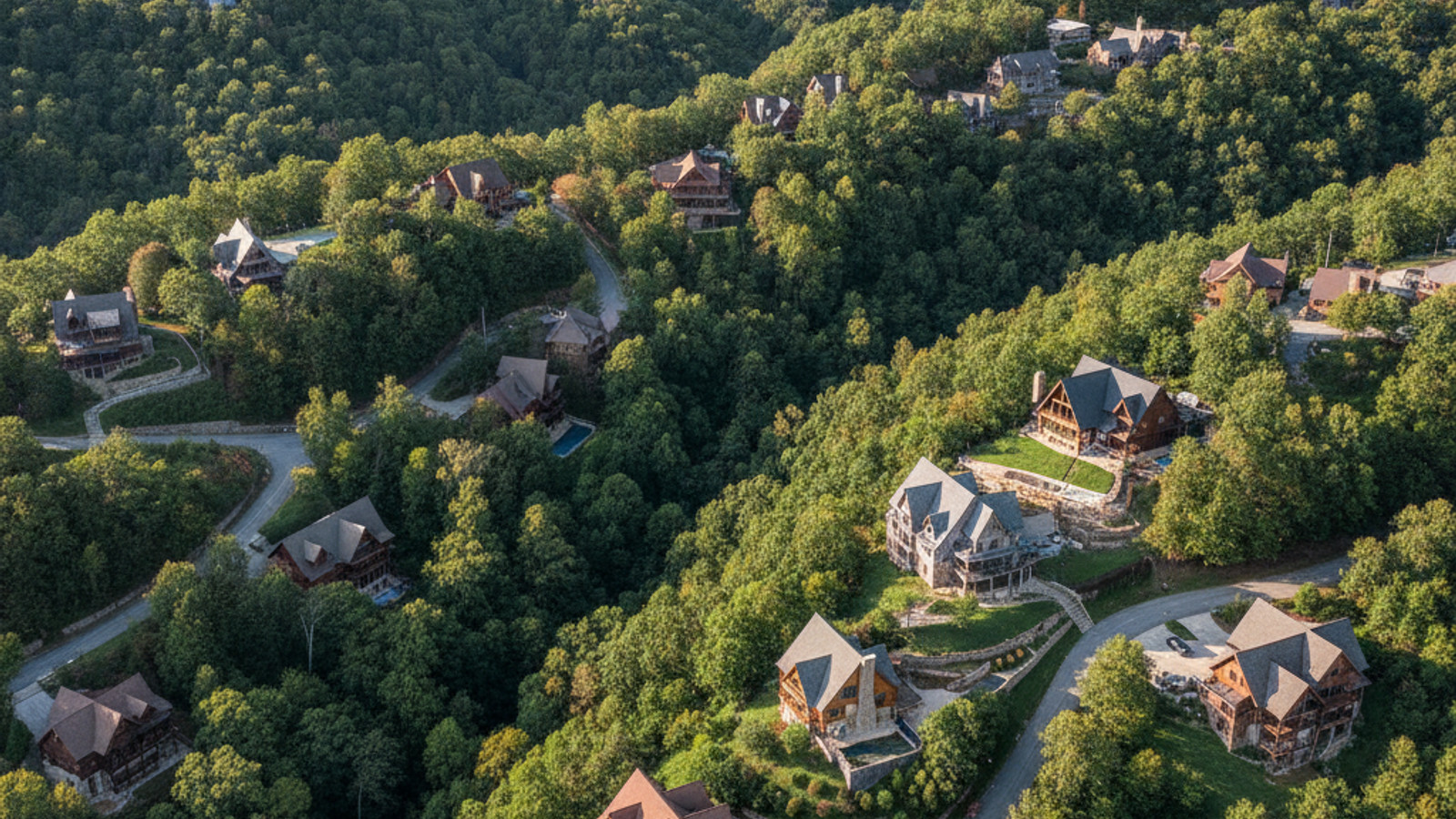
Forget the standard suburban grid. Gatlinburg’s residential inventory is dominated by log cabins, A-frames, and custom mountain estates engineered to capture Smokies views. Flat, buildable land is genuinely scarce, which shapes what gets built and where.
Traditional single-family homes and newer construction do exist, but they’re not the story here. Condominiums offer a lower-maintenance entry point, particularly for buyers who don’t want to deal with the upkeep that comes with an isolated mountain property.
Entry-Level Options and Condos
If you’re watching your budget or simply don’t want to spend weekends on exterior maintenance, attached townhomes and condos are worth a serious look. They give you access to the area without the logistical demands of a standalone cabin up a steep private drive. You might also consider looking into first-time home buyer programs in Gatlinburg, TN to help with upfront costs.
Many complexes include shared amenities – pools, clubhouses – but run the HOA dues through your actual monthly budget before you fall in love with a unit. Those fees vary more than people expect.
Luxury Estates and Vacation Cabins
At the upper end, you’re looking at custom builds with panoramic views, home theaters, and indoor pools – properties that list well above the $802,500 median. A significant portion of these operate as short-term rentals when owners aren’t in residence, which benefits those selling a home in town with an established income history.
If that’s your plan, you need to pull the zoning overlay for the specific property before you get too far down the road. Sevier County has rules about short-term lodging, and they’re not uniform across the area.
Where to Look: Neighborhoods and Local Geography
Gatlinburg is in Sevier County, about 39 miles southeast of Knoxville, and the entire town operates under a single primary Gatlinburg ZIP code: 37738. The terrain here isn’t decorative – steep elevation changes and winding roads have a direct effect on which properties are practical for full-time living versus seasonal use.
The best neighborhoods in Gatlinburg will place you either five minutes from the downtown strip or five minutes from a national park trailhead. Both have their appeal; they’re just different lives.
Popular Areas and Chalet Village
When comparing neighborhoods in Gatlinburg, Chalet Village and Chalet Village North are two of the most consistently active areas for real estate. Their proximity to Ober Gatlinburg Ski Resort and the Great Smoky Mountains National Park makes them attractive to both investors and buyers who want easy recreational access.
Downtown Gatlinburg is a different proposition entirely. You’re walking distance from restaurants and shops, with the 407-foot Gatlinburg Space Needle – the observation tower that opened in 1970 and offers 360-degree mountain views – as your neighborhood landmark. It’s more convenient and considerably more lively, depending on what you’re looking for.
Getting Around and Airport Access
A car is non-negotiable here. The main parkway gets genuinely congested during summer and fall tourist peaks, so factor that into your thinking if you’re commuting or running errands daily. For anything beyond basic services, you’re heading north toward Sevierville or Knoxville.
For air travel, the Gatlinburg-Pigeon Forge Airport is about 13 miles out but handles private aviation only. Most people fly into McGhee Tyson Airport in Alcoa – roughly 40 miles away – which serves commercial carriers including Delta, American, Allegiant, Frontier, and United.
Cost of Living and Local Lifestyle
The overall cost of living here tracks below the national average. The local index sits at 84.3 against the U.S. baseline of 100, and the estimated median household income is around $52,708. Tennessee also doesn’t levy a state income tax, which is worth factoring in if you’re relocating from somewhere that does.
You get four real seasons – the fall color draws serious crowds for a reason – and winters at higher elevations can bring snow, though they’re generally mild. What you’re trading for the mountain scenery is suburban convenience. That’s not a criticism, just an honest description of the exchange.
Day-to-Day Expenses
Property taxes in Sevier County run relatively low compared to most out-of-state metro areas. Utilities are a different story if you’re not paying attention – heating a large, poorly insulated log cabin through the winter will show up on your budget in a way that a standard house wouldn’t.
Amenities and Recreation
Hundreds of miles of hiking trails, fishing streams, and scenic drives are essentially your backyard. The local economy is built around outdoor recreation and tourism, which means the amenity mix reflects that.
For major shopping or specialized medical care, you’re heading to the Knoxville metro area. Most full-time residents make peace with that trade-off pretty quickly.
Finding a Local Real Estate Agent
You need the best real estate agent in Gatlinburg on your side because an out-of-town agent isn’t going to cut it here. Mountain property involves well water systems, steep-grade foundations, and rental ordinances that require someone who actually works in this market to navigate competently. This is one of those situations where local knowledge isn’t a nice-to-have.
Agent commissions in Gatlinburg, TN typically average around 5% to 6% of the purchase price, paid by the seller. The best realtor in Gatlinburg will also have relationships with inspectors, lenders, and property managers who know this terrain specifically.
Questions to Ask Before Hiring
Ask how many transactions they’ve closed within the 37738 ZIP code in the past year, and ask specifically about experience with the property type you’re targeting – primary residence and investment cabin are not the same transaction. The issues that come up are different, and so is the due diligence.
If you’re planning to rent, ask for references to local property management companies. A well-connected agent should be able to point you toward reliable cleaners, maintenance people, and lenders who are comfortable with mountain properties.
The Home-Buying Process in Tennessee
The steps to buying your first home in Gatlinburg, TN always start with a pre-approval. Local lenders tend to have a much easier time underwriting unusual mountain properties than large national banks do – a log cabin on a steep lot isn’t a transaction that fits neatly into a standard underwriting box.
Once your offer is accepted, the inspection period begins. In Gatlinburg, that phase deserves your full attention. Vacation homes see hard use, and the terrain adds a layer of complexity you simply don’t encounter in a flat suburban market.
Inspections and Red Flags
Hire an inspector with specific experience in log homes and mountain construction – not just a general home inspector. They need to know what to look for with wood-boring insects, moisture intrusion in logs, and the structural integrity of cantilevered decks.
Retaining walls and steep driveways also warrant a close look. A failing retaining wall on a mountain lot can run tens of thousands of dollars to repair, and it’s not always obvious at a showing.
Closing Costs and Final Steps
Plan for closing costs between 2% and 5% of the total loan amount. As a buyer in Tennessee, you’re covering your own appraisal, loan origination fees, and a portion of title insurance.
One thing that catches out-of-state buyers off guard: many Gatlinburg properties sell fully furnished, so your final walk-through should confirm that agreed-upon furniture and decor are still in the home. Once the deed records at the Sevier County courthouse, the property is yours.
Frequently Asked Questions
Are there zoning restrictions for short-term rentals when buying a house in Gatlinburg, TN?
Yes. Sevier County enforces specific zoning overlays for short-term rentals. Verify the property’s zoning classification before you’re under contract – not after.
How much are typical HOA fees for resort cabin communities in Gatlinburg?
It depends on the community and what amenities it offers. Chalet Village, for example, provides access to shared facilities, which come with monthly or annual HOA dues. Get the actual figures for any community you’re seriously considering.
What specific issues should I check for during a mountain cabin home inspection in Gatlinburg?
Focus on the structural integrity of cantilevered decks, the condition of the log siding, and the stability of any retaining walls. Wood-boring insects and moisture intrusion are both common in this climate and worth specific attention.
Is it better to buy an investment property in Gatlinburg or neighboring Pigeon Forge?
It depends on your target renter and your preferred location. Gatlinburg gives you immediate proximity to Great Smoky Mountains National Park and the downtown strip; Pigeon Forge puts you closer to its own set of commercial attractions. Different draws, different guests.
How does the closing process work if I am buying a Gatlinburg vacation home from out of state?
The entire process can be handled remotely. Title companies and local agents coordinate digital document signing, and a mobile notary can come to you in your home state for the final paperwork.
Is it difficult to get homeowners or wildfire insurance for properties in the Gatlinburg area?
It can be more complex than a standard purchase, given the mountain terrain and wildfire exposure. Reach out to local insurance brokers early – before you’re deep into a transaction – to get realistic quotes and confirm what coverage is actually available for the specific property.


