

 Facebook
 X
X
 Pinterest
 Copy Link
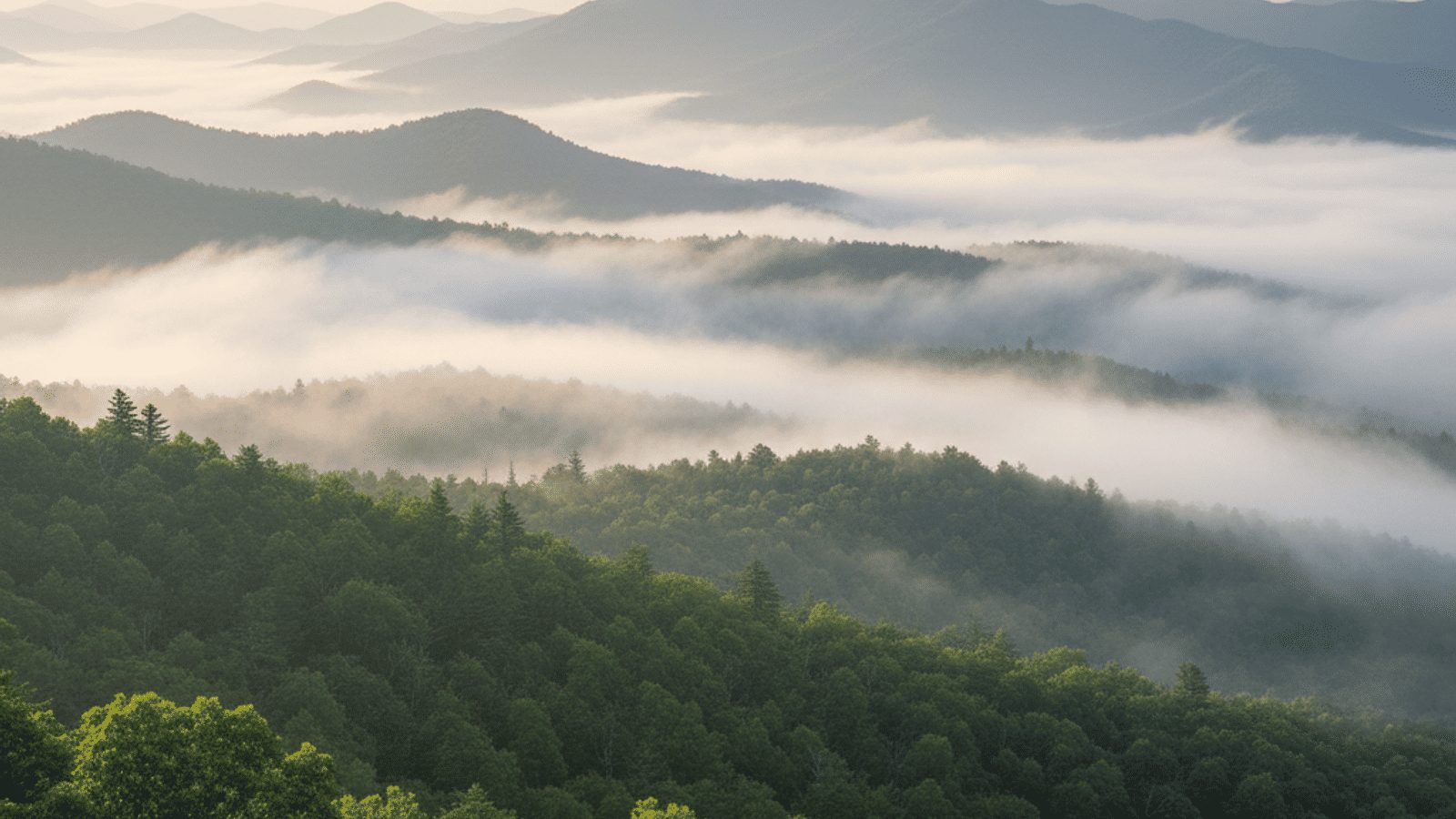
There is a specific allure to East Tennessee that is hard to shake once you’ve experienced it. Maybe it’s the mist rolling off the Great Smoky Mountains in the morning, the quiet of the rural valleys, or simply the financial freedom that comes with low property taxes and no state income tax. For many, the ultimate goal isn’t just moving here—it’s buying a piece of land and building a custom home exactly the way they want it.
However, building in the Volunteer State—especially in 2026—isn’t quite the “Wild West” some folks imagine. While it is true that we have more freedom here than in many coastal states, there is a reality to the “opt-out” counties and rural zoning that can trip up newcomers.
If you are looking to break ground near Knoxville, Chattanooga, the Tri-Cities, or the quiet counties in between, you need a roadmap. Let’s walk through what it actually takes to get from a raw patch of land to a finished driveway.
Cost to Build a House in East Tennessee (2026 Estimates)
One of the first questions I get over coffee is, “What’s the damage going to be per square foot?” It is the most important number for your budget, but it’s also a moving target. As of early 2026, material prices have stabilized somewhat, but labor remains in high demand.
Construction Costs at a Glance
For a standard custom build, you are likely looking at a range of $130 to over $350 per square foot, excluding the land itself.
- Basic Builder-Grade: If you are keeping finishes simple (think laminate countertops, vinyl siding, standard fixtures), expect $130–$160 per square foot.
- Semi-Custom: This is where most buyers land. With hardwood floors, quartz counters, and maybe a stone fireplace, you are looking at $180–$250 per square foot.
- Luxury or Mountain Custom: If you want heavy timber beams, a steep metal roof, or a chef’s kitchen, costs easily jump to $300–$450+ per square foot.
The “Hidden” Site Prep Costs
Here is where the budget often breaks for people moving from flatter states. East Tennessee is beautiful because of the hills, but hills are expensive. If you buy a steep ridge-line lot for the view, you might spend $10,000 to $50,000+ just on the foundation and retaining walls before a single stick of wood is framed.
Also, permit fees here are generally refreshing compared to the national average. Depending on the county, you might pay anywhere from $1,000 to $4,000 for your building permits. It’s a small line item, but it varies significantly depending on whether you are inside city limits or out in the county.
When you factor all this in, the overall cost of living in Tennessee is still attractive, but construction requires a healthy contingency fund.
Step 1: Buying Land in East TN (What to Look For)
Finding the right land is about 80% of the battle. You might see a listing for five acres priced at $25,000 and think you’ve struck gold, but usually, there is a reason it’s that cheap.
Topography is King
In real estate here, flat land is premium land. If a lot is flat and buildable, it commands a higher price per acre. Sloped land is cheaper upfront, but as mentioned above, you will pay that savings back to your concrete subcontractor. When you are walking a property, look for a natural “bench” or flat spot where a house could sit without requiring massive excavation.
The All-Important Perc Test
If you are building outside city limits (which is most custom builds), you won’t have sewer access. You will need a septic system. Before you close on any land, you must have a soil scientist perform a “perc test” (percolation test).
This test determines if the soil can absorb water fast enough to handle a septic field. If the land doesn’t perc, you generally cannot build a house there. Never skip this step.
Check the Deed Restrictions
Just because a property is in a rural county doesn’t mean there are no rules. Even without an HOA, land can have deed restrictions that prohibit mobile homes, impose minimum square footage requirements, or ban barndominiums. Always have your title company or agent pull the deed restrictions during your due diligence period.
- Rural Land Pricing: Approx. $5,000–$15,000 per acre (e.g., Hancock, rural Greene counties).
- Prime/Suburban Land: Approx. $50,000–$150,000+ per acre (e.g., Williamson, Sevier, outskirts of Knox).
Zoning, Permits, and “No Code” Counties
There is a lot of confusion regarding “no code” counties. You will often hear people say, “I’m moving to a county with no building codes so I can do what I want.” That is only half true.
City vs. County vs. State
If you build inside a city like Knoxville or Chattanooga, you will deal with strict municipal codes and frequent inspections. However, some rural counties in Tennessee have “opted out” of residential building codes. This means the county itself might not send an inspector to check your framing spacing or your insulation R-value.
The Inspections You Can’t Skip
Even in an opt-out county, you are not totally off the hook.
- Electrical: The State of Tennessee handles electrical inspections. You must pass a state electrical inspection to get power turned on.
- Septic: The Tennessee Department of Environment and Conservation (TDEC) manages septic permits. You cannot install a system without their approval.
Greenbelt Tax Benefits
If you are buying a larger tract of land, keep the “Greenbelt” law in mind. If you purchase 15 acres or more, you may qualify for agricultural tax assessments, which can significantly lower your Tennessee property taxes. It’s a great way to make holding a large property more affordable.
Financing Your Build: Construction Loans & Lenders
Unless you are sitting on a pile of cash, you will likely need a construction loan. These are different from standard mortgages and can be tricky if you haven’t done one before.
One-Time Close Loans
The most popular product right now is the “Construction-to-Permanent” loan, often called a single-close loan. You close once, pay closing costs once, and the loan converts to a standard mortgage after the house is finished. This locks in your interest rate early, which is smart in a fluctuating market.
The Down Payment Reality
Banks view construction as higher risk than buying an existing home. Consequently, most lenders require a 20% to 25% down payment based on the total project cost (land + build). You will also need a detailed contract, floor plans, and a specs list from your builder before the bank will appraise the project.
The Owner-Builder Challenge
I talk to many people who want to be their own General Contractor to save money. Be aware that most banks will not lend on an owner-builder project unless you are a licensed contractor yourself. If you want to manage the build yourself, you usually need to finance it with your own cash.
Local Lenders to Watch:
- Home Federal Bank of TN
- Wilson Bank & Trust
- TVFCU (Tennessee Valley Federal Credit Union)
- USDA Rural Development (for specific eligible rural areas)
Setting Up Utilities: Well, Septic, and Power
When you are looking at raw land, you need to verify exactly how you will keep the lights on and the water running.
Water: Public vs. Well
Public water lines are extending further into rural areas, but don’t assume they are available just because there is a road. If you need to drill a well, remember that East Tennessee is rocky. Drilling costs average $15 to $30 per foot. Since you might hit water at 100 feet or 400 feet, budgeting for a well—typically $4,000 to $15,000+—can be a gamble.
Septic Systems
As mentioned earlier, TDEC controls this process. If your soil is rocky or heavy clay (common here), a standard gravity system might not work. You may be forced to install a “mound” system or a pump system, which can drive the cost from a standard $6,000 up to $20,000.
Electric & Internet
Identify your local utility provider early. In rural areas, this is often a cooperative like Powell Valley Electric or Sevier County Electric. The good news is that fiber internet is expanding rapidly across the state thanks to relentless work by these co-ops. However, always verify specific address availability—don’t just take a “high-speed internet available” listing description at face value.
The Construction Timeline: Clearing to Keys
Once you close on the loan and permits are issued, the fun (and the stress) begins. Here is how the physical process generally unfolds in our region.
Site Prep and Excavation
This involves clearing trees and grading the driveway. If you have hardwood timber (oak, walnut, cherry), try to sell it or mill it rather than just burning it. During grading, this is when you find out if your soil is dirt or solid limestone.
Foundation and Framing
Crawl spaces are the most common foundation type in Tennessee. They are cost-effective and provide access to plumbing. Basements are popular on sloped lots, but remember: “digging” a basement here often means “blasting” a basement if you hit rock.
Dry-In Phase
Tennessee weather is unpredictable. We get heavy seasonal rains, so the race is to get the house “dried in”—meaning the roof, windows, and sheathing are installed—as fast as possible. Once the house is weather-tight, the pace can slow down for interior work.
Final Inspection
After plumbing, electrical, and HVAC are done, you’ll have your final inspections. Once the county (or city) issues your Certificate of Occupancy (CO), you can move in.
FAQ: Building in East Tennessee
Can I be my own General Contractor in Tennessee?
Yes, you can act as your own contractor for a personal residence (owner-builder) in Tennessee. However, you can generally only do this once every two years to avoid being classified as a commercial builder. The biggest hurdle is financing; very few banks will issue a construction loan to an owner-builder without a general contractor’s license.
How much does it cost to drill a well in East Tennessee?
Costs vary wildly depending on depth, but you should budget between $15 and $30 per foot. Most complete well systems (drilling, pump, and pressure tank) end up costing between $4,000 and $15,000. Because of the limestone and bedrock in the region, drilling can sometimes take longer than expected.
Which counties in East Tennessee have no building codes?
Several rural counties have opted out of adopting residential building codes for structure and framing. However, this list changes, so you must verify with the specific county planning office current as of 2026. Remember that regardless of county codes, state-mandated electrical and septic inspections are always required.
Is it expensive to build on a sloped lot?
Yes, building on a slope is almost always more expensive than building on flat land. You will face higher costs for engineered foundations (retaining walls, taller concrete pours) and potentially more complex driveway grading. However, sloped lots often come with the best mountain views, so many buyers find the trade-off worth it.


