

 Facebook
 X
X
 Pinterest
 Copy Link
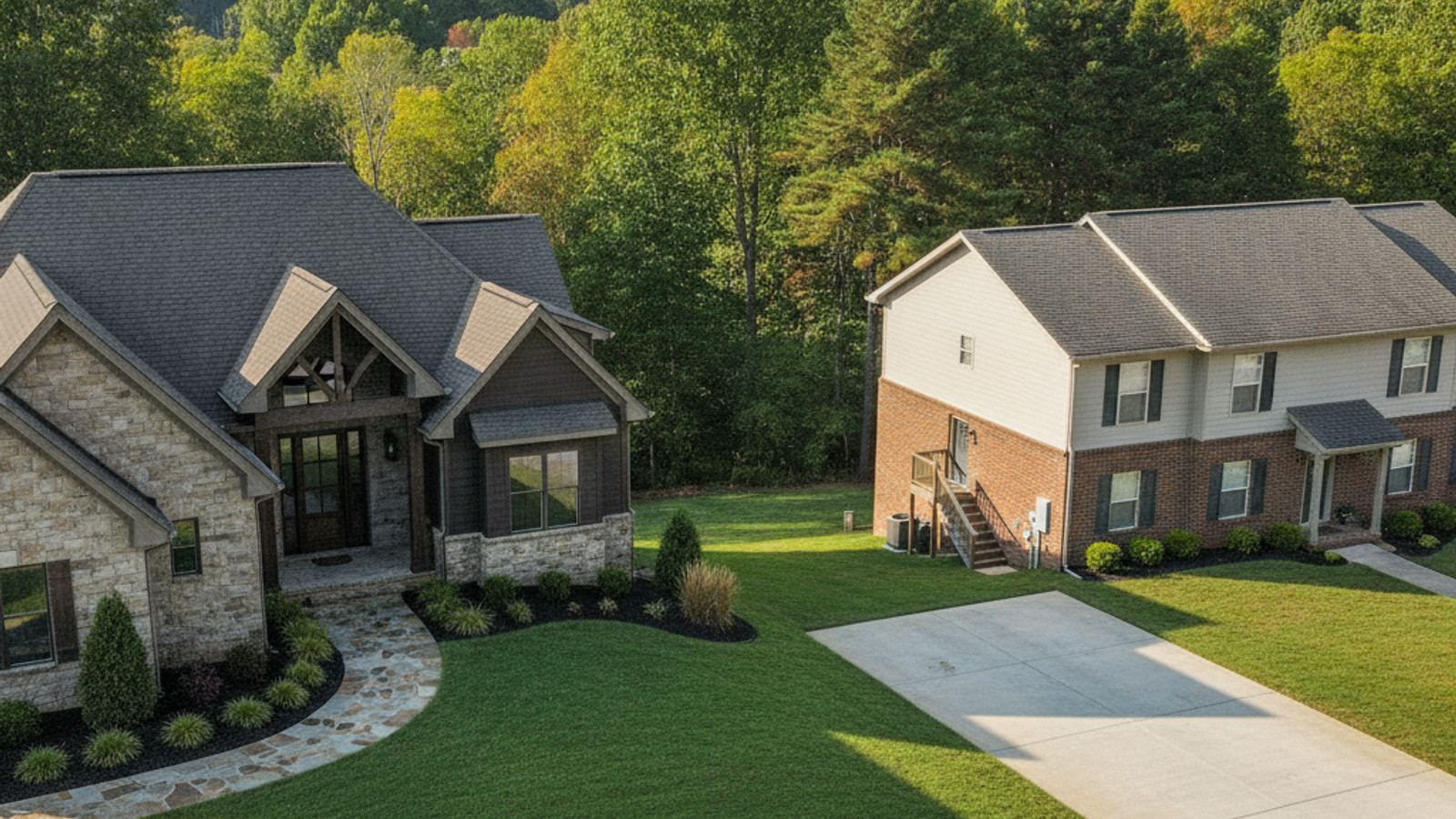
Tennessee’s lack of a state income tax continues to draw out-of-state buyers, pushing the state’s population past 7.2 million. For those looking at Investing in East Tennessee Real Estate, the regional economy offers a mix of logistics hubs, university towns, and major tourism centers.
The area stretching from Chattanooga, TN to the Tri-Cities is anchored by interstates like I-40 and I-75. This infrastructure supports steady commercial growth while the Appalachian Mountains maintain a consistent draw for new residents. Buyers evaluating this region should look closely at local property tax rates, zoning laws, and neighborhood-level rental demand before making an acquisition.
Economic Drivers Across the Eastern Corridor
Major employers in healthcare and manufacturing form the backbone of the region’s job market. Facilities connected to the University of Tennessee and regional hospital networks keep rental demand consistent year-round.
Local property tax rates vary widely by county, altering the math on expected returns. Investors should map out these holding costs alongside the specific transportation corridors that make properties attractive to long-term tenants.
The natural geography of the Great Smoky Mountains also plays a role in regional development. Topography limits where new subdivisions can go, keeping existing housing inventory relatively tight in the valleys.
Knoxville Housing Market and Rental Yields
Knox County sits at the center of the region’s growth, with a median listing price of approximately $425,000 in the spring of 2026. Monthly rents currently hover around $2,000, driven largely by the student and faculty population at the University of Tennessee.
Investors often compare single-family homes in West Knoxville against multi-family units closer to the urban core. Local zoning laws dictate exactly where multi-unit properties can be developed, limiting supply in predominantly single-family neighborhoods.
Out-of-state buyers should review the specific zoning overlay of any prospective parcel before planning a multi-unit conversion. Existing multi-family properties rarely stay on the market long, requiring buyers to have financing ready.
Chattanooga Real Estate Options
Hamilton County presents a different economic profile, driven by the tech sector and major logistics hubs. The median listing price in the Chattanooga area is roughly $419,000, while average rents range from $1,800 to $1,900.
The city’s position along major highways makes it a prime location for commercial real estate and industrial properties. Land parcels near the urban center offer opportunities for mixed-use development, provided they meet current municipal guidelines.
Residential investors often target neighborhoods with easy access to these employment centers. Shorter commute times reliably support higher tenant retention rates.
The Tri-Cities: Johnson City and Kingsport
Further north, the Tri-Cities region offers a lower entry point for property acquisitions. Washington County currently shows a median listing price of $411,000, with average monthly rents near $1,800.
Local economic drivers include large healthcare systems and educational institutions like East Tennessee State University. These employers provide a steady base of renters looking for affordable housing options.
While median prices are slightly lower than in Knoxville or Chattanooga, the Tri-Cities area shows steady appreciation potential. Buyers looking for long-term holds often find the ratio of purchase price to rental income favorable here.
Smoky Mountains Vacation Rental Regulations
Sevier County enforces a mandatory Short-Term Rental Unit Permit Program for properties located outside city limits. This framework took full effect during the 2024-2025 cycle and remains the standard for operators in 2026.
Tourism volume in the Great Smoky Mountains keeps occupancy rates high, but compliance costs should be factored into the operating budget. Gatlinburg and Pigeon Forge maintain their own specific business license and safety rules for properties within their municipal boundaries.
The permit process for unincorporated areas of Sevier County involves several specific steps. Owners must prepare for the following requirements:
- An annual $250 permit fee paid to the county.
- Mandatory annual fire and life-safety inspections.
- Adherence to septic system capacity limits based on the number of bedrooms.
Property Operations and Portfolio Management
Out-of-state owners should hire a local property manager to handle tenant screening and routine maintenance. A professional management team understands local landlord-tenant laws and can coordinate emergency repairs without delaying the process.
Acquiring properties goes smoother when partnering with a local real estate agent who belongs to the National Association of Realtors and uses the regional Multiple Listing Service. These professionals can pull accurate comparable sales data to verify property values before you make an offer.
Investors should account for local property transfer taxes and county-specific recording fees when calculating closing costs. Expected yields will also shift based on local county tax rates, HOA fees, and property insurance premiums.
Frequently Asked Questions
Are short-term rentals still profitable in the Smoky Mountains in 2026?
Yes, but profit margins depend entirely on how you manage compliance costs and turnaround fees. A cabin in Gatlinburg, TN can generate strong seasonal revenue, provided the owner budgets for the annual permit renewals and local business taxes.
Which city is better for cash flow: Knoxville or Chattanooga?
Chattanooga currently offers a slight edge for initial cash flow due to a slightly lower median purchase price of $419,000 compared to Knoxville’s $425,000. However, Knoxville’s massive university population provides a larger pool of yearly tenant turnover, which can minimize vacancy periods.
What are the property tax rates for rental properties in Tennessee?
Tennessee assesses residential properties at 25% of their appraised value, and each county applies its own tax rate to that assessed amount. For example, Knox County and Hamilton County have different millage rates, so you should verify the specific tax burden for any parcel before buying.


