

 Facebook
 X
X
 Pinterest
 Copy Link
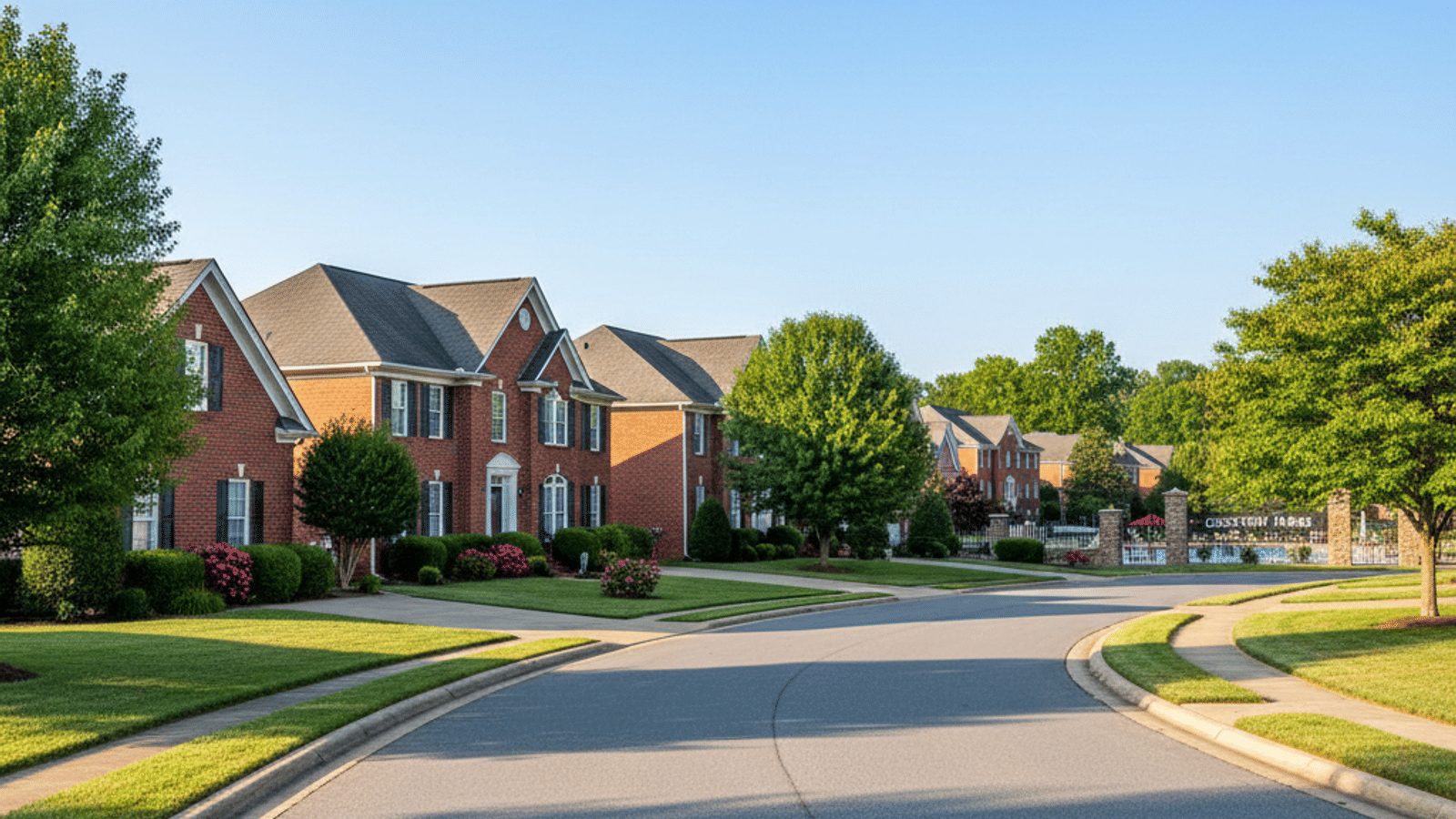
When people start looking at the cost of living in East Tennessee, the headline numbers usually look great. No state income tax, reasonable property taxes, and home prices that—while rising—still offer better value than many coastal markets. But there is one line item that catches many buyers off guard: the Homeowners Association (HOA) fee.
It’s easy to look at a mortgage calculator and forget to factor in these community costs, but in 2026, they are a critical part of your monthly budget. While Tennessee’s median HOA fees (often around $150 per month) generally sit well below the national average, that average is deceptive. Depending on whether you buy a standalone house in Farragut or a villa in a resort community like Fairfield Glade, your fees could range from a nominal yearly payment to a significant monthly bill.
If you are thinking about moving to Tennessee, it is important to understand what you are actually paying for. This guide breaks down the numbers as of early 2026, reflecting the recent shifts in insurance premiums and maintenance costs that have impacted budgets across the region.
The Three Tiers of HOA Fees in East Tennessee
One of the biggest sources of confusion for buyers is the difference between an annual fee and a monthly fee. In our market, we generally see fees fall into three distinct “tiers” based on the lifestyle the community provides.
Tier 1: Traditional Single-Family Subdivisions If you are looking at standard subdivisions in Knoxville or Johnson City, you will usually encounter annual fees. These typically run $100–$600 per year. Since the homes are standalone, the HOA isn’t fixing your roof or painting your siding. These fees generally cover the basics: mowing the common areas, maintaining the entrance sign, and perhaps upkeep for a community pool.
Tier 2: Condos and Townhomes When you start looking at condos for sale in Knoxville or maintenance-free townhomes, the fee structure shifts to monthly. Expect to pay anywhere from $200–$500 per month. This sounds steeper, but it’s because the association is taking on major liabilities. This fee usually covers the “master insurance” policy for the building exterior, roof reserves, landscaping, and sometimes water and sewer.
Tier 3: Resort & Retirement Communities For those exploring retirement communities in Tennessee, the fees are often a combination of mandatory assessments and lifestyle memberships. These generally range from $150–$400+ per month. In exchange, you get extensive infrastructure: private roads, 24/7 security gates, clubhouses, and sometimes bundled utilities.
Knoxville Area HOA Fee Averages (2026)
Knoxville is a diverse market, and fees here depend entirely on how close you are to the city center and how much maintenance you want to hand off to someone else.
In the suburban markets, such as the best neighborhoods in Knoxville and Farragut, the “Tier 1” model dominates. You might find a beautiful brick home in a swim/tennis community where dues are just $450 annually. However, buyers should be aware that newer developments built in 2025 and 2026 are launching with slightly higher initial fees—closer to $600–$800 annually—to account for the inflated costs of landscaping labor and pool chemicals.
The downtown and luxury condo market is a different animal. If you are looking at a loft on Gay Street or a luxury condo near the University, fees often exceed $500 per month. Historic buildings require specialized upkeep, and luxury buildings with elevators and concierges have high operating costs. If you are considering living in Farragut TN in a “maintenance-free” villa, expect to pay a premium for the convenience of never touching a lawnmower again, usually in the $250–$350 per month range.
Resort Community Fees: Fairfield Glade, Tellico Village, and More
This is the sector where we get the most questions. If you are comparing Fairfield Glade vs Tellico Village, you are looking at two very different financial models, especially after the budget shifts we saw leading into 2026.
Fairfield Glade Following the changes after the Wyndham exit, the Glade has adjusted its structure. For 2026, the base assessment is roughly $137 per month. It’s important to note that this fee includes sewer and trash pickup, which helps offset the cost. However, buyers need to budget for the “Amenity Reserve Fee” (ARF) due at closing. As of this year, that capitalization fee has risen to approximately $6,000, which goes toward maintaining the extensive infrastructure.
Tellico Village Tellico operates on a different scale. The Property Owners Association (POA) assessment is approximately $176 per month for the 2025/2026 fiscal year. This fee keeps the lights on, the roads paved, and the administration running. Unlike some bundled communities, Tellico is largely “pay-as-you-play.” You pay the low monthly assessment, and then you purchase a la carte memberships for golf or the wellness center only if you use them.
Rarity Bay If you are looking at lakefront homes for sale in TN, Rarity Bay offers a hybrid model. The mandatory HOA fee is actually quite low for a gated community, often around $1,100 per year. However, the social and golf memberships are optional add-ons. This gives you flexibility; you aren’t forced to pay for a golf course you don’t use, but the costs are there if you want the full country club lifestyle.
WindRiver & Luxury Communities For ultra-luxury gated communities like WindRiver, expect higher monthly premiums to cover the 24-hour manned security and marina access. These fees ensure exclusivity and top-tier maintenance of the grounds.
HOA Trends in Johnson City and the Tri-Cities
Historically, Northeast Tennessee has been a haven for buyers who hate HOAs. If you are considering living in Johnson City TN, you can still find plenty of established neighborhoods with zero fees or voluntary dues of just $50 per year for snow removal.
However, the market is shifting. As the area grows, national and regional builders are introducing master-planned communities in areas like Boones Creek and North Johnson City. In these new construction “villa” neighborhoods, HOA fees have jumped about 10% recently, now averaging $300+ per month.
This increase is largely driven by insurance rates for the structures. Buyers looking at older homes can still find bargains, but if you want a brand-new home with lawn care included, you will need to budget for these modernized fee structures.
What Do HOA Fees Actually Cover in Tennessee?
When you write that check, what are you actually buying? It varies by community, but there are a few legal and practical standards you should know.
- Common Area Maintenance: This is the baseline. It covers mowing shared grass, maintaining stormwater retention ponds (a big deal in our rainy climate), and paving private roads. In resort communities, road maintenance is a massive part of the budget since the county doesn’t pave them.
- Utilities: It is rare for single-family HOAs to cover utilities, but in condos and some resorts like Fairfield Glade, the fee may bundle in water, sewer, or trash services. This can make a $200 fee look much more reasonable when you realize it replaces a $60 bill.
- Insurance: This is the big one for condos. The fee covers the “Master Policy,” which insures the building’s shell. However, owners still need an “HO-6 Policy” for the interior (drywall, cabinets, flooring).
- Reserves: A well-managed HOA puts a portion of your dues into a “Reserve Fund.” This is a savings account for big future expenses, like replacing the clubhouse roof or repaving the parking lot, so they don’t have to hit you with a surprise bill later.
Smart Buying: How to Vet an HOA Before You Close
Nobody wants to move in and get hit with a fee hike three months later. There are specific questions to ask when buying a house in a managed community that can save you thousands.
First, always demand the Resale Certificate. This document shows the current financial health of the HOA. You want to see if they have plenty of cash in the bank or if they are operating in the red.
Second, ask point-blank about Special Assessments. Ask the seller or the board: “Are there any major projects planned for 2026 or 2027 that aren’t fully funded?” If they are planning to redo the pool deck and don’t have the cash, you could be on the hook for a lump sum payment right after moving in.
Finally, read the CC&Rs (Covenants, Conditions, and Restrictions) carefully. In East Tennessee, the most common friction points are parking rules. Many buyers assume they can park their bass boat or RV in the driveway, but many HOAs strictly prohibit this. Check the fee history as well—slow, steady increases are actually a good sign of responsible management, whereas a five-year freeze followed by a massive spike suggests poor planning.
Frequently Asked Questions About TN HOA Fees
Are HOA fees in Tennessee regulated by the state?
Tennessee law regulates how HOAs can foreclose on properties and how they must handle records, but the state does not cap the amount an HOA can charge. The fees are determined by the association’s board and budget, not by state regulators.
Can HOA fees be included in my mortgage payment?
Generally, no. While your lender will count the HOA fee as a debt when calculating your Debt-to-Income (DTI) ratio to see if you qualify for the loan, you usually pay the HOA directly, separate from your mortgage payment.
Do HOA fees in East Tennessee typically include property taxes?
No, HOA fees and property taxes are almost always separate bills. Your property taxes are paid to the county (and city, if applicable), while your HOA dues go directly to the private association managing the neighborhood.
What happens if I don’t pay my HOA fees in Tennessee?
Tennessee takes HOA debts seriously. If you fall behind, the association can place a lien on your property, charge interest and legal fees, and eventually initiate foreclosure proceedings to recover the unpaid dues.


