

 Facebook
 X
X
 Pinterest
 Copy Link
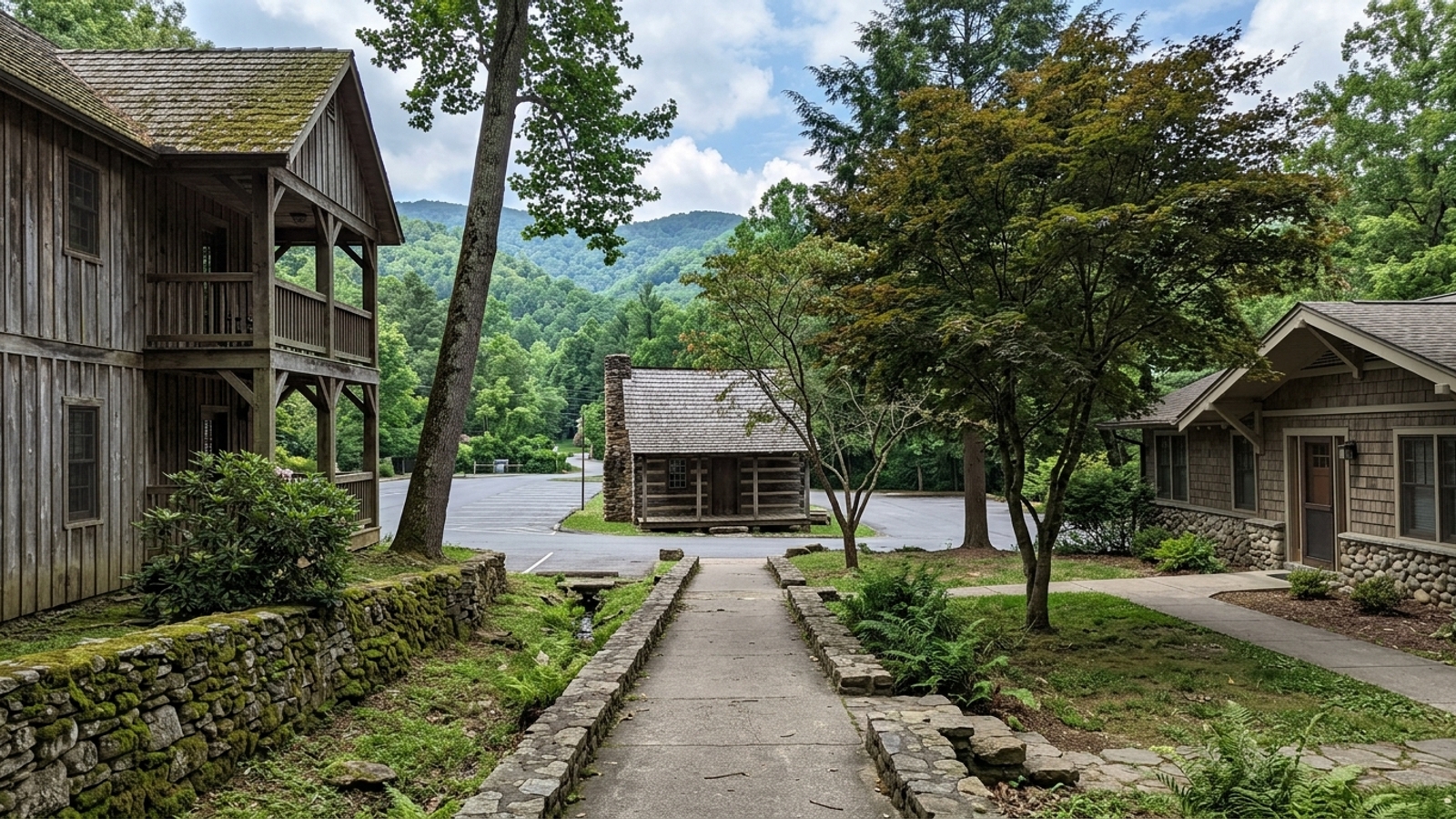
William Ogle scouted the land that would become Gatlinburg in 1802. That’s where this story starts – a single prospecting trip into eastern Tennessee that set everything else in motion. Today the community is a major center for tourism and Appalachian arts and crafts, with roughly 319 homes currently available and a median sale price around $475,000. These historical roots still matter today if you are weighing the pros and cons of living in Gatlinburg, TN.
If you’re thinking about buying here, the area’s history isn’t just background noise. The town grew from a small 19th-century settlement into a globally recognized destination, and that trajectory explains a lot about how the modern market behaves. Here’s how it all came together.
Early Settlement and the Naming of Gatlinburg
The first permanent settlement in the area began around 1807, when Martha Jane Huskey Ogle led her family into this mountain terrain – following the scouting trip her late husband, William Ogle, had made five years earlier.
The Original White Oak Flats
Before anyone called it Gatlinburg, the area went by White Oak Flats. The Ogle family and other early arrivals built their homes here, and that original footprint forms the core of the modern city.
How the Town Got Its Current Name
In 1856 the town was renamed Gatlinburg. The name comes from Radford C. Gatlin, a controversial store owner who arrived in 1854. A new post office was established inside his general store, and that was enough to make the name stick.
Founding and Incorporation Timeline
The community’s roots go back to those 1802 and 1807 milestones, but official incorporation came much later – Gatlinburg wasn’t formally recognized as a city until 1945. That designation is what opened the door to the modern infrastructure and growth you see today.
Geography and County Boundaries
Gatlinburg sits entirely within Sevier County, Tennessee, right at the edge of the Great Smoky Mountains National Park. That boundary isn’t incidental – it shapes local property lines and limits development in ways that matter when you’re evaluating a specific parcel.
Metropolitan Area Classification
Despite how close it sits to Knoxville, Gatlinburg is not part of the official Knoxville Metropolitan Statistical Area. The Census Bureau classifies Sevier County separately, as its own Sevierville micropolitan area. It is included in the broader Knoxville–Morristown–Sevierville Combined Statistical Area, but that’s a different designation and worth understanding if you’re comparing market data across the region.
Historic Landmarks and Local Museums
The Ogle Cabin is considered the town’s first home and one of its most recognized historic landmarks. Built in the early 1800s, it uses logs originally cut by William Ogle before his death. It’s a tangible connection to the 1807 settlement – not a reconstruction, not a replica.
The Great Smoky Arts and Crafts Community
Established in 1937, the Great Smoky Arts and Crafts Community is a recognized historic district – also called the Glades – consisting of an 8-mile loop of artisan shops and galleries. It holds the distinction of being the largest group of independent artisans in North America.
The Gatlinburg History Museum
The Gatlinburg History Museum opened in August 2014 inside the Ripley’s Aquarium of the Smokies building. Its main exhibit, “Through The Years,” traces the history, people, and crafts of the area. If you want a condensed version of everything this guide covers, that’s the place to spend an hour.
Gatlinburg’s Signature Industries and Modern Market
Tourism is the engine here. It always has been, and it’s built on two things that reinforce each other: a deep tradition in Appalachian arts and crafts, and direct access to the national park next door.
Real Estate and Housing Context
Homes have recently been averaging about 62 days on the market, and sellers are generally receiving about 96% of their list price. Those are useful benchmarks, but the tourism economy adds a layer of context you don’t get in a typical residential market. It shapes traffic patterns, the mix of property types available, and how buyers and sellers think about value. That’s worth keeping in mind before you write an offer.
Frequently Asked Questions
What is Gatlinburg, TN known for?
Gatlinburg is known for its tourism industry and its strong tradition of Appalachian arts and crafts. The Great Smoky Arts and Crafts Community – an 8-mile loop of independent artisans – is a major cultural draw.
What county is Gatlinburg, TN in?
Gatlinburg is in Sevier County, Tennessee. The Census Bureau classifies this county as the Sevierville micropolitan area.
How did Gatlinburg get its name?
The town is named after Radford C. Gatlin, a store owner who arrived in 1854. The post office was established inside his general store in 1856, which is what triggered the name change from White Oak Flats.
When was Gatlinburg, TN founded?
The Ogle family first settled the area around 1802 to 1807. The town was officially incorporated as a city in 1945.
Is Gatlinburg a city, town, or neighborhood?
Gatlinburg is an incorporated city. It officially gained that status in 1945.
Are there any famous people from Gatlinburg?
The town’s most notable historical figures are its founders. William Ogle scouted the area in 1802, and Radford C. Gatlin – the controversial store owner the town is named after – arrived in 1854.
Are there special zoning restrictions for homes in Gatlinburg’s historic districts?
It depends on where the property sits and what local ordinances apply. If you’re looking at anything near the 8-mile loop of the Great Smoky Arts and Crafts Community, review both Sevier County and city guidelines before you get too far into the process.
How does Gatlinburg compare to other Appalachian mountain towns?
Many buyers evaluate the differences between Gatlinburg and Asheville when looking for a home with strong arts traditions and national park access. While both offer beautiful mountain terrain, Gatlinburg’s market is shaped by its specific tourism economy.
How does the local market compare to other Sevier County communities?
Because the broader region relies on tourism, buyers frequently compare Gatlinburg and Pigeon Forge to see which area fits their needs. Gatlinburg sits right at the edge of the national park, which limits development and shapes local property lines differently than in surrounding communities.


