

 Facebook
 X
X
 Pinterest
 Copy Link
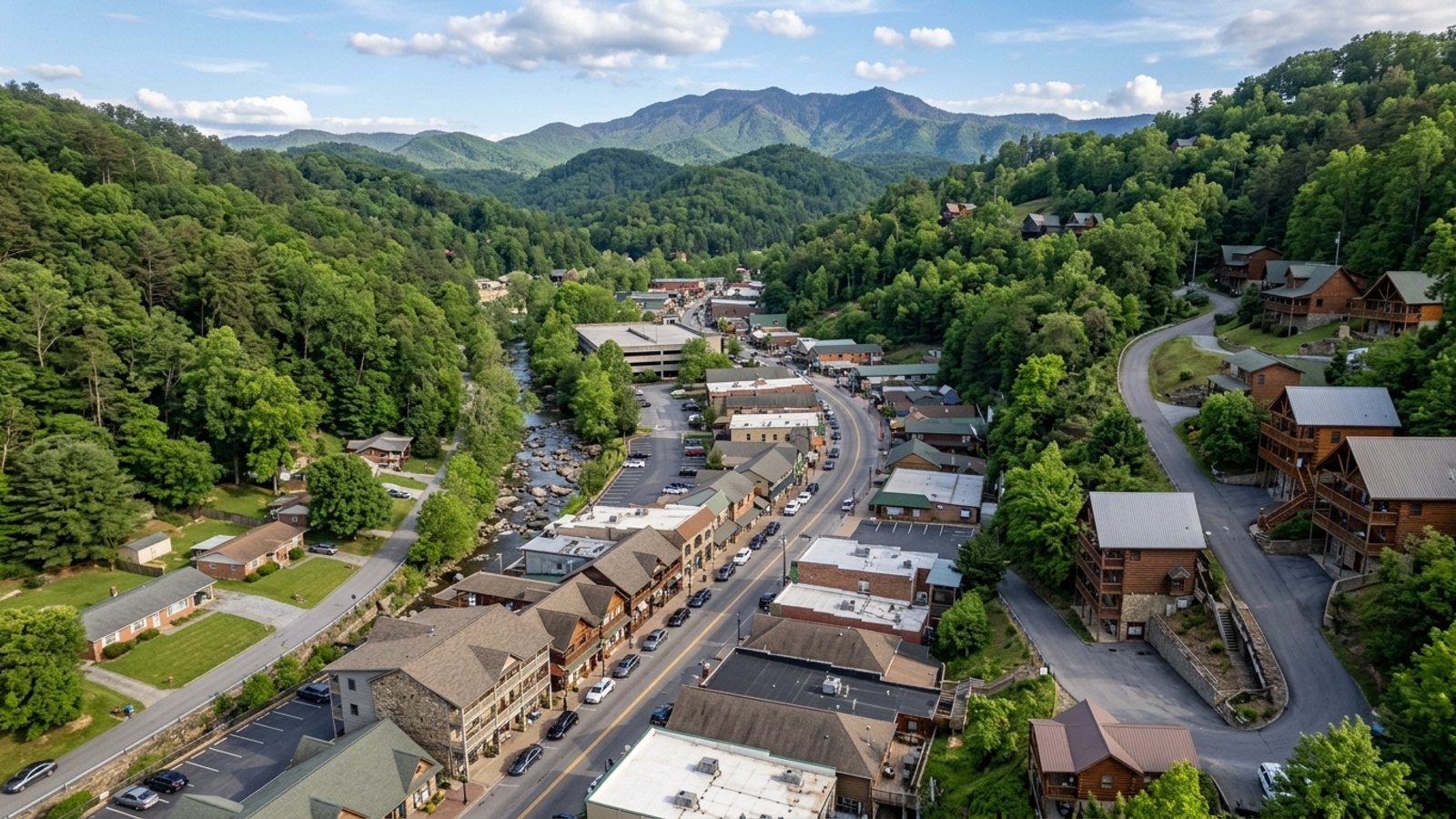
Gatlinburg, TN, sits at the entrance to the Great Smoky Mountains National Park, and that location drives everything – the tourism, the traffic, and yes, the real estate. Right now there are about 319 homes for sale here, with a median sale price around $475,000 and an average of 62 days on market. That last number is useful for buyers: you have a little breathing room to weigh the pros and cons of living in Gatlinburg before you commit.
The town is built into a narrow mountain valley, which funnels nearly all traffic onto a handful of roads. Once you understand how people move through here – and how to work around the bottlenecks – daily life gets a lot less frustrating. Whether you’re commuting from Knoxville or scoping out a cabin up in the hills, the infrastructure is worth knowing before you sign anything.
Arriving from Knoxville and the Airport
Knoxville is the main jumping-off point for Gatlinburg. Downtown Knoxville to downtown Gatlinburg is roughly 35 miles via I-40 and US-441 – about 57 minutes to an hour under normal conditions. That qualifier matters here more than in most places.
McGhee Tyson Airport (TYS) sits about 41 to 42 miles from Gatlinburg. Plan on 60 to 70 minutes from the terminal, depending on your route and what’s happening on US-441 that day.
Driving Routes and Travel Times
Most people take I-40 East out of Knoxville and merge onto US Highway 441 South – called the Parkway locally – which drops you straight into the center of town. It’s the most direct path, and it’s also the one that turns into a parking lot during autumn leaf season and summer weekends.
If you’re buying here with plans to commute into Knoxville, those peak tourist windows are worth building into your mental model of the drive. Alternate routes through the foothills exist, but none of them are meaningfully faster when things get bad on 441.
Airport Shuttles and Rideshares
A few dedicated services run between McGhee Tyson Airport and Gatlinburg. Ride to Gatlinburg offers private transfers directly from TYS to local addresses. General private bus and shuttle options are also on the table, averaging around $9 for the one-hour trip.
Uber works at the airport too – expect to pay roughly $67 for that 41-mile ride into town. Getting one at TYS is generally straightforward. Getting one back from a remote mountain cabin is a different conversation, and worth thinking through before you assume rideshares are a reliable fallback.
Parking and Downtown Access
The mountain valley geography doesn’t leave much flat land, and the city feels that squeeze with parking. The city runs several municipal facilities and pushes drivers toward satellite lots to keep things from completely locking up.
There are free options on the edges of town if daily fees aren’t something you want to deal with. If you’d rather be closer to the action, paid garages and private lots along the Parkway will get you there.
Free Park-and-Ride Locations
Gatlinburg has two free Park & Ride lots, both with direct connections to the local transit system. The Gatlinburg Welcome Center lot at 1011 Banner Road on the Spur has about 145 spaces and can handle cars, buses, and RVs.
The City Hall Complex lot on Highway 321 offers approximately 95 spaces. Park at either one at no cost and catch a transit vehicle into the downtown core.
Municipal Garages and Private Lots
The city runs two municipal garages for paid parking. The McMahan/Parkway Parking Garage holds up to 382 vehicles; the Ripley’s Aquarium Garage offers about 364 spaces. Both run around $10 per day.
Private lots are scattered through the downtown area and typically charge between $10 and $20 or more per day, depending on the season and how close they are to the main attractions.
Using the Free Trolley System
The Gatlinburg Trolley is the town’s primary public transit system, with all routes connecting at the Mass Transit Center at Ripley’s Aquarium of the Smokies. There are four color-coded routes: Red, Blue, Purple, and Yellow.
Peak season runs May 1 through October 31. During that window, the Red, Blue, and Purple routes run daily from 8:30 AM to midnight. Winter hours shift to roughly 10:30 AM to 10:00 PM, with some variation by day of the week. The Yellow Route – which serves the Great Smoky Arts & Crafts Community – runs 10:30 AM to 6:00 PM daily from April through October, then Monday through Saturday in November and December.
Fares and Regional Connections
The Gatlinburg Trolley is completely fare-free. No ticket, no app, no pass – just get on. That’s a change from previous years when rides ran up to $2 for a daily pass.
One thing to keep straight: the free ride applies only within the Gatlinburg system. If you’re heading to Pigeon Forge to visit places like Dollywood, you’ll need to connect to the Pigeon Forge trolley system and pay that system’s fare.
Deciding Whether to Keep a Car
Downtown is compact, but the residential areas spread into steep, winding terrain that the trolley doesn’t reach. Transit handles the main tourist corridors well. It doesn’t handle most private neighborhoods at all.
Where exactly you buy determines how much you’ll use it.
Walking the Downtown Parkway
The Downtown Parkway is genuinely walkable – sidewalks line the main thoroughfare, and moving between shops, restaurants, and attractions on foot is easy. If you own a condo or townhome close to the Parkway, you can handle most daily errands without touching your car. Plenty of residents in the immediate downtown area let their cars sit for days at a stretch.
When Driving Makes Sense
Buy a property up in the hills and you’ll need a vehicle. Mountain cabins and single-family homes above town are rarely within walking distance of a trolley stop or a grocery store, and that’s just the reality of the terrain.
Rideshares do operate here, but wait times outside the downtown core can stretch. For grocery runs, medical appointments, or regular trips into Pigeon Forge and Sevierville, a car isn’t a convenience – it’s the practical choice.
Frequently Asked Questions
How far is Gatlinburg from Knoxville?
Gatlinburg is approximately 35 miles from downtown Knoxville. The drive takes about 57 minutes to an hour via I-40 and US-441.
Do you need a car in Gatlinburg?
It depends on where you’re located. If you’re near the Downtown Parkway, the free trolley and walkable streets cover most of what you need. If your home is up in the surrounding mountains, a car is necessary for daily life.
Is Gatlinburg walkable?
The downtown area along the Parkway is, yes. The terrain through the center of town is relatively flat, with wide sidewalks connecting the major attractions. Once you get into the hills, that changes quickly.
How much does the bus cost in Gatlinburg?
The Gatlinburg Trolley is completely free. No fare or ticket is required for any of the four color-coded routes within the city.
Are there shuttle services from the Knoxville airport to Gatlinburg, TN?
Yes. Ride to Gatlinburg offers private transfers from McGhee Tyson Airport, and general private bus options are available for around $9.
How does traffic in Gatlinburg compare to other mountain towns?
The narrow valley geography here creates specific bottlenecks that you might not find in a more spread-out city. Buyers weighing Gatlinburg vs Asheville often notice that Gatlinburg relies on a single main parkway to move traffic. Understanding these local road layouts helps you decide which location fits your daily driving routine.
Is it easy to commute between Gatlinburg and Pigeon Forge?
Driving between the two towns is straightforward, though traffic on the Parkway slows down during peak tourist seasons. If you are comparing Gatlinburg vs Pigeon Forge for a home purchase, remember that the trolley systems are separate. You will need to switch vehicles and pay a fare to cross the city line.


