

 Facebook
 X
X
 Pinterest
 Copy Link
According to the U.S. Census Bureau, the permanent population across Gatlinburg, TN zip codes sits at an estimated 3,703 residents as of 2024. That number sounds like a small mountain village – because it is one. But the local real estate market operates on a much larger scale, driven by strong investor interest and a tourism economy that runs through all of Sevier County.
Buyers looking at homes here notice pretty quickly that housing inventory and pricing don’t align with a typical town of under 4,000 people. With a median sale price reaching approximately $802,500 in mid-2026, understanding that permanent resident baseline helps clarify why this market behaves the way it does.
Gatlinburg Resident Trends and Growth
Since the 2020 Census counted 3,577 permanent residents, Gatlinburg’s population has grown by about 5.79% – an annual rate of roughly 1.27%. Steady, but controlled. This isn’t a place experiencing explosive growth; it’s a place where a modest, consistent influx of new full-time locals layers on top of a market already dominated by vacation home buyers.
That physical constraint matters here more than the growth rate does. The town is bounded by the Great Smoky Mountains National Park, so there’s only so much room to spread out. New residents don’t just show up and find somewhere to go.
Current Year Resident Estimates
The most recent data puts the town’s permanent population somewhere in the 3,600 to 3,800 range. Short-term visitors swell the daily headcount into the tens of thousands, but the core group of year-round residents stays relatively small.
That small permanent base means local government and infrastructure are scaled for a modest community – even though they’re servicing a large transient population every single week of the year. If you’re planning to relocate full-time, factor that dynamic into your expectations for civic services and community size before you fall in love with a listing.
Historical Growth and Annual Rates
Census estimates show a 4.14% increase in residents between 2020 and 2023 alone, and that momentum has continued. It reflects a broader pattern of buyers choosing mountain communities across East Tennessee.
The growth rate is manageable on paper. The catch is that it competes directly with the short-term rental market for available housing. Every new permanent resident needs a housing unit, which shrinks the pool available for investors and keeps upward pressure on values.
How Resident Growth Impacts the Local Housing Market
In early 2026, active listings in Gatlinburg showed median list prices around $649,900. By mid-2026, the median closed sale price had climbed to $802,500. That gap tells you something about what’s actually happening when permanent residents and out-of-state investors end up bidding on the same limited pool of properties.
The area currently holds about 13.4 months of housing supply, with roughly 267 homes on the market as of late May 2026. Homes are spending a median of 90 days on the market, and sellers are getting about 95.9% of their asking price. There’s inventory – but the premium end of the market isn’t softening.
Housing Supply Versus Buyer Demand
More full-time residents means fewer homes sitting empty or available for seasonal rent. With 267 active listings, buyers have options. But a high median sale price tells you demand for premium properties remains firm.
Sellers securing nearly 96% of list price is worth taking seriously. The steady 1.27% annual population growth keeps a continuous baseline of local demand for single-family homes, and that demand doesn’t disappear in January the way tourist traffic does.
New Construction and Mountain Development
Building in Sevier County isn’t like building on flat suburban land. Steep terrain and proximity to protected national park acreage limit where developers can actually break ground for new subdivisions or cabin communities.
Most new construction responds to that constraint by maximizing available buildable lots – multi-story mountain cabins, higher-density condo projects. If you’re set on brand-new construction, expect to pay a premium. Land scarcity drives up initial costs for developers, and that gets passed along.
Density Metrics and Local Property Types
Gatlinburg covers a land area of 10.41 square miles, putting the population density at approximately 350.9 people per square mile based on 2024 estimates – up slightly from the 2020 Census figure of 343.5 people per square mile.
Compared to any urban center, that density is quite low. Outside the main commercial strip, the town has a spread-out, rural feel. Usable land is concentrated in valleys and along ridges, and that geography largely dictates what kind of properties are actually available.
Making Sense of Local Density Numbers
At 350.9 people per square mile, homes are generally spaced out. You get privacy, wooded buffers between lots, and terrain that naturally breaks up neighborhoods in a way that no zoning board ever could. There’s no grid-like sprawl here.
That low density appeals to buyers looking for a mountain retreat. It also means everyday amenities and grocery stores require a short drive rather than a walk down the street – something worth knowing before you commit.
Common Homes and Cabin Properties
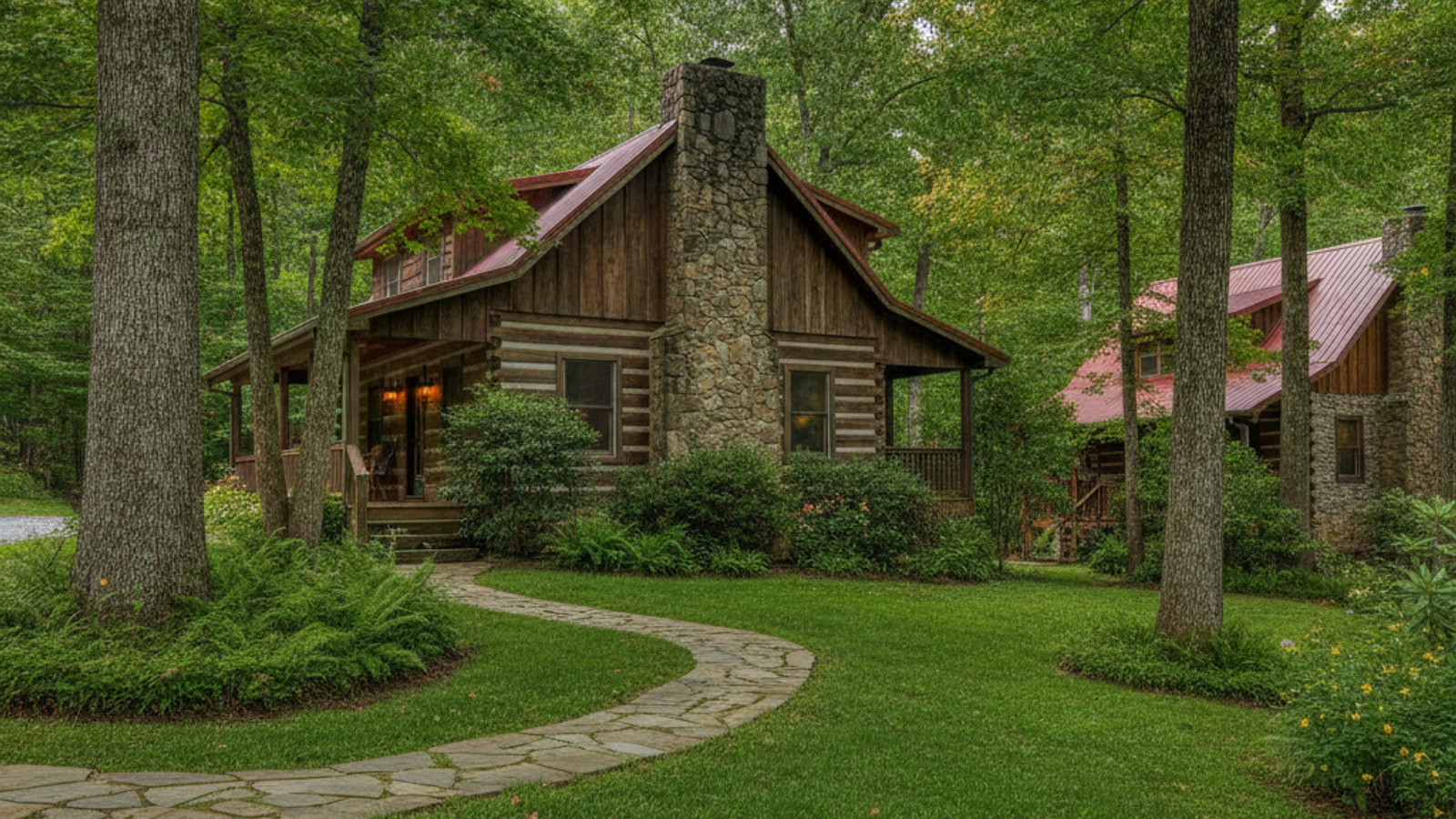
The local density produces two main property types: low-density single-family homes and mountain cabins, with a handful of higher-density condo buildings near the downtown center. The average list price runs around $388 per square foot, which reflects the value of both the structures and the land underneath them.
Condos offer lower-maintenance ownership for buyers who want to stay close to the commercial district. Cabins pushed further into the hills deliver the classic Smoky Mountain experience – along with the winding mountain roads that come with it. That tradeoff between privacy and accessibility is a real one, and it’s worth thinking through before you start touring properties.
Frequently Asked Questions
How does Gatlinburg’s massive tourist-to-resident population ratio affect local property taxes and utility costs?
The high volume of tourists helps fund local infrastructure through sales and lodging taxes, which can offset the property tax burden for the 3,700 permanent residents. Utility usage and road maintenance costs are scaled to handle the visitor influx, though, meaning overall civic budgets operate much larger than you’d expect from a town this size.
Is the permanent population in Gatlinburg growing, or are most homes being purchased by out-of-state investors?
Both things are true at the same time. The permanent population is growing at roughly 1.27% annually, adding a real baseline of full-time residents. Out-of-state investors are also continuing to purchase mountain cabins, which keeps the median sale price elevated at around $802,500.
How drastically does the Gatlinburg population drop in the off-season, and will that impact my short-term rental income?
The daily headcount drops significantly during the late winter months when tourism slows down, leaving mostly the 3,700 permanent residents in town. If you’re counting on short-term rental income, budget for those seasonal dips – occupancy rates will move with the tourist calendar, not a flat monthly average.
What are the biggest challenges of moving to Gatlinburg full-time given the small local population and heavy tourist traffic?
Full-time residents deal with dense traffic on the main parkways during peak summer and fall seasons. The local economy is also focused primarily on hospitality, which means non-tourist amenities are less concentrated than you’d find in a standard residential suburb.
How does the population density and neighborhood feel in Gatlinburg compare to buying a home in nearby Pigeon Forge or Sevierville?
Gatlinburg has a population density of about 350.9 people per square mile, with homes often built into steep, wooded terrain. Sevierville and Pigeon Forge generally offer flatter topography, larger residential subdivisions, and closer access to major big-box retail stores.
Are there enough everyday amenities, like non-tourist grocery stores and schools, to support full-time families living in Gatlinburg, TN?
Yes – Gatlinburg has basic grocery options and public schools for its permanent residents. Because the year-round population is small, though, many locals travel to other parts of Sevier County when they want a wider selection of large supermarkets and retail centers.


