 Facebook
 X
X
 Pinterest
 Copy Link
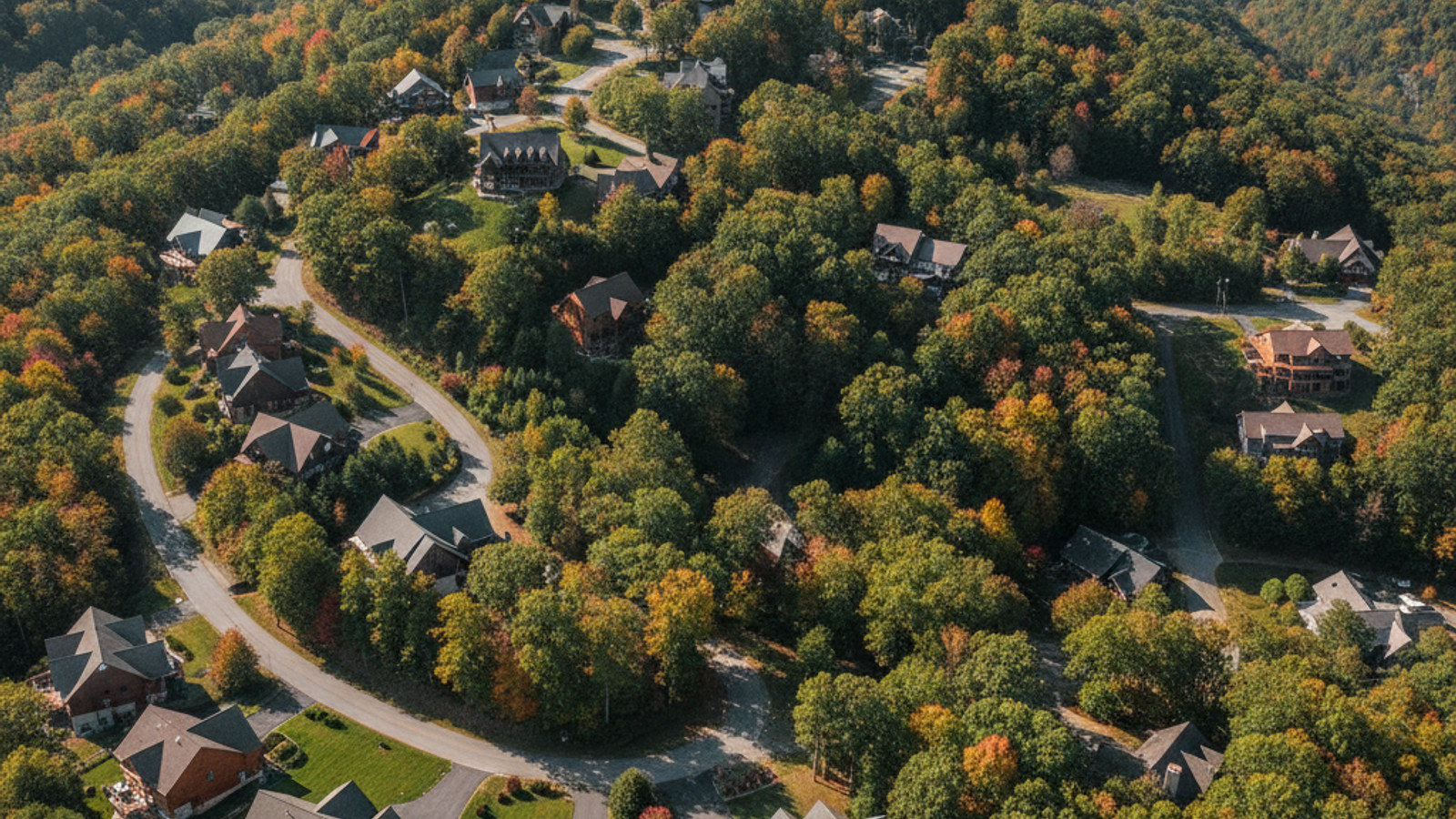
The median sale price for a home in Gatlinburg, TN sits around $802,500 as of mid-2026. Average apartment rents, by contrast, run between $1,500 and $1,900 a month. If you plan to buy your first home in Gatlinburg, TN, that gap between owning and leasing is real, and it’s wide.
If you’re moving to the Smoky Mountains, that difference doesn’t tell the whole story on its own. Gatlinburg operates differently than your typical suburban market – the short-term rental economy touches almost everything here, from available inventory to how the county classifies your property for tax purposes. Before you decide, you need to look honestly at upfront costs, what you’ll carry month to month, and exactly what the local tax rules mean for your situation.
Current Market Costs for Housing in Gatlinburg
There’s a clear divide between what it costs to lease and what it costs to own right now. Homes are spending roughly 90 days on the market, with about 267 active listings available – buyers have choices, but they’re paying for the privilege. The average buyer closes at about 95.9% of list price, so don’t count on negotiating your way into a deal that dramatically changes the math.
The rental side has its own complications. Because so many property owners here are running short-term vacation units, the pool of standard 12-month leases is smaller than you’d find in most comparable towns. That compression pushes whole-house rental prices above what you’d pay for an apartment, and it means you may spend more time searching than you expect.
What You Can Expect to Pay for Rent
Standard apartments in the area run $1,500 to $1,900 per month. If you need a full house, expect to pay closer to $2,500 a month – and that number moves depending on how close you are to downtown or the main routes into the national park.
The upfront picture, though, is genuinely easy. First month’s rent plus a security deposit – typically one month’s rent – and you’re in. If you’re not in a position to pull together a large cash reserve right now, leasing is the faster path through the door.
The Cost of Purchasing a Home
At a median price of $802,500, the entry costs are substantial. A standard 20% down payment is roughly $160,500, and that’s before closing costs. Go in with a smaller down payment and you’re still committing far more cash than any rental deposit would require.
Then there’s the monthly carry. Estimates put the gap between a mortgage payment and a typical rent at somewhere between $1,000 and $2,000 per month. That’s not a rounding error – it’s a real number you need to plan around before you start touring properties.
The Upsides and Downsides of Leasing
A lease gives you a fixed number on the first of every month and zero exposure to a surprise repair bill when something breaks. For someone managing a tight monthly budget, that predictability is worth something.
It also buys you time to actually learn the market. You can spend a year figuring out whether the Parkway commute bothers you, or whether the higher elevations around Chalet Village feel worth it. A lot of buyers who skip this step end up wishing they hadn’t.
Flexibility and Upkeep
When the HVAC goes or the roof starts leaking, that’s the landlord’s problem – financially and logistically. Renters don’t carry that exposure.
There’s also the exit. A 12-month lease is a clean out if your situation changes. Selling a house in a market where properties average 90 days before closing is not.
Limits on Building Wealth
Here’s the honest downside: every payment you make goes toward someone else’s equity, not yours. Over several years, that’s a meaningful amount of wealth you’re not building.
Renters also have no protection against rent increases at renewal. When your lease expires, the landlord can reprice to whatever the market will bear. A fixed-rate mortgage doesn’t work that way.
The Realities of Homeownership in Sevier County
One thing that does work in buyers’ favor here is the property tax structure. Sevier County’s effective rate runs between 0.28% and 0.37% of market value – well below the national average. The county’s base statutory rate is $1.48 per $100 of assessed value, and Tennessee uses a 25% residential assessment ratio. The city of Gatlinburg layers on an additional $0.126 per $100 of assessed value. Even combined, those rates keep annual holding costs manageable for primary residents.
That’s the primary residence picture. The numbers change if you’re planning to rent to vacationers.
Building Equity Over Time
Every mortgage payment reduces your principal balance and increases your ownership stake. Combine that with any appreciation in local values and you’re building real net worth over time – something a rent check simply doesn’t do.
You also get full control of the property. Renovate it, landscape it, upgrade the kitchen – no landlord approval required, and any improvement you make that adds value comes back to you when you sell.
Taxes and Ongoing Maintenance
Under a 2021 state law, short-term rental properties in Sevier County are classified as commercial – which carries a 40% assessment ratio rather than the 25% residential rate. If you’re buying with the idea of running vacation rentals, that reclassification will meaningfully increase your annual tax bill compared to what a primary resident pays.
Mountain properties also come with maintenance costs that flat-terrain homes don’t. Wood exteriors need staining. Steep driveways and retaining walls require attention. Pest control is not optional. You need a dedicated budget for this – not a mental note, an actual fund.
How to Choose Which Path Makes Sense for You
The honest answer is that it comes down to two things: your timeline and how much cash you have available. If you’re looking at fewer than five years in the area, the transaction costs of buying and then selling will likely wipe out whatever equity you’ve built. Renting is the more defensible financial position for anyone with a short horizon.
If you’re putting down permanent roots, the calculus shifts. You’re paying a premium to enter – a median price of $802,500 requires real savings – but you’re acquiring an asset with a long track record of appreciation.
Figuring Out Your Break-Even Timeline
Your break-even point is the year when the cumulative cost of renting finally exceeds the cumulative cost of owning. With the monthly gap between rent and a mortgage payment often running over $1,000, it takes meaningful appreciation and principal paydown to get there.
Run this with your actual numbers – your rate, your down payment, your realistic maintenance costs. If you expect to move before you reach that year, you already have your answer.
Aligning Housing with Your Long-Term Plans
Think about what tying up $160,000 in a down payment means for the rest of your financial life. If you want a stable, permanent base, that trade-off makes sense. If you’d rather keep capital liquid for other uses, a lease serves that goal better.
There’s also a straightforward lifestyle question underneath all of this. Some people genuinely prefer the low-maintenance reality of an apartment. Others won’t settle for anything less than a standalone mountain home they can make their own. Neither preference is wrong – but it should factor into the decision.
Frequently Asked Questions
Is the monthly cost of buying a house in Gatlinburg currently higher than signing a long-term lease?
Yes, by a significant margin. With median home prices around $802,500, monthly mortgage payments easily outpace average apartment rents of $1,500 to $1,900. The gap between renting and owning typically lands somewhere between $1,000 and $2,000 per month.
Does it make more financial sense to buy a Gatlinburg cabin as an investment or just rent a place when I visit the Smoky Mountains?
It depends on how often you visit and how seriously you want to manage a rental property. Buying a cabin for short-term rentals means it will be classified as commercial under a 2021 state law, subjecting it to a 40% assessment ratio in Sevier County. If you only visit occasionally, renting avoids both that commercial tax exposure and the ongoing maintenance costs.
Should I rent for a year to learn the different neighborhoods before buying a permanent home in Gatlinburg?
Renting first is a genuinely useful move here. Commute times and road conditions vary quite a bit depending on where you are relative to the national park entrances. A 12-month lease gives you time to sort that out without pressure – and with homes averaging 90 days on the market, you’re unlikely to miss the right opportunity.
What are the hidden maintenance costs of owning a mountain home in Gatlinburg compared to the fixed costs of renting?
Renters pay a fixed monthly rate and nothing more when something breaks. Homeowners are responsible for everything – staining wood exteriors, maintaining steep driveways, managing retaining walls, pest control. These costs are variable and come out of your pocket when they arrive.
Is it harder to find an available year-round rental in Gatlinburg or to successfully win a bid on a house?
Finding a year-round rental is often the harder search, because much of the available inventory is oriented toward short-term vacationers rather than permanent residents. Buying means entering a market with a median price of $802,500 and roughly 267 active listings. Both paths require patience – but the long-term rental pool is historically thin.
How do the upfront down payment requirements for buying a Gatlinburg property compare to the standard security deposits needed to rent?
There’s no real comparison. A standard security deposit is typically one month’s rent – somewhere between $1,500 and $2,500 depending on the unit. Buying a median-priced $802,500 home means you need tens of thousands of dollars for a down payment alone, plus additional cash for closing costs.


