 Facebook
 X
X
 Pinterest
 Copy Link
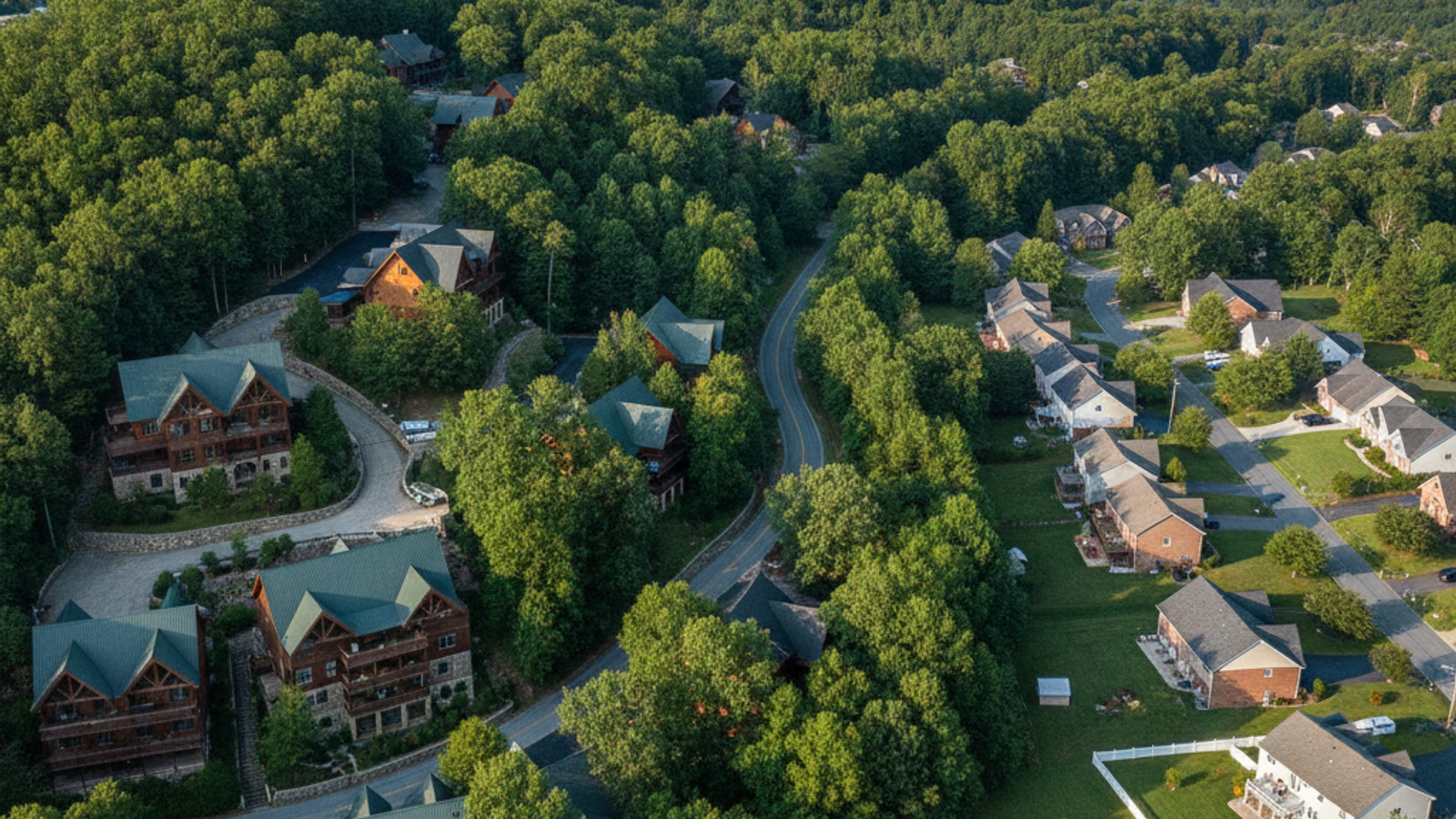
The median home sale price in Gatlinburg, TN sits at roughly $802,500 as of mid-2026. That number reflects something unusual about this market – traditional primary residences share the same inventory with high-end vacation cabins and short-term rentals, and the mix skews everything upward. Following the right steps to buying your first home in Gatlinburg, TN requires a clear view of these unique market dynamics.
With local inventory hovering around 267 available homes and properties spending roughly 90 days on the market, you’re not in a situation where you need to decide in 48 hours. That said, walking into showings without a clear budget is still a bad idea. A firm budget keeps you focused on homes that actually fit your financial life.
Calculating Your Gatlinburg Home Budget
Your price range starts with gross monthly income – what you earn before taxes. That’s the figure lenders use to set your maximum monthly housing payment, and everything else flows from there.
Online calculators give you a rough starting point, but the Smoky Mountains have enough local quirks that the standard math doesn’t always hold. A realistic budget here has to account for both conventional mortgage guidelines and the specific costs that come with Sevier County real estate.
The 28/36 Rule Explained
Most lenders use the 28/36 rule to evaluate your financial health. The first number means your housing costs – principal, interest, taxes, and insurance – shouldn’t exceed 28% of your gross monthly income.
The second number, 36%, is your total debt-to-income ratio. Your new mortgage payment plus every existing monthly debt obligation combined should stay under 36% of your pre-tax income. Both thresholds matter, and lenders check both.
Factoring in Gatlinburg Home Prices
Valuations here vary widely depending on property type and location. Recent MLS data puts the median sale price at roughly $802,500, but the Zillow Home Value Index places the typical home value closer to $506,638.
That spread isn’t a data error – it’s what happens when luxury investment cabins and standard single-family homes share the same market. If you’re buying a primary residence, you’ll often find options well below the overall median.
What Lenders Look At for Pre-Approval
Getting pre-approved means opening your financial history to a fairly thorough review. Lenders are looking at specific metrics that determine how much they’re willing to put on the table.
Familiarity with these metrics before you apply gives you a chance to strengthen your position. Even modest improvements to your financial picture can move your purchasing power meaningfully.
Debt-to-Income Ratio (DTI)
Your DTI compares total monthly debt payments to gross monthly income. Lenders break it into two pieces: front-end DTI, which is just your housing payment, and back-end DTI, which includes everything else – auto loans, student debt, minimum credit card payments, all of it.
Paying down those balances before you apply will directly increase the size of the mortgage you can qualify for. It’s one of the most straightforward levers you have.
Credit Score Requirements
Your credit score determines your interest rate, and your interest rate determines how much home you can afford on a given monthly payment. The relationship is that direct.
Minimum score requirements vary by loan type. Conventional loans typically require at least 620. FHA loans often accept scores down to 580.
Down Payment Options
How much cash you bring to closing changes both your loan amount and your monthly payment. A larger down payment reduces your principal and can eliminate private mortgage insurance entirely.
The standard benchmark for avoiding that extra cost is 20% down, but plenty of programs ask for far less. FHA loans require just 3.5% down, and VA loans offer zero-down options for eligible military members.
Extra Costs to Factor Into Your Monthly Payment
Principal and interest are only part of what you’ll pay each month. Property taxes, insurance premiums, and any HOA dues all factor into your total housing expense – and all of them affect your DTI when you’re qualifying for a loan.
Tennessee has its own tax structure and insurance averages that don’t match national baselines, so you can’t just plug in generic numbers and expect an accurate picture.
Property Taxes in Sevier County
Sevier County has some of the lowest property tax rates in Tennessee, with an effective rate around 0.31% to 0.37%. The state assesses residential property at 25% of its appraised value.
The county base rate is $1.48 per $100 of assessed value. Buy inside Gatlinburg city limits, and you’ll also pay the city rate of $0.126 per $100 of assessed value on top of that.
Homeowners Insurance and HOA Fees
Tennessee ranks seventh highest nationwide for home insurance costs, averaging around $3,408 to $3,757 per year depending on coverage and provider. Budget $2,200 to $3,800 annually for a standard policy.
Many properties in the Smoky Mountains also belong to homeowners associations that maintain private roads or community amenities. Those monthly or annual HOA fees count toward your DTI when you’re qualifying – they’re not optional line items you can set aside.
Closing Costs
Closing costs typically run between 2% and 5% of the purchase price. That covers the appraisal, title search, loan origination, and local recording taxes.
You’ll need that cash on closing day, separate from your down payment. Sometimes sellers will cover a portion, but plan to pay it yourself and treat any seller contribution as a bonus.
Ways to Stretch Your Buying Power
If your initial budget falls short of what you’re looking for, there are concrete ways to improve your position before you apply. A few deliberate moves can make a real difference in what a lender will approve.
State-level programs also exist specifically to help buyers with the down payment gap. Explore what’s available before you assume you’re stuck.
Improving Your Credit Profile
Reducing outstanding debt is the fastest way to improve your purchasing power. Lower credit card balances improve your DTI and frequently boost your credit score at the same time – two benefits from one move.
Don’t open new lines of credit or make large purchases while you’re preparing to buy. Consistent, on-time payments keep your profile clean through the underwriting process.
Tennessee First-Time Homebuyer Programs
The Tennessee Housing Development Agency (THDA) offers the Great Choice Home Loan, which pairs with down payment assistance. The program provides $6,000 as a forgivable second mortgage at 0% interest, and that loan is forgiven if you stay in the home for 30 years.
THDA also runs a Homeownership for Heroes program for military members and veterans. It provides financial assistance, reduces the interest rate by 0.5%, and waives the first-time homebuyer requirement statewide.
To qualify for any THDA program, you’ll need a minimum credit score of 640 and completion of an approved homebuyer education course. Eligibility also depends on household income limits that vary by county.
Frequently Asked Questions
Can I use projected Airbnb rental income to qualify for a larger mortgage in Gatlinburg?
It depends. Some lenders will consider projected short-term rental income if you’re purchasing strictly as an investment using a commercial or investment loan product. If you’re buying the home as your primary residence, lenders typically won’t let you use potential rental income to qualify.
How much of a down payment is required to buy an investment cabin versus a primary residence in Gatlinburg, TN?
Investment properties generally require more cash up front. A primary residence might qualify for an FHA loan at 3.5% down or a conventional loan at 3% to 5% down, but investment cabins typically require at least 15% to 20% down.
What hidden costs, like wildfire insurance or steep driveway maintenance, should I factor into my Gatlinburg housing budget?
Plan for higher-than-average homeowners insurance premiums – Tennessee averages around $3,408 to $3,757 per year. Mountain properties often add costs for private road upkeep, steep driveway clearing, and specialized insurance riders depending on the exact location.
How do Sevier County property taxes and local HOA fees impact how much house I can afford?
Lenders add your estimated annual taxes and HOA dues to your projected mortgage payment before calculating your DTI. To get an accurate pre-approval amount, request the HOA fee schedule for any specific cabin community you tour, as these dues can range from minimal road maintenance to high monthly costs for resort pools and amenities.
Is it more affordable to buy an existing home in Gatlinburg or build a new cabin in the Smoky Mountains?
It depends on the property type and location. The median sale price for existing homes sits at roughly $802,500, but building new means separate costs for land clearing, utility installation, and mountain-specific engineering – expenses that can quickly push past what an existing structure would cost.
Do I need to use a local Tennessee lender to get pre-approved for a mountain property?
No, you’re not required to. That said, a local lender typically understands the nuances of financing Gatlinburg’s mix of primary homes and investment cabins, and that familiarity tends to make the underwriting process run more smoothly.


