

 Facebook
 X
X
 Pinterest
 Copy Link
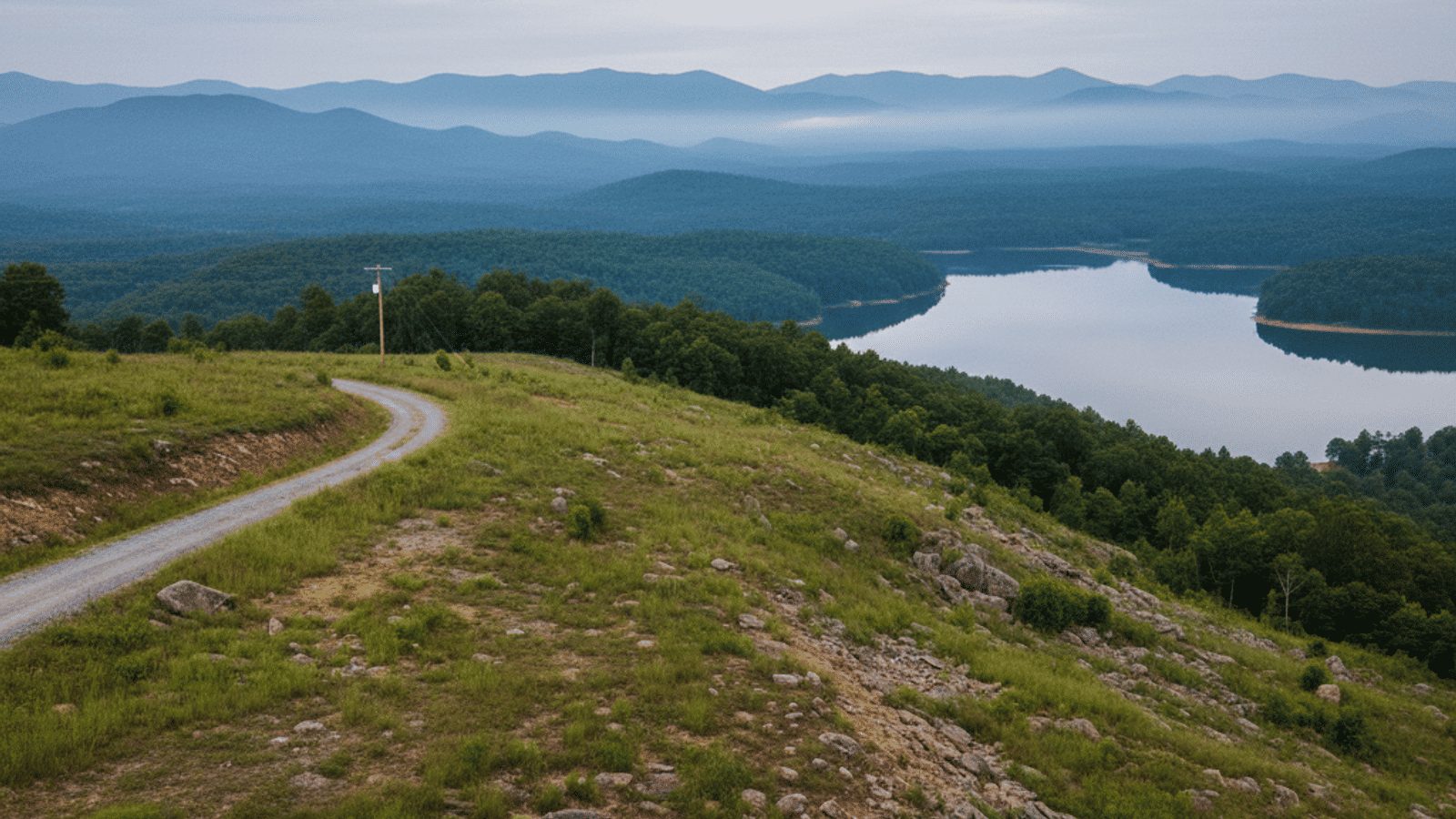
If you’re sitting on a porch anywhere from Chattanooga to the foothills of the Smokies, you might be wondering what that view is actually worth in today’s market. It’s a common conversation I have over coffee with homeowners: “My neighbor sold his cabin for a fortune last year—can I do the same?”
The answer, as usual in real estate, is “it depends.” But in East Tennessee, it depends on a lot more than just square footage and bedroom counts. Valuing property here is part art, part science, and part knowing exactly how much a steep driveway scares away a flat-land buyer.
Whether you own a rental cabin in Sevier County, a historic home in Knoxville, or raw hunting acreage, understanding property valuation in East Tennessee requires looking beyond the basic numbers.
The East Tennessee Property Market Landscape (2026 Update)
Let’s start by looking at the big picture. For the last few years, we saw a frenzy that made heads spin. However, as we settle into 2026, the market is taking a breath. We aren’t seeing the wild bidding wars on every single listing anymore, and that is honestly a healthy change for everyone.
Inventory is finally creeping back up—we are seeing about 30% more homes on the market compared to this time last year. This increase has created a much more balanced environment. Buyers have a little more breathing room to make decisions, and sellers are learning that pricing right is more important than ever. While days on market are ticking up slightly (averaging around a 3.5-month supply regionally), prices haven’t crashed; they have stabilized and, in some pockets, are still seeing modest appreciation due to steady demand.
It is also crucial to recognize that we really have two different markets happening at once. You have the primary residential hubs like the Knoxville Metro area, where the median price of a home is hovering around $408,000 and driven by people needing places to live and work. Then you have the vacation and investment markets, particularly in Sevier County. There, the median for cabins and short-term rentals sits closer to $535,000, driven entirely by ROI and tourism traffic.
For a deeper dive into these numbers, it’s worth keeping an eye on current East Tennessee market trends to see how your specific county is performing week to week.
Key Factors Influencing Property Value in East Tennessee
If you try to price a mountain home using a calculator designed for a subdivision in the suburbs, you are going to get the wrong number. Our region has quirks that algorithms just can’t see.
Topography and Views are the biggest wildcards. A home with an unobstructed, panoramic mountain view can easily command a 10% to 20% premium over a nearly identical house sitting in a valley without a view. However, you have to balance that view against Accessibility. You might have a million-dollar view, but if the driveway is a terrifying 45-degree gravel slope that requires a tricked-out Jeep to climb, you are significantly shrinking your pool of potential buyers, which impacts the final sale price.
Then there is the water factor. In our area, not all water is created equal. Lakefront property on Norris, Douglas, or Tellico Lakes operates in its own high-value tier. A seasonal creek that dries up in July adds a nice touch, but it doesn’t drive value the way year-round river frontage does.
Finally, for the investment crowd, value is directly tied to Short-Term Rental Potential. In areas near Dollywood or Gatlinburg, the property’s value is often calculated based on its income history. A cabin that consistently pulls in rental revenue because it’s five minutes from the Parkway will sell for a much higher price per square foot—often north of $290—compared to a standard residential home, which usually trades in the $215–$230 per square foot range.
Valuing Land and Acreage in the Region
Valuing a house is one thing; valuing dirt is a whole different animal. I often talk to landowners who see a developer buying land for $150,000 an acre near a tourist strip and assume their 50 acres in a rural county is a goldmine.
The value of land here is dictated almost entirely by its “highest and best use.” If you are selling rural acreage suitable for hunting or timber in a county like Hancock, you might be looking at $5,000 to $10,000 per acre. However, if that land is flat, buildable, and near utilities in a prime spot in Sevier or Williamson counties, the price per acre can skyrocket to $50,000 or even $150,000+.
We also need to talk about the Greenbelt Program. Many large tracts in Tennessee are on Greenbelt tax assessments, which keeps your annual property taxes incredibly low based on agricultural use. This is great for holding costs, but it can confuse sellers. Just because your tax bill is low doesn’t mean the market value is low—and conversely, losing that Greenbelt status upon sale can trigger rollback taxes that a buyer needs to be aware of.
One final “make or break” factor for land is the soil itself. You can have the most beautiful ten acres in the state, but if it fails a perc test (meaning the soil can’t support a septic system) and public sewer isn’t available, that land becomes very difficult to build on. In rural areas, utility availability—specifically water and high-speed fiber internet—is often the number one value driver.
If you are looking for land for sale East Tennessee, always check the utility situation first.
Tax Assessment vs. Appraised Value vs. Market Value
This is where things get confusing for a lot of folks. You open your mail, see the county tax assessment, and panic because it’s way lower (or sometimes higher) than what you thought your home was worth.
Here is the reality: Tax Assessment is a number used by the government to collect revenue, and it often lags behind reality. Tennessee counties operate on reappraisal cycles that can be 4 to 6 years long. In a market that moves as fast as ours, a tax value from several years ago has almost no relationship to what a buyer will write a check for today.
Market Value is simply what a buyer is willing to pay right now, influenced by supply, demand, and interest rates. It is also the figure used to determine the total real estate commissions in East Tennessee—typically ranging between 5% and 6%—as well as the various seller closing costs in East Tennessee. Beyond commissions, sellers should budget for an additional 1% to 3% for items like title insurance, transfer taxes (currently $0.37 per $100 of value), and prorated property taxes.
Appraised Value is different still; it’s what a bank’s third-party appraiser says the home is worth to justify a loan.
There is also a very specific tax shift happening right now that investors need to watch. Counties like Sevier are beginning to reclassify many short-term rentals. Instead of the standard 25% residential assessment rate, some STRs are being hit with a 40% commercial assessment rate. This doesn’t change the market price of the home directly, but it definitely changes the ROI calculation for a buyer, which can cool demand for certain properties.
Tools for Estimating Value: Accuracy & Limitations
I know everyone loves to check their “Zestimate,” but you have to take those online numbers with a massive grain of salt in East Tennessee.
Online Estimators work great in subdivisions where every house is a cookie-cutter copy of the next. They fail miserably in the mountains. An algorithm cannot tell the difference between a modular home and a custom log cabin, nor can it see that your neighbor’s house sold cheap because it sits next to a noisy highway while yours sits on a quiet ridge.
For a real number, you usually start with a Comparative Market Analysis (CMA). This is where an agent steps in to make manual adjustments. We look at the comps and say, “Okay, this one sold for less, but it didn’t have a seasonal mountain view,” or “This one sold for more, but it had a finished basement.” If you are curious, it’s usually free to request a comparative market analysis from a local expert.
Eventually, if a loan is involved, you will deal with a Formal Appraisal. This is the bank’s safety net. In rural areas, appraisers have a tough job because comparable sales might be miles away. They have to work hard to justify values, which is why having your documentation in order is so important.
Strategic Ways to Maximize Property Value Before Selling
If you are thinking about selling your home in East Tennessee in 2026, you don’t necessarily need a full-scale renovation to see a significant return. In a market that has moved from a “frenzy” to a more balanced state, buyers are more discerning. Often, the “unsexy” logistical prep adds the most confidence to a buyer’s offer and keeps your deal from falling apart during the inspection period.
Documentation is king. If you have a septic permit that proves your home is a three-bedroom (even if you’re using a fourth room as an office), have it ready. Providing thorough and transparent seller disclosures in East Tennessee—specifically the Tennessee Residential Property Condition Disclosure—is one of the most effective ways to build trust. By being upfront about the age of the roof or any past water issues, you prevent “re-negotiation” late in the deal when a buyer’s inspector inevitably finds those same items. If you own an investment property, have your rental history and P&L statements printed out; proving ROI is the fastest way to justify a premium price to an investor.
Curb Appeal means something different here. In our region, it often means getting a tree crew out to “window” or trim back branches that are blocking that money-making mountain view. It also means regrading a gravel driveway so a potential buyer doesn’t bottom out their sedan when they pull up for a showing.
Lastly, address the “deferred maintenance.” Buyers in 2026 are often looking for turnkey getaways or move-in ready primary residences, not projects. If they see wood rot on the deck or a questionable HVAC unit, they won’t just ask for a repair—they will often deduct double the estimated repair cost from their offer price to account for the “hassle factor.”
FAQs
How much does an appraisal cost in East Tennessee?
For a standard residential home, you are typically looking at $500 to $800. However, if you have a complex rural property with large acreage or unique structures (like a barndominium), the cost can go higher because the appraiser has to do significantly more research to find relevant data.
Do log cabins sell for more than traditional homes in East TN?
generally, yes—especially in tourist-heavy areas. Because visitors want the “authentic” mountain experience, log cabins command higher nightly rental rates, which drives up their asset value. You will often see a higher price-per-square-foot for a log cabin compared to a vinyl-sided home on the same street.
Does being in a flood zone affect property value in East Tennessee?
Yes, and it is a major factor for properties near creeks and rivers. Being in a FEMA flood zone requires the owner to carry flood insurance, which can be expensive. This ongoing cost lowers the property’s net value and can limit what you are allowed to build or renovate on the land.
How often are property taxes reassessed in Tennessee?
Tennessee counties are on a reappraisal cycle that typically runs every 4 to 6 years, depending on the specific county’s schedule. This means your tax value can stay the same for years even if the market value of your home has doubled in that time.


